I’ve packed for meditation retreats in Thailand, safari trucks in Kenya, and capsule hotels in Tokyo out of the same 40-litre bag. What’s in it hasn’t changed much in three years, and that’s the point of this list. Every item here has survived an actual trip. Nothing is in it because a brand paid for the placement.
Budget travel gear content is full of 47-item mega-lists that try to sell you a packing cube for every occasion. This isn’t that. This is the shorter, more useful version: what actually earns its place in a bag, why, and what you can skip entirely.
Why Most Packing Lists Get This Wrong
Most “ultimate” packing lists are written to hit a word count, not to help you pack. They list a travel umbrella and a “versatile scarf” next to genuinely useful gear, and you end up with a bag as heavy and unfocused as the list itself.
Budget travel gear should do one of two things: save you money on the road, or save you from a bad night, a broken phone, or a soaked passport. If an item doesn’t do one of those two things, it’s not on this list.
============================================================ –>Free Guide · Instant Download
50 Genuinely Free
Travel Experiences
Named, located, and verified — no catches, no upsells. Get the full guide plus one smart, specific travel idea in your inbox every month.
No spam, ever. Unsubscribe in one click.
The Core Bag
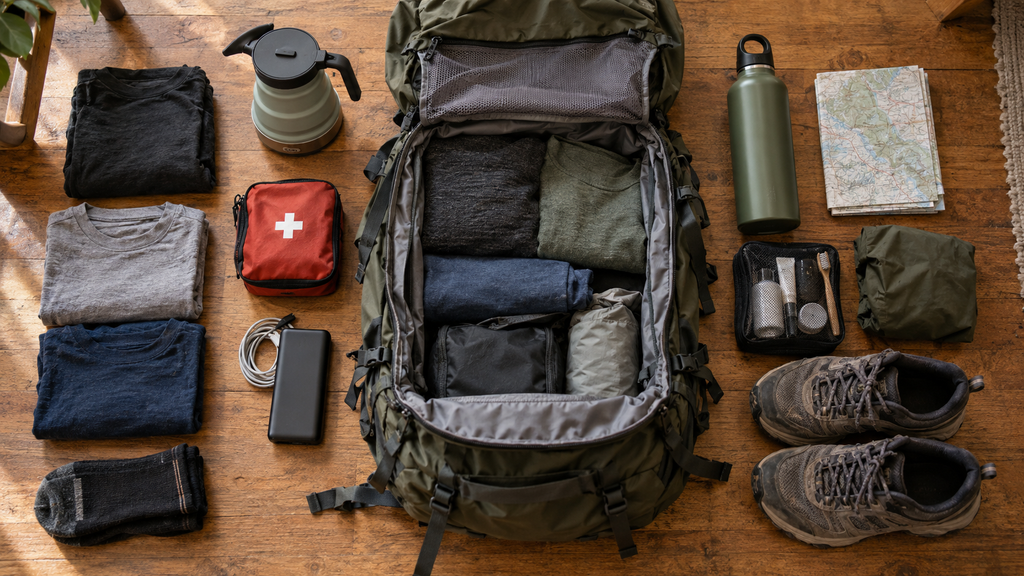
A 35–45 litre carry-on backpack. This is the single biggest budget decision you’ll make before you even leave. A bag that fits airline carry-on limits means no checked-bag fees on budget airlines — which, over a year of travel, is worth more than almost any other packing choice. Look for a fixed-back panel (comfort over long walks matters more than you think) and a lockable main compartment.
Packing cubes (2–3, not 6). Not for the Instagram aesthetic — for finding your charger without unpacking the whole bag at 6am for a 6:15 bus. Compression cubes also buy you real space, which matters far more in a 40-litre bag than a 90-litre one.
A slim day bag that folds flat. For city days when you don’t want your whole pack on your back.
Cluster 4 · Sleeping It Off, Not Sleeping It Rough
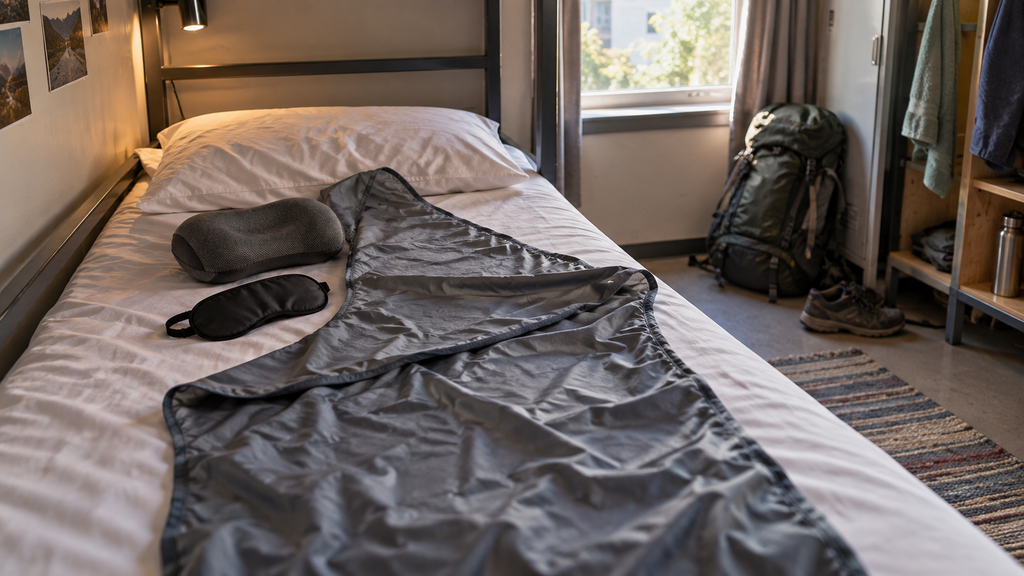
A silk or silk-blend sleep sack. Non-negotiable for hostels, night trains, and any farm stay where the sheets are a mystery. Doubles as a light blanket on long-haul buses.
A compact travel pillow. Skip the horseshoe-shaped novelty ones — they don’t pack down and don’t actually support your neck on a night bus. A compressible inflatable or memory-foam wrap does both jobs properly.
An eye mask and silicone earplugs. Cheap, tiny, and the difference between arriving somewhere functional or arriving somewhere furious.
The Kettle (Yes, Really)
The foldable travel kettle is the single most-recommended item on this site, and it earns that spot honestly. A silicone-collapsible kettle that packs flat takes up almost no room and pays for itself within a week of not buying overpriced hotel coffee or hostel-kitchen instant noodles. If you’re doing farm stays, van life, or any accommodation with even a single power socket, this is the highest-value item in your bag by weight.
What to look for: dual voltage (essential — check it explicitly, don’t assume), a stated auto shut-off, and a capacity of at least 0.5 litres. Cheaper ones without auto shut-off are a genuine fire risk in shared accommodation — don’t cut this corner.
Gadgets and Tech That Actually Earn Their Weight
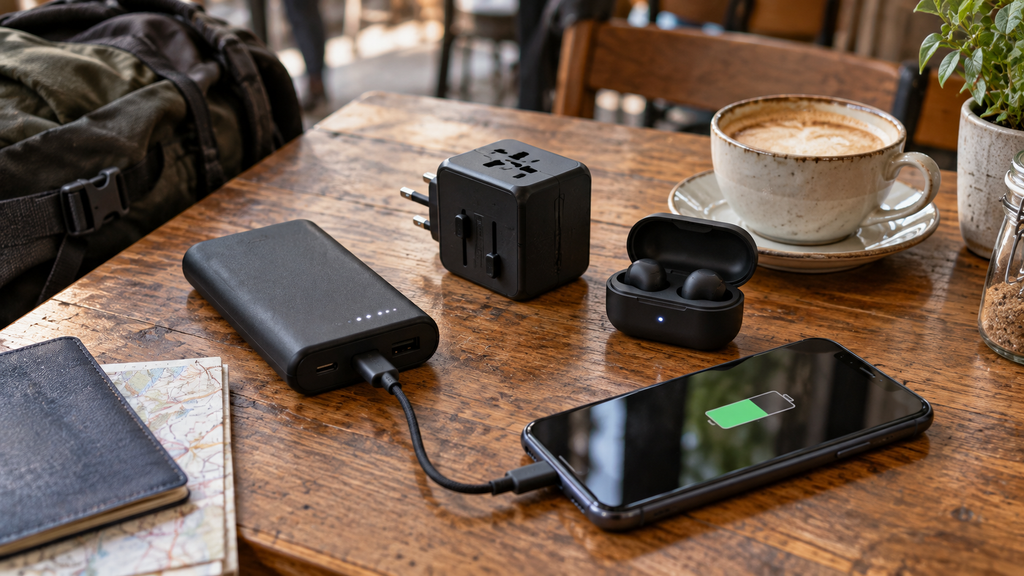
A portable power bank, 10,000mAh minimum. Overnight buses, long museum days, and airports with no free sockets all drain a phone fast — and a dead phone means a dead map, a dead translation app, and a dead boarding pass.
A universal travel adapter with built-in USB ports. One adapter, every country, no separate USB brick needed.
A cheap, unlocked phone or an eSIM-ready device. Local SIMs are almost always cheaper than roaming, and an eSIM means you can set this up before you land.
Noise-cancelling earbuds, not full headphones. Smaller, lighter, and just as effective on the transport you’ll actually be taking — overnight buses and trains, not just flights.
Clothing: Fewer Pieces, Better Choices
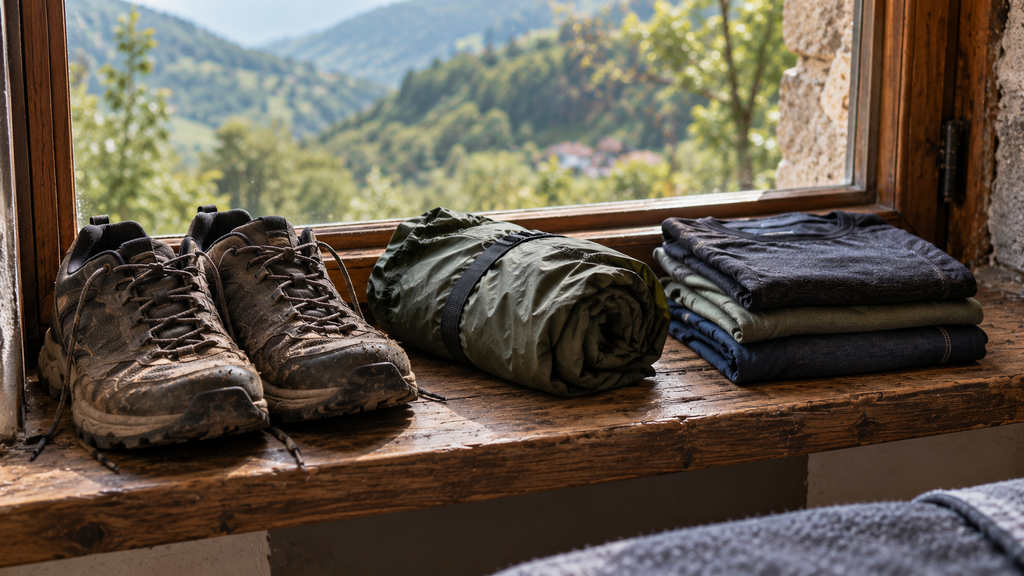
Merino wool or technical base layers (2–3 tops). They don’t hold odour the way cotton does, which matters enormously when you’re hand-washing in a hostel sink. This alone can cut your clothing volume by half.
One pair of proper walking shoes, broken in before you leave. Not new-out-of-the-box. Blisters on day two of a three-month trip are entirely avoidable.
A packable rain shell. Weighs almost nothing, folds into a pocket, and means weather never dictates your itinerary.
A sarong or lightweight scarf. Genuinely multi-use — temple coverage in Southeast Asia, a beach towel, an emergency blanket on an air-conditioned overnight bus.
The Boring Essentials Nobody Photographs
A reusable water bottle with a filter. Pays for itself fast anywhere tap water isn’t reliable, and it’s one of the simplest ways to cut daily spend and plastic waste in the same move.
A physical first-aid kit — plasters, rehydration salts, any personal prescriptions, and a basic antihistamine. Small, cheap, and the one bag item you hope you never need but will be glad of when you do.
A padlock (TSA-approved) for hostel lockers. Bringing your own is cheaper than renting one at every stop, and it means you’re never caught without one.
What to Leave at Home
Skip the travel umbrella (a rain shell does the job in less space), the “just in case” second pair of jeans (jeans are heavy and slow to dry), and any gadget you haven’t used in the last month at home. If it’s sitting in a drawer now, it’ll sit in your bag on the road.
Nikki’s Actual Bag Weight
For reference, everything above — bag included — comes in under 8kg for a three-week trip in a warm climate, and closer to 10kg once cold-weather layers are added. If your bag is heavier than that, something on your list isn’t earning its place.
Where to Buy This Gear Without Overpaying
Most of what’s listed here doesn’t need to be bought premium. A mid-range foldable kettle, a decent-not-flagship power bank, and own-brand packing cubes all do the job the expensive versions do. Spend the extra money on the two items where quality genuinely matters: your shoes and your backpack. Everything else is replaceable; a bad pair of shoes will follow you for months.
Read next: Best Foldable Travel Kettles: Honest Reviews for Budget Travellers