By Nikki Piggott · The Smart Explorer · affordableexplorer.com · Updated May 2026
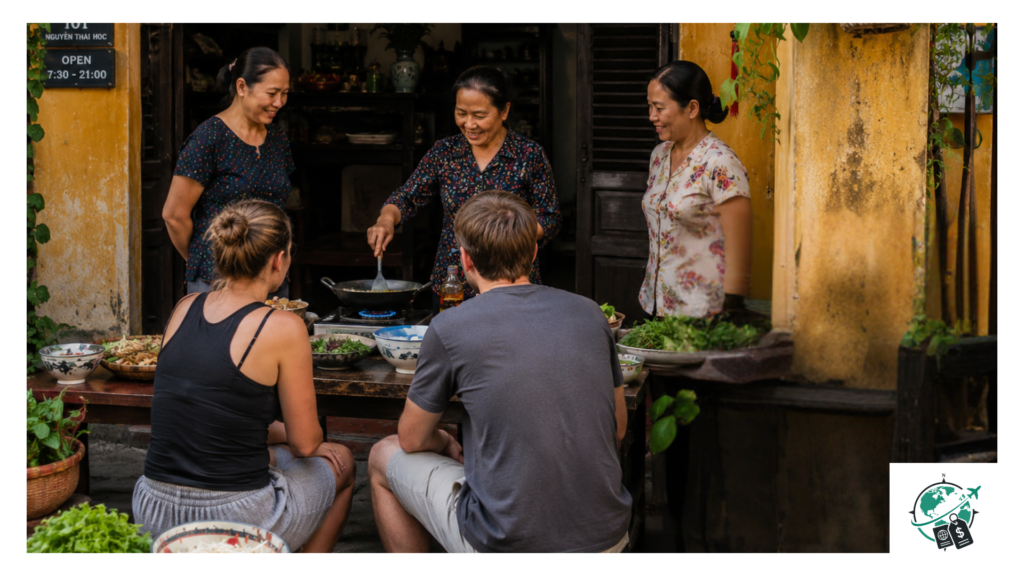
The best meal I ever had in Vietnam cost nothing. A woman in Hội An taught me to make bún bò Huế in her garden for free. She asked only that I ate everything she put in front of me.
Cooking classes are one of travel’s great scams. The glossy ones in Chiang Mai and Bologna charge £60–£120 per person for a three-hour tourist experience that ends with a recipe card you’ll never use. The best cooking knowledge in the world sits in local communities — and a surprising amount of it is free, if you know where to look.
This is not a guide to discounted cooking classes. This is a guide to genuinely free ones: the community programmes, the cultural exchange hostels, the NGO kitchens, the temple feasts, and the hosts who simply want to share their food.
============================================================ –>Free Guide · Instant Download
50 Genuinely Free
Travel Experiences
Named, located, and verified — no catches, no upsells. Get the full guide plus one smart, specific travel idea in your inbox every month.
No spam, ever. Unsubscribe in one click.
| THE SMART EXPLORER APPROACH Free cooking knowledge is everywhere. It’s in the local market stalls, the volunteer kitchens, the community centres, and the Workaway hosts who’ll teach you three dishes in exchange for five hours of garden work. The trick is knowing which doors to knock on. |
Why Free Cooking Classes Exist
It helps to understand why someone would teach you to cook for free. There are usually four reasons:
- Cultural exchange programmes — many cities run subsidised or donation-based cooking sessions specifically to connect travellers with local food culture. These are common in Southeast Asia, Japan, and parts of Latin America.
- NGO and community kitchens — organisations that work with marginalised communities (often women’s cooperatives or community development groups) teach cooking as both income generation and cultural preservation. Travellers are often welcomed as a way to raise awareness and funds.
- Workaway and exchange hosts — through platforms like Workaway and Worldpackers, hosts often teach cooking as part of the cultural exchange. You help with their garden or guesthouse; they teach you their grandmother’s dal recipe.
- Hostels and guesthouses — a growing number of budget accommodation providers run free cooking events as a guest perk or community activity. It costs them almost nothing and keeps guests engaged.
Where to Find Free Cooking Classes by Region
Southeast Asia
Thailand, Vietnam, Cambodia, and Indonesia are probably the easiest places in the world to find free cooking experiences. Here’s what actually works:
Buddhist temple feasts and merit-making meals — Thailand. Temples across Thailand hold regular communal cooking and eating events tied to Buddhist merit-making. These are not tourist programmes — they’re religious community events open to respectful visitors. Arrive early, offer to help, and you’ll often end up in the kitchen.
Hội An free cooking demonstrations — Vietnam. Several local women in Hội An’s old town run informal free cooking demonstrations out of their homes or street stalls. These are not advertised — you find them by asking at the central market. Bring your own ingredients (cost: £2–3) and you’ll likely get a full lesson in exchange.
Balinese cooking at offering-making events — Indonesia. In Ubud and surrounding villages, many local families preparing temple offerings will welcome curious visitors to watch and participate. It’s not a cooking class in the formal sense, but you’ll learn more about Balinese food from an hour in someone’s compound than from any paid class.
NGO kitchens in Phnom Penh — Cambodia. Several Phnom Penh NGOs run social enterprise restaurants where they train at-risk youth in professional cooking. Many offer free cooking demonstrations or invite guests to eat family-style meals with the trainees. Friends-International runs some of the most accessible programmes.
South Asia
Sikh langar kitchens — India, worldwide. Every Sikh gurdwara runs a langar — a communal kitchen that feeds everyone for free, regardless of religion or background. Visitors are always welcome to eat, and at most gurdwaras you can ask to help with the cooking preparation (called seva). The Golden Temple in Amritsar feeds over 100,000 people a day from its langar. Turn up, offer to help peel onions for an hour, and you’ll learn more about Indian cooking than any class.
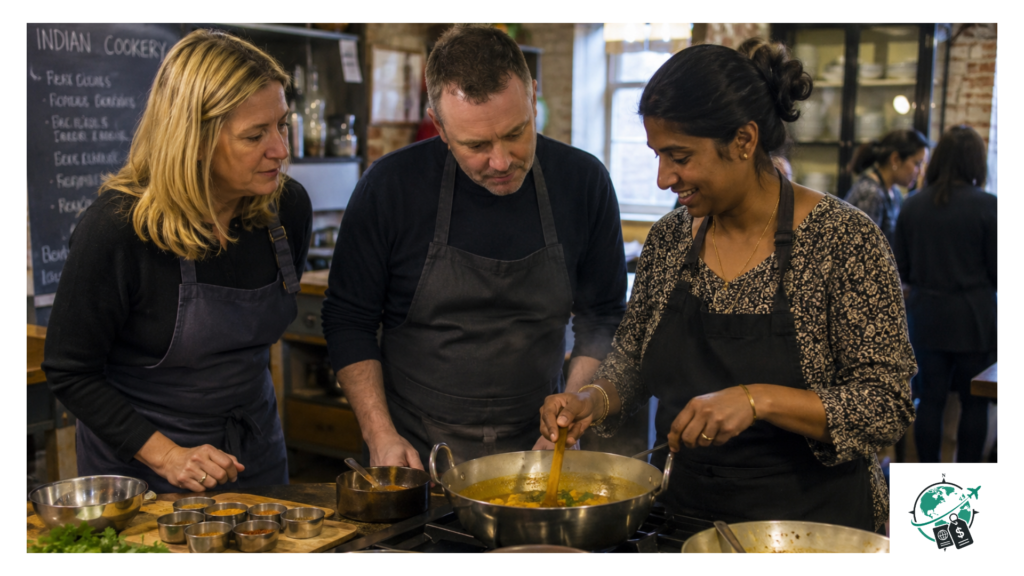
Ashram cooking — India. As covered in the Free Meditation Retreats in India guide, most ashrams prepare their own sattvic vegetarian food. Residents and volunteers participate in kitchen duties as part of the daily practice. Stay at a genuine ashram and kitchen participation is built into the schedule.
Homestay cooking — Nepal. On trekking routes across Nepal, teahouse and homestay hosts regularly involve travellers in meal preparation — not as a class, but as a natural part of staying with a family. Offer to help and you’ll be peeling potatoes and learning dal bhat within five minutes.
Latin America
Community kitchen projects — Mexico, Peru, Bolivia. Grassroots cultural preservation projects in Oaxaca, Cusco, and La Paz run regular community cooking sessions focused on indigenous and traditional recipes. Many are donation-based or ask only that you buy your own ingredients from the local market. Search for ‘talleres de cocina comunitaria’ (community cooking workshops) in any major Peruvian or Mexican city.
Workaway hosts across the region. Latin America is one of the best regions for Workaway cooking exchanges. Organic farms, community projects, and small guesthouses regularly offer cooking instruction as part of their exchange. Search specifically for hosts who mention ‘traditional cooking’, ‘local recipes’, or ‘culinary exchange’ in their listings.
Mercado cooking demonstrations — Peru. In Cusco’s Mercado San Pedro and Lima’s Mercado Surquillo, local food stalls and market vendors will often give informal cooking demonstrations if you express genuine interest, buy some ingredients, and ask politely. It’s not formal, but it’s real.
Europe
Free cooking classes are less common in Europe, but they do exist — particularly through cultural exchange and community programmes.
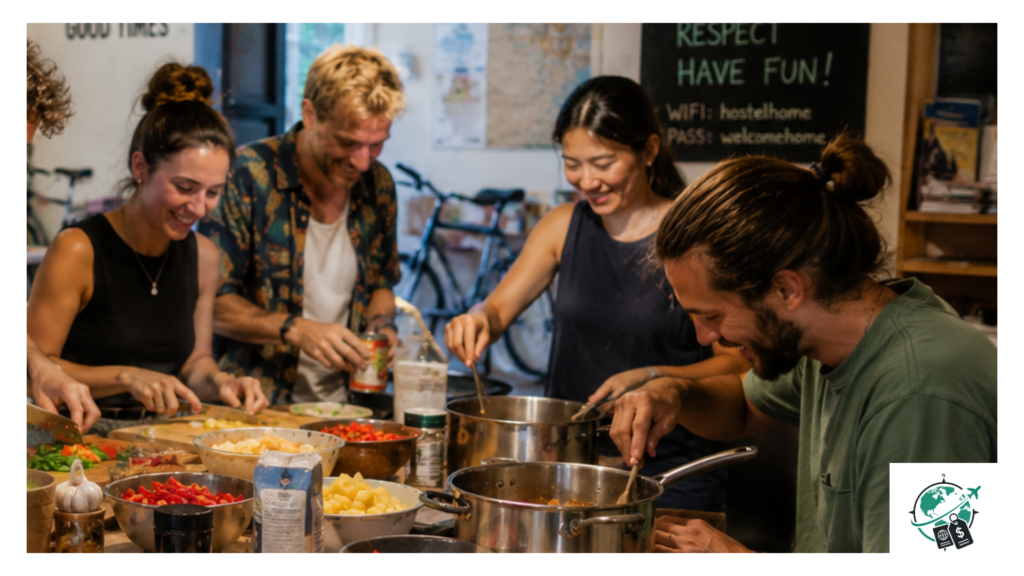
Community cooking nights at hostels. A growing number of European hostels (particularly in Lisbon, Berlin, Budapest, and Krakow) run weekly ‘cook together’ nights where guests collectively make a traditional dish. No charge, just shared participation. Check hostel listings specifically for this — it’s usually advertised on booking platforms or their social media.
Refugee-led cooking events. Several European cities run social enterprise programmes where refugees teach cooking as a way to share their culture and generate income. In London, Berlin, and Amsterdam, these are often free or pay-what-you-can. Search for ‘refugee cooking’ or ‘community kitchen’ alongside your destination city.
Cultural centres and diaspora community kitchens. In major European cities, cultural centres run by immigrant communities regularly host public cooking events. The Italian Cultural Institute, Turkish community centres, and various national cultural associations often run open cooking demonstrations for free.
| QUICK WIN: THE HOSTEL KITCHEN TEST When you check into a hostel, ask two questions: ‘Do you have any cooking events?’ and ‘Is there a local cook who teaches guests?’ You’d be surprised how often the answer is yes. Many of the best informal cooking exchanges happen in hostel kitchens, entirely unadvertised. |
How to Find Free Cooking Classes: A Practical System
Finding free cooking experiences requires a different approach from finding paid classes. Here’s the system:
Before You Arrive
- Search Facebook Groups for your destination — groups like ‘Expats in [City]’ or ‘[Country] Travel’ often share local events including free cooking workshops.
- Check Couchsurfing’s Events section — Couchsurfing hosts regular free cultural events in most major cities, including cooking nights.
- Search Meetup.com for ‘cooking’ in your destination — community cooking meetups are free or very low cost in most major cities.
- Look at your hostel’s social media before booking — Instagram and Facebook often reveal weekly events that aren’t on the booking platform listing.
- Search Workaway and Worldpackers for hosts in your destination who mention food, cooking, or local cuisine in their description.
When You’re There
- Ask at your hostel’s front desk — specifically ask if there are any local cooking experiences, community kitchen nights, or nearby events.
- Visit the local market and talk to vendors — market stall holders are often connected to local food communities and know about cooking events.
- Look at community noticeboards in hostels, cafes, and cultural centres — free local events are often advertised here.
- Ask at any temple, gurdwara, or mosque — religious communities often host communal cooking and are genuinely welcoming of respectful visitors.
- Check with the local tourist office, but ask specifically about community and cultural events rather than tourist experiences.
A Quick Comparison: Where Free Cooking is Easiest to Find
| Destination | Type of Class | How to Find It |
| Thailand | Temple feasts, merit events | Go directly to local temples |
| India | Langar, ashram cooking | Any gurdwara; ashram stays |
| Vietnam | Home cooking with market vendors | Ask at Hội An central market |
| Nepal | Homestay kitchen participation | Trekking homestays and teahouses |
| Peru / Mexico | Community kitchen workshops | Search ‘talleres de cocina’ |
| Europe (major cities) | Hostel cook-togethers, refugee kitchens | Hostel front desk; Facebook events |
| Bali | Temple offering preparation | Village temples in Ubud area |
| Cambodia | NGO restaurant kitchens | Friends-International, Phnom Penh |
Making the Most of a Free Cooking Experience
A few things that make the difference between a genuine learning experience and a polite tourist encounter:
- Bring something. Wine, local fruit, a small gift — a gesture of reciprocity changes the dynamic. You’re not a tourist receiving a service; you’re a guest being welcomed.
- Learn five words before you arrive. Knowing ‘delicious’, ‘thank you’, ‘how do you say this in [language]?’ in the local language opens doors. People teach more enthusiastically when they feel respected.
- Write everything down. Don’t rely on memory. Carry a small notebook. Hosts notice when you’re taking notes and tend to share more.
- Ask about substitutions. ‘What would you use if you couldn’t get this ingredient?’ is one of the most useful cooking questions in any language. It tells you about the dish’s regional variations and gives you something replicable at home.
- Eat everything. Declining food in a generous host’s kitchen is the fastest way to end the experience. Even if you’re full. Even if you’re not sure what it is.
What About Low-Cost Rather Than Free?
Sometimes you can’t find a genuinely free option. In that case, ‘local price’ classes — often found through community networks rather than tourist booking platforms — cost a fraction of the tourist rate.

A cooking class that costs £5–10 booked through a local community project is not the same as a £60 tourist class booked through GetYourGuide. The food is often better, the setting is always more authentic, and the money goes directly to the cook rather than a booking platform.
To find these:
- Ask at the hostel for local cooks rather than tourist class operators.
- Search Facebook Marketplace or local Facebook groups in your destination for cooking class listings.
- Look at Airbnb Experiences for the cheapest options — even paid Airbnb experiences are often hosted by local cooks at reasonable rates, and the host keeps most of the revenue.
| RECOMMENDED: AIRBNB EXPERIENCES FOR BUDGET COOKING Airbnb Experiences includes cooking classes in almost every destination, and many are priced between £15–25 per person. Filter by price and look for hosts with local-sounding names rather than professional cooking school operators. The quality is often far higher and the price far lower than dedicated cooking class companies. |
Further Reading on This Site
This article is part of The Smart Explorer’s Free Experiences cluster. Related guides:
- Free Meditation Retreats in Thailand — full guide to temple-based silent retreats
- Workaway and Worldpackers: The Complete Guide — how to work for accommodation, including food and cooking exchanges
- Free Museum Days Around the World — planning trips around free cultural access
- Volunteer Abroad Free — programmes that cover food and accommodation
The Bottom Line
Free cooking classes are abundant if you look in the right places — religious kitchens, NGO programmes, market vendors, hostel cook-togethers, and Workaway hosts. They require more effort to find than the paid tourist options, but they’re usually more interesting, more authentic, and more memorable.
The meal you make in someone’s home kitchen in Hội An, or the dal you help prepare in a gurdwara in Amritsar, or the mole you learn from a community cook in Oaxaca — that’s the food you’ll remember. Not the three-hour tourist class with the recipe card.
The Ultimate Guide to Free Travel Experiences: Save Money Without Sacrificing Adventure
Travel smarter. Eat better. Spend less.