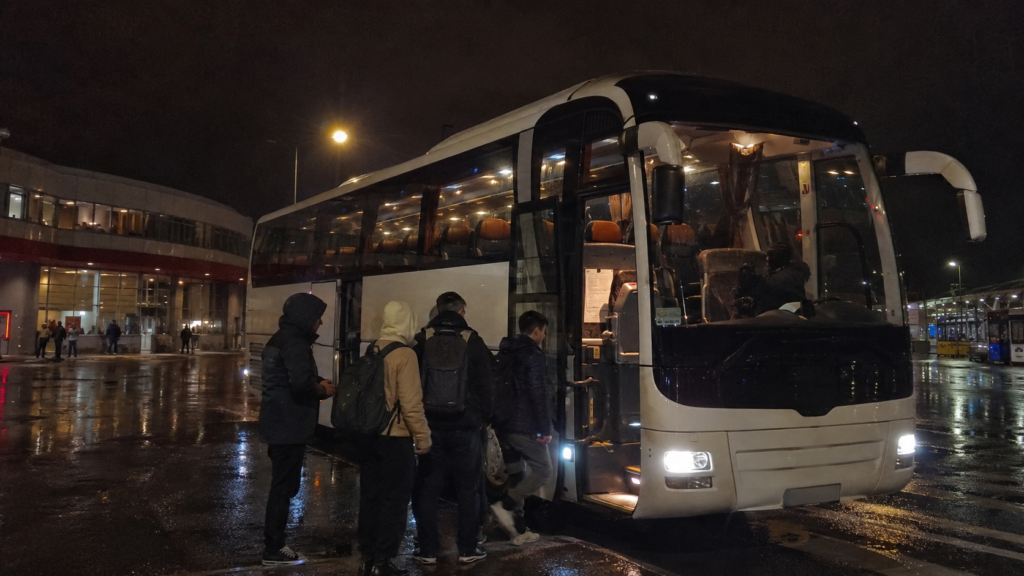
A night bus does two jobs for one price. It moves you 400 miles and it replaces a night’s accommodation — which means a £25 ticket isn’t really competing with a £60 train. It’s competing with a £60 train plus a £30 hostel bed. Once you start doing that maths, overnight transport becomes one of the single smartest moves in budget travel.
I’ll be honest upfront: you will not sleep as well as you would in a bed. Some nights you’ll barely sleep at all. But done right — the right operator, the right seat, the right kit — you arrive functional, you’ve saved £30–£80, and you’ve gained a full day at your destination instead of losing one to transit.
Here’s how to do it right.
The maths: what a night bus actually saves you
Take a common route: London to Edinburgh.
============================================================ –>Free Guide · Instant Download
50 Genuinely Free
Travel Experiences
Named, located, and verified — no catches, no upsells. Get the full guide plus one smart, specific travel idea in your inbox every month.
No spam, ever. Unsubscribe in one click.
- Daytime train: £60–£120, plus you still need somewhere to sleep that night (£25–£40 hostel bed in Edinburgh)
- Night bus (Megabus or FlixBus): £15–£35, sleep on board, arrive around 7am
Real saving: £70–£125 per leg. Do that four times on a two-week trip and you’ve saved £300–£500 — enough to fund an entire extra week of travel in Southeast Asia or a budget safari deposit.
The same logic applies almost everywhere: Paris to Barcelona, Bangkok to Chiang Mai, Lima to Cusco, Hanoi to Da Nang. Any route of 6–12 hours is night bus territory. Shorter than 6 hours and you arrive at 3am with nowhere to go. Longer than 14 and you should probably fly or break the journey.
The operators worth knowing
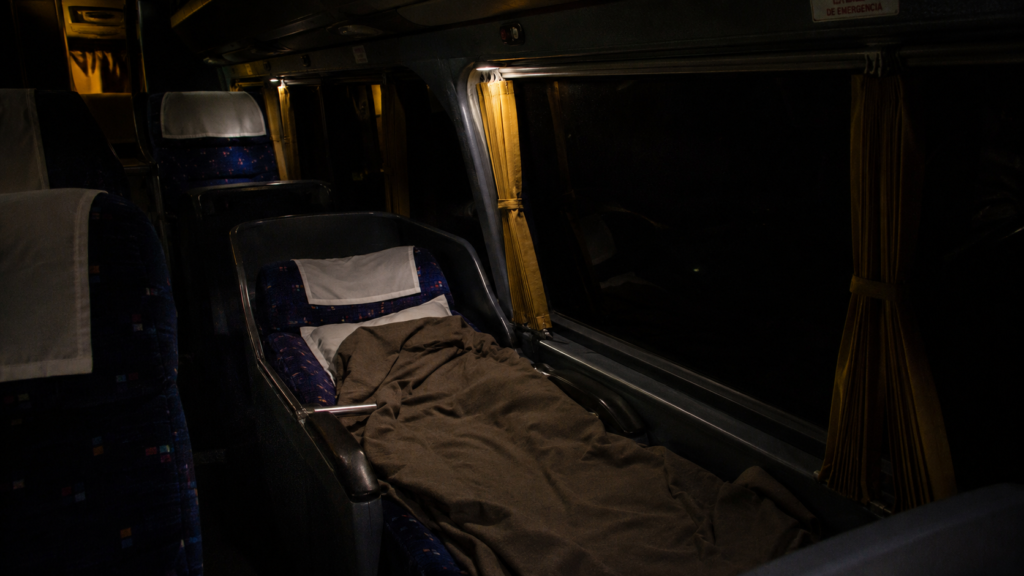
Europe — FlixBus. The dominant network. Covers 40+ countries, and night routes between major cities regularly go for €15–€40. Book 2–4 weeks out for the best prices. Seats recline slightly; bring a neck pillow, because the headrests won’t do the work for you.
UK — Megabus and National Express. Megabus runs overnight London–Scotland routes from around £15. National Express costs a little more but the coaches are generally newer and the drivers stick rigidly to rest stops, which means predictable wake-ups.
Spain — ALSA. Genuinely comfortable overnight coaches, and their “Premium” seats (wider, more recline) are usually only €5–€10 more than standard. On an eight-hour overnight, pay it.
Southeast Asia — sleeper buses. Vietnam and Thailand run actual lie-flat sleeper buses — bunk-style reclining pods — for £10–£20 on routes like Hanoi to Hue. Book through 12Go rather than at random street agencies, and check recent reviews of the specific operator, not just the route. Quality varies wildly.
South America — Cruz del Sur (Peru), Andesmar (Argentina). The “cama” and “salón cama” classes are the gold standard of night buses anywhere in the world: 160–180 degree recline, meals included, £20–£40 for 10+ hour routes. If you’ve only ever done European coaches, these will genuinely surprise you.
Night buses vs sleeper trains
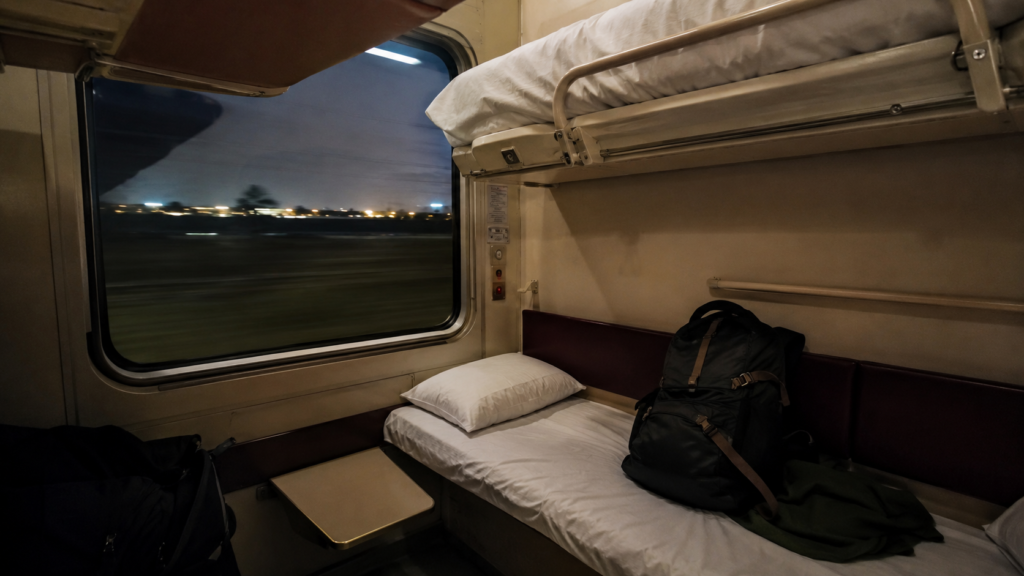
Sleeper trains (Nightjet in Europe, sleeper classes in India, the Caledonian Sleeper in the UK) are the more comfortable cousin — and usually two to four times the price.
The honest comparison:
- Take the train when the couchette price is within £20 of a bus ticket plus a hostel bed, when the route is 10+ hours, or when you have an early commitment the next day and genuinely need sleep. A Nightjet couchette at €49–€79 is often worth it.
- Take the bus when the price gap is bigger than that, when the route is 6–9 hours, or when the train requires a booking weeks out and you want flexibility.
The Caledonian Sleeper is lovely and starts at around £50 for a seat, £140+ for a room. The Megabus on the same route is £15. That’s not a comfort upgrade, that’s a different holiday budget. Know which one you’re on.
How to actually sleep on a night bus
This is the part most guides skip, and it’s the part that decides whether you arrive fresh or wrecked.
Seat choice matters more than operator. Pick a window seat on the side away from the driver (less aisle light), roughly mid-coach — the back is bumpier and near the toilet, the front gets headlight glare through the windscreen. On double-deckers, upstairs front has the best recline but the most sway; upstairs mid-cabin is the sweet spot.
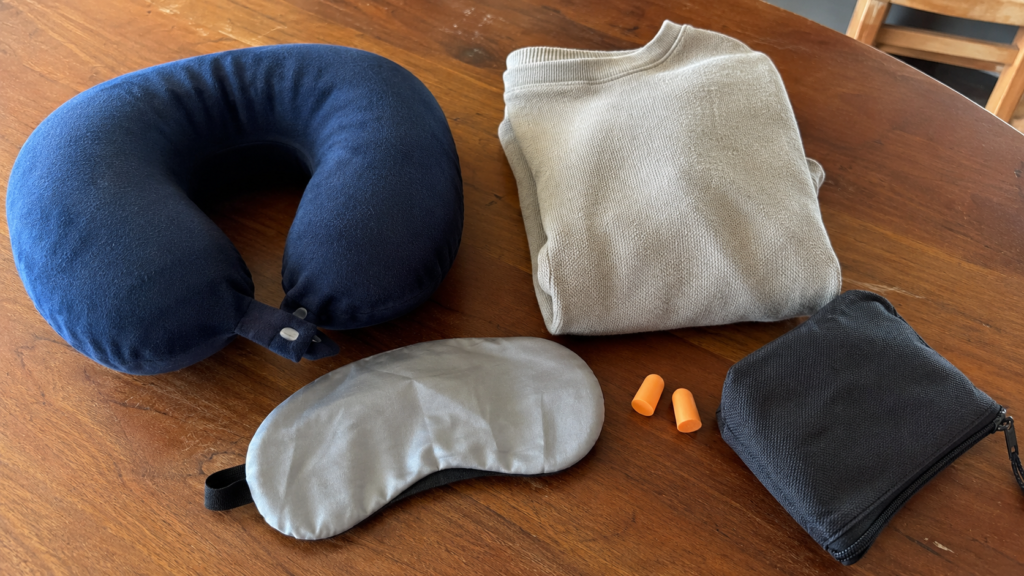
The kit that earns its place: a proper wraparound neck pillow (not the flat U-shaped ones), an eye mask, earplugs, and a light layer — coaches run cold at 3am, always. Total cost under £20, and it’s the difference between four hours of sleep and none.
Eat before you board, not on board. Service station food at midnight is expensive and grim. A proper meal an hour before departure helps you sleep and saves £10.
Keep valuables on your body. Passport, phone, cards in a zipped pocket or a small bag you sleep on — not in the overhead rack, and never in the hold. This isn’t paranoia; it’s just the standard rule on any overnight transport anywhere.
Set an alarm 20 minutes before arrival. Border crossings and city arrivals come fast, and being the person scrambling for shoes while everyone files past is a bad start to the day.
The arrival problem — and how to solve it
The catch nobody mentions: night buses arrive early. Often 5:30–7am, before your hostel will let you check in, before most cafés open.
Three fixes:
- Message your hostel the day before. Most will store your bag free from early morning, and some will let you use the showers. Hostelworld listings usually say whether luggage storage exists — check before booking.
- Book a hostel with 24-hour reception for the night you arrive. It costs nothing extra and removes the problem entirely.
- Plan a slow first morning. A free walking tour (most start at 10–11am) is the perfect first activity after a night bus — you’re moving, you’re outside, and you’re not committing to anything that punishes tiredness.
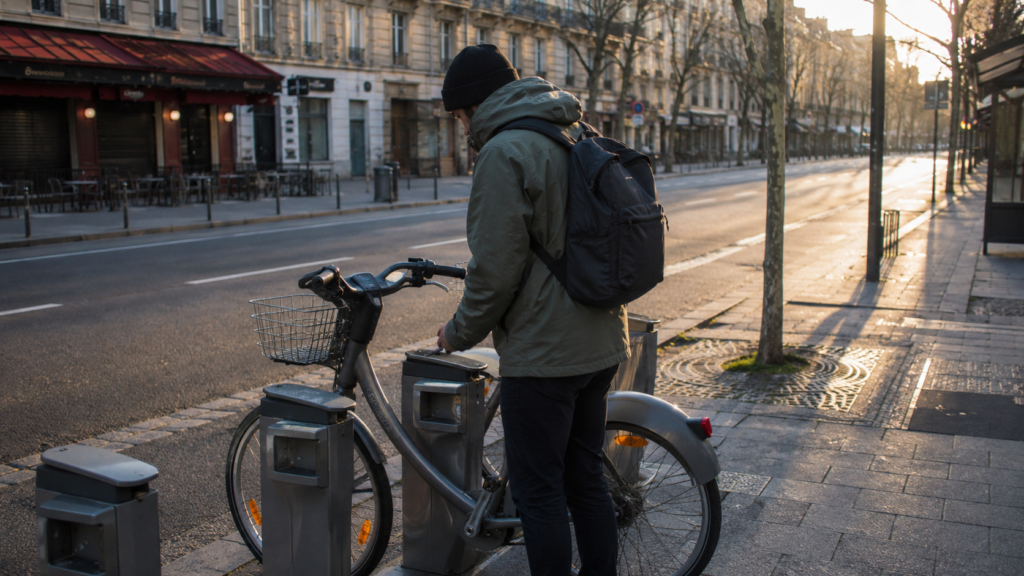
And a genuinely useful pairing: cities with good bike share schemes are ideal night bus destinations, because the bus station to old town ride at 6:30am is quiet, cheap, and wakes you up properly. Our City Bike Share Programs Worldwide guide covers which cities make this easy.
When NOT to take the night bus
Have opinions, so here’s mine: skip the night bus when the route is under five hours (you’ll arrive at 2am, which helps nobody), when you have something important the next morning, or when the price difference to a sleeper train is small. And skip any Southeast Asian sleeper bus operator with a pattern of recent safety complaints — the £4 saving is not worth it. Check reviews for the operator by name every time.
The one-line version
If the route is 6–12 hours and the ticket is cheaper than a bed, take the night bus, pack the eye mask, and message your hostel about the bag. That’s it. That’s the trick.
Planning a longer trip? The Airport to City Centre for Free guide and Tourist Travel Cards: Are They Worth It? cover the rest of the getting-around puzzle.