Here’s the short answer, because you shouldn’t have to scroll for it: if you’re travelling solo and you’re happy in a dorm, a hostel is almost always cheaper. If you’re two people, run the numbers first — a budget hotel or a private hostel room is often the same price or less. Everything below is the detail that makes that decision easy for your specific trip.
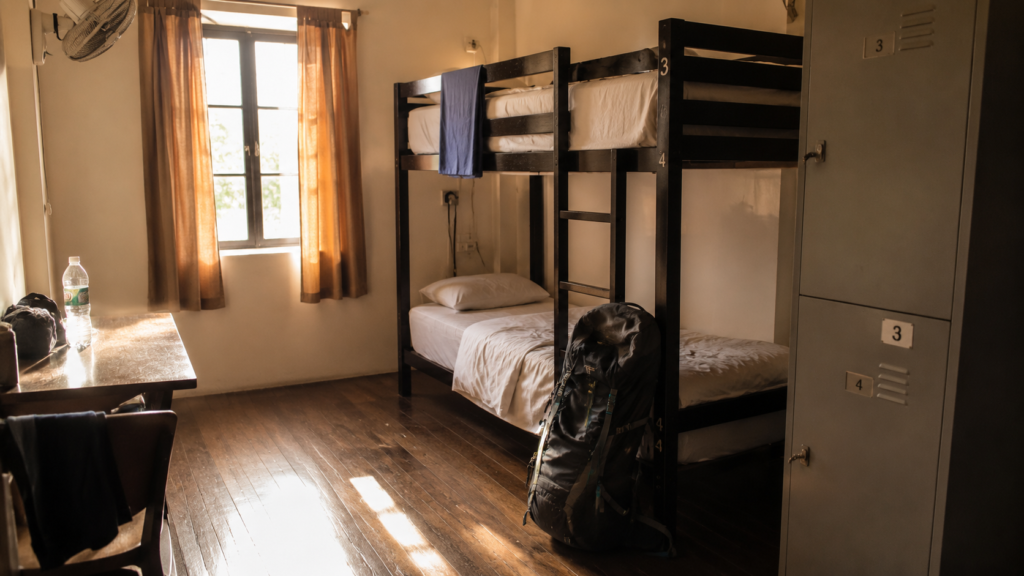
I’ve stayed in both, in a lot of countries, and the “hostels are always cheaper” rule that every travel blog repeats is out of date. Hostel prices in big European cities have climbed hard since 2023 — some Amsterdam and Paris dorms now cost what a chain budget hotel does. Meanwhile a Premier Inn or Ibis booked early can undercut two dorm beds. The market has changed. This post reflects that.
What each one actually costs in 2026
Rough per-night figures I’d plan around right now. These are for a bed (hostel dorm) vs a double room (budget hotel), booked 4–6 weeks ahead:
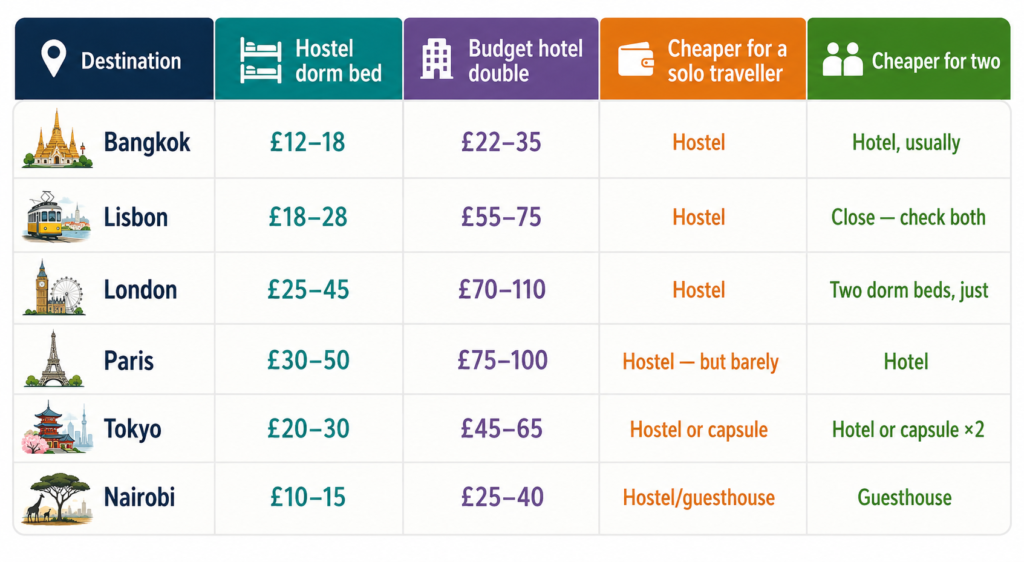
Two things the headline price hides:
============================================================ –>Free Guide · Instant Download
50 Genuinely Free
Travel Experiences
Named, located, and verified — no catches, no upsells. Get the full guide plus one smart, specific travel idea in your inbox every month.
No spam, ever. Unsubscribe in one click.
- Hostels charge per bed, hotels per room. The moment you’re two people, the hostel’s price doubles and the hotel’s doesn’t. This single fact settles most of the debate.
- Hidden extras run both ways. Hostels sometimes add linen, locker, or towel fees (£2–5/night). Budget hotels in cities add tourist tax per person per night. Read the checkout page, not the search results page.
When a hostel wins — clearly
You’re solo. One bed is all you’re paying for, and the maths is unbeatable in expensive cities. In London, the gap between a £30 dorm bed and a £90 hotel room over a week is £420. That’s a flight.
You want to meet people. No budget hotel on earth replicates a good hostel common room. If you’re travelling alone for more than a few days, this stops being a nice-to-have.
You’ll use the kitchen. A hostel kitchen saves £10–20 a day in most of Europe. I’ve written a full guide on this — see Cooking in Hostels: Everything You Need to Know— and it’s the most underrated money-saver in budget travel.

You’re travelling long-term. Over a month, dorm beds vs hotel rooms is the difference between the trip continuing or ending.
When a budget hotel wins — clearly
You’re two people. Two dorm beds in Paris ≈ £70–100. An Ibis Budget booked early ≈ £75–90 — with a door that locks, your own bathroom, and no one climbing down a ladder at 3am. This is the comparison most blogs skip because it ruins the “hostels always win” story.
You need to sleep. Overnight bus tomorrow? Early flight? Working remotely? Dorms do not reliably deliver eight hours. Pay the £25–40 premium and treat it as buying sleep, not a room.
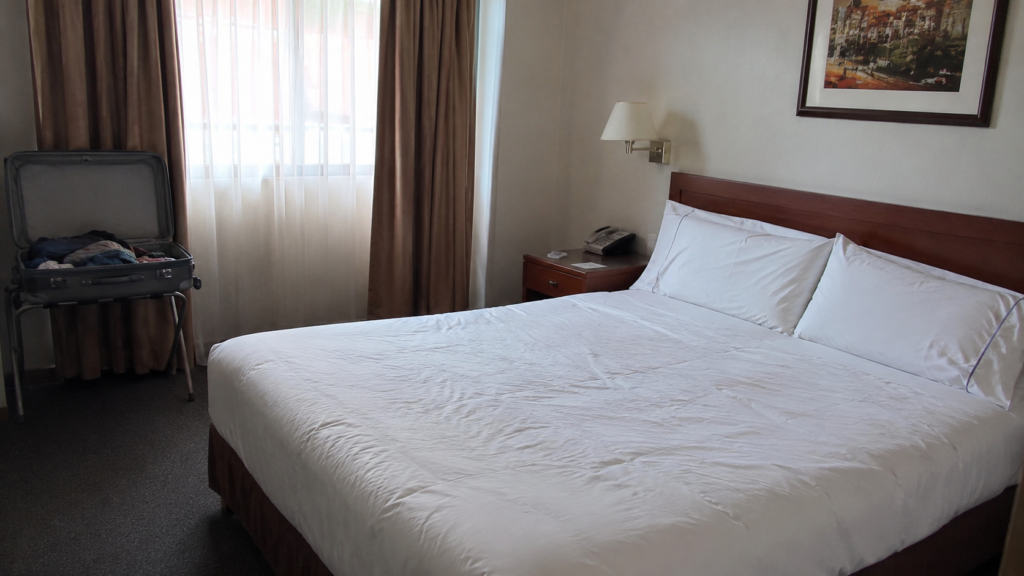
You’re ill. A private bathroom stops being a luxury the day you get food poisoning. I consider one budget-hotel night per week of hostel travel a legitimate line item, not a splurge.
You’re over the dorm phase. That’s allowed. Budget travel is about spending deliberately, not spending the minimum at any cost.
The middle option everyone forgets: private hostel rooms
A private room in a hostel gets you the kitchen, the social space, and the location — with a door. In most of Asia and Eastern Europe it’s £25–45 for two people, which routinely beats the local budget hotels. In Western Europe it’s often more than a budget hotel, so compare per city, not on principle.
And in Japan, skip this debate entirely: capsule hotels are the answer for solo travellers, at £20–35 a night in Tokyo and Osaka. Full guide here: Capsule Hotels: The Complete Guide for First-Timers.
Where to book (and why it matters)
- Hostels: Hostelworld. Bigger hostel inventory than Booking.com, and the reviews are written by people who actually stay in dorms, which makes them far more useful for judging noise, cleanliness, and atmosphere.
- Budget hotels: Booking.com for coverage — but check the hotel’s own site before you confirm. Ibis and Premier Inn often price-match or beat third-party rates and throw in free cancellation.
- Asia (and capsule hotels specifically): Agoda. Consistently the best rates in Japan, Thailand, and across Southeast Asia.
One booking habit worth stealing: filter reviews to the last three months. Hostels change fast under new management, and a 9.2 rating built in 2023 tells you nothing about this year.
The honest decision checklist
Ask these five, in order:
- Solo or not? Solo → hostel dorm, unless sleep is critical this week.
- Two or more? Price a budget hotel and a private hostel room before you even look at dorms.
- Will you cook? Yes → hostel value goes up £50–100 a week.
- Is tomorrow important? Flight, interview, long drive → buy the quiet room.
- Expensive city or cheap one? The pricier the city, the more the dorm saves you. In cheap destinations the gap shrinks to a few pounds — take the private room.
What I’d actually do
Mix them. On any trip over ten days I book hostels in the social, walkable cities and a budget hotel every fifth or sixth night to sleep properly and wash everything I own. The goal was never the cheapest bed. It’s the best trip per pound — and sometimes the smartest £35 you’ll spend all week is a door that closes.