Most farm stays cost nothing. That’s the part every accommodation comparison site misses. Through work exchange programmes like WWOOF and HelpX, you get a bed and three meals a day on a working farm in exchange for four to six hours of help — feeding animals, weeding, fencing, whatever the season demands. Paid farm stays exist too, and they’re often cheaper than a mid-range hotel: from around NZ$50 a night for a self-contained cottage on a Canterbury sheep farm.
I’ve done both. This guide covers exactly how each works, what it costs in 2026, the visa rule that catches people out in New Zealand, and where farm stays are worth building a whole trip around.
The two kinds of farm stay (and which one you want)
People use “farm stay” to mean two completely different things:
1. Work exchange. You volunteer 4–6 hours a day; the host provides accommodation and food. Cost: a platform membership fee (NZ$20–£50 a year) and nothing else. Minimum stays are usually 3 days to a week; many travellers stay for weeks. This is the genuinely free option — and the more interesting one.
============================================================ –>Free Guide · Instant Download
50 Genuinely Free
Travel Experiences
Named, located, and verified — no catches, no upsells. Get the full guide plus one smart, specific travel idea in your inbox every month.
No spam, ever. Unsubscribe in one click.
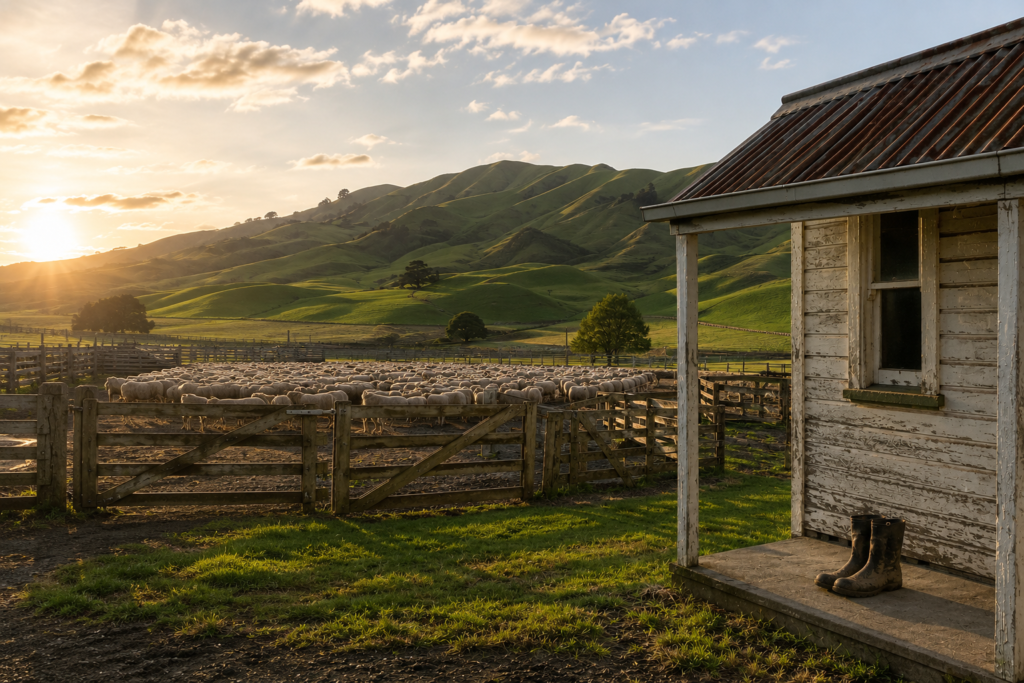
2. Paid farm accommodation. You book a room, cottage or shearers’ quarters on a working farm like you’d book a B&B. No work required, though most hosts will let you watch or join in with feeding and milking. Cost: roughly NZ$50–150 per night in New Zealand, similar in Australia. Cheaper than most hotels in rural areas, and dinner is often included or available for a small extra.
If you’re travelling for months on a tight budget, work exchange wins. If you’ve got two weeks and want one memorable rural stop without committing to a week of weeding, book a paid stay. I’ll cover both.
New Zealand: the farm stay capital of the world
New Zealand has more farm stay options per capita than anywhere I’ve travelled. Sheep, dairy, deer, alpaca, kiwifruit orchards — if it grows or grazes, someone hosts on it.
WWOOF New Zealand
WWOOF (World Wide Opportunities on Organic Farms) is the original scheme, running in NZ since 1974. Membership costs NZ$40 for your first 14 months (covers up to two people travelling together), then NZ$20 a year to renew. That gets you access to over a thousand host listings — organic farms, market gardens, lifestyle blocks and self-sufficiency projects across both islands.
The typical arrangement: 4–5 hours of help a day, all meals and a bed included, minimum stay around three days. You usually live with the family, which is the point — this is cultural exchange, not free labour with a smile painted on.
Where to go: the Nelson/Tasman region and Golden Bay have the densest concentration of organic hosts. Northland is great for subtropical growing (avocados, citrus). Central Otago hosts tend to want longer stays around harvest.
HelpX
HelpX is older, clunkier, and brilliant in New Zealand specifically. Its Premier membership costs about €20 and lasts two years — the cheapest full-featured work exchange platform there is. The listings skew rural and agricultural, which is exactly what you want here, and unlike WWOOF the farms don’t have to be organic, so you’ll find conventional sheep and dairy stations too.
My tip: sort hosts by “last updated” and only contact ones active in the past month. HelpX doesn’t police inactive hosts the way Workaway does.
The visa rule nobody tells you
Here’s the catch, and it’s a real one: Immigration New Zealand treats work-for-accommodation as work. If you receive food and a bed in exchange for helping on a farm, you need a visa with work rights — for most readers that means a Working Holiday Visa (available if you’re 18–30, or 18–35 for some countries). You cannot legally WWOOF or HelpX on a visitor visa.
Paid farm stays, where you’re simply a paying guest, are fine on a visitor visa. If you’re over the WHV age limit, that’s your route.
Paid farm stays in NZ
Farmstay booking sites and Booking.com list hundreds of working farms with guest accommodation. Expect NZ$50–90 for a simple room or converted shearers’ quarters, NZ$100–150 for a self-contained cottage. The best value is in Canterbury, Southland and the King Country — anywhere the tourist buses don’t stop. Many include farm tours and animal feeding at no extra cost, which in Rotorua would be sold to you as a NZ$45 “agri-experience.”
Australia: farm stays with a visa bonus
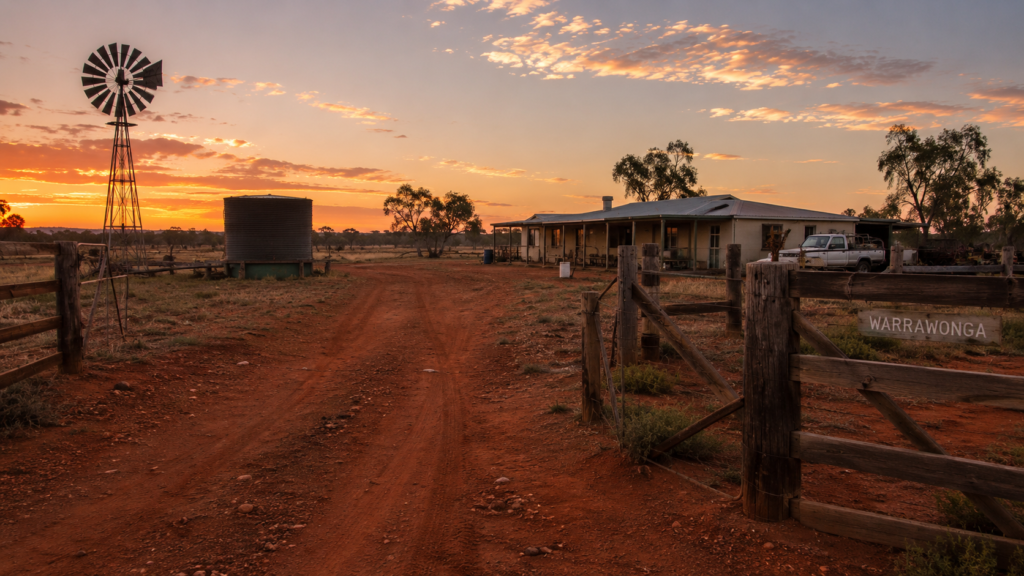
Australia does farm stays at a different scale — cattle stations the size of English counties, outback properties where the nearest neighbour is an hour’s drive.
The platforms: HelpX has historically deep coverage in Australia, and Workaway (around US$59 a year for a solo membership, US$69 for couples) has the largest network overall. WWOOF Australia runs separately with its own membership.
The visa angle that changes everything: if you’re on an Australian Working Holiday Visa and want to extend it to a second or third year, you need to complete 88 days of “specified work” — and paid farm work in regional areas counts. Plenty of travellers structure this as a paid farm placement with accommodation included, which means you’re earning money, extending your visa, and paying nothing to sleep. It’s the single best accommodation-plus-income move in budget travel. Note that unpaid work exchange generally does not count toward the 88 days anymore — it needs to be paid work. Check the current Home Affairs rules before you commit, because they’ve tightened over the years.
Where to go: Queensland’s Atherton Tablelands for fruit farms, the NSW Riverina for harvest work, Tasmania for smaller organic properties with shorter stays. Outback station stays (WA, NT, western QLD) are the most memorable but the most demanding — long days, real heat, genuine isolation. I’d do a week on a small farm first before committing to a station.
Paid station stays run AU$80–150 a night for shearers’ quarters or station cottages, often with dinner at the homestead table included. Compare that with AU$200+ for a bland motel in the nearest town.
Beyond: farm stays worth planning a trip around
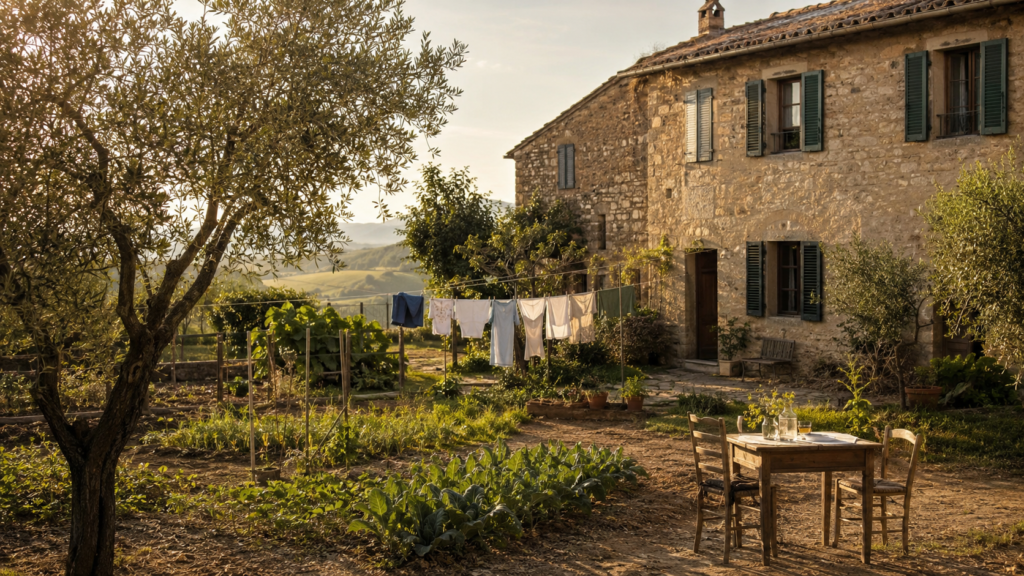
Italy — agriturismo. Italy legally requires agriturismi to be working farms, which keeps them honest. Rooms from €40–70 a night in most regions outside Tuscany’s postcard zones, and dinner is usually the farm’s own produce for €20–25. Emilia-Romagna and Puglia are the value picks. WWOOF Italy is also one of the most active chapters in Europe if you want the free version.
Japan. Rural Japan has a growing farm stay (nōhaku) movement, particularly in Kyushu and Nagano, where family farms host guests from around ¥6,000–9,000 a night with two meals. It pairs perfectly with the capsule hotel circuit — cities in capsules, countryside on farms. WWOOF Japan is well established and one of the best ways to experience the country outside the tourist rail corridor.
United Kingdom. Farm stays here are mostly the paid kind — from £25–40 per person in a farmhouse B&B, concentrated in Wales, the Lake District and the West Country. HelpX and Workaway both have decent UK host lists if you want the exchange version, and no visa complications if you already live here.
Canada. WWOOF Canada is strong in British Columbia and the Maritimes. Same deal as New Zealand: work exchange technically requires work authorisation, so check your status before booking flights around it.
What it actually costs: the honest numbers
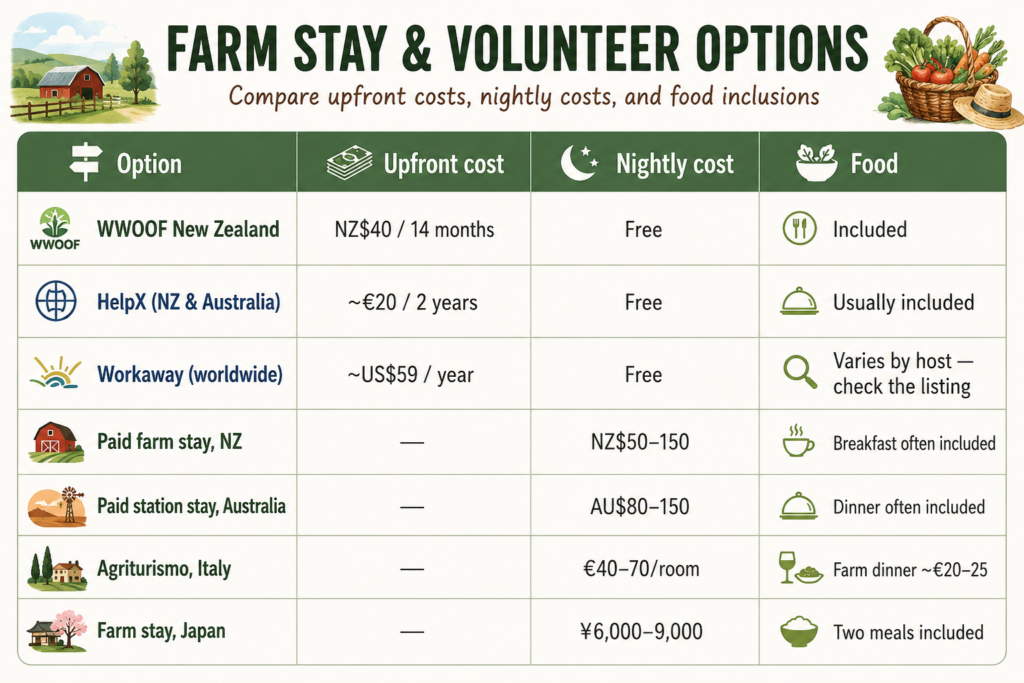
For comparison: a dorm bed in Queenstown runs NZ$45–60 a night with no meals. A month of WWOOFing in New Zealand costs you a NZ$40 membership. That’s the whole argument.
What you actually do all day
Nobody hands you a scythe at dawn. The reality on most hosted farms:
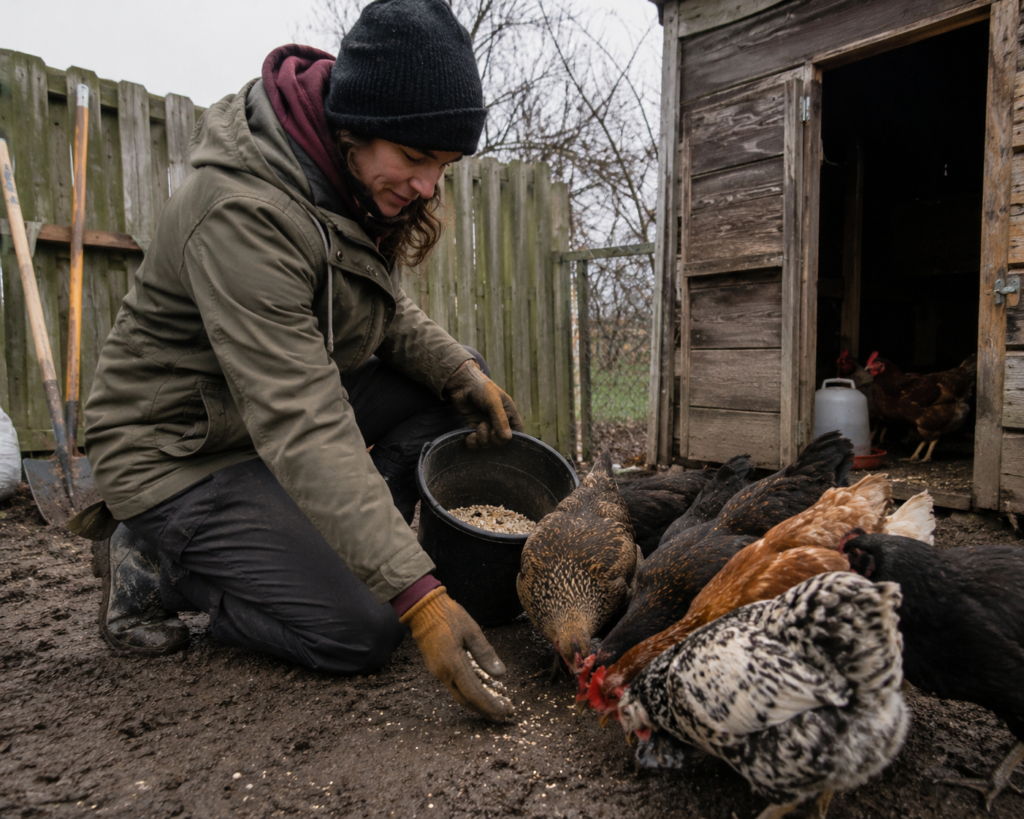
- Mornings (4–6 hours): feeding animals, collecting eggs, weeding, planting, fencing repairs, fruit picking in season, mucking out. On dairy farms, milking starts early — ask before you commit if 5am isn’t your thing.
- Afternoons: yours. Most hosts genuinely want you to explore the area; several of mine drove me to trailheads.
- Evenings: dinner with the family. This is where farm stays beat every hostel on earth. You will learn more about a country at one farm dinner table than in a week of walking tours.
The honest downside: you’re joining someone’s household, and households vary. I’ve had hosts who treated the exchange as friendship with chores attached, and one who treated it as free labour with a curfew. Which brings me to —
How to pick a good host (and the red flags)
- Read every review, and read between the lines. “The work was more than expected” appearing twice means it’s a pattern, not a grumble.
- Agree hours in writing before you arrive. Four to five hours a day, five days a week is standard. Anything over six hours daily isn’t an exchange — it’s an unpaid job.
- Check the accommodation photos. “Cosy sleepout” can mean a lovely garden cabin or a caravan with a tarp. Ask.
- Ask about food explicitly. “Meals included” ranges from three cooked meals to access to a pantry shelf. Workaway listings vary the most on this.
- Have an exit plan. Book your first stay near a town with a bus route, not three hours up a gravel road. If it’s not working, you can leave without drama.
- Solo travellers: prioritise hosts with 10+ reviews and recent activity. Both WWOOF NZ and Workaway let you filter for this.
Farm stay vs the alternatives
If you’re weighing this against other budget accommodation, here’s my honest ranking for a long trip: work-exchange farm stays give you the lowest cost and the best cultural depth, but the least flexibility — you’re committed to a place and a schedule. House sitting is more comfortable but competitive and pet-dependent. Hostels win on flexibility and social life but drain a budget over months. Van life gives total freedom at a real upfront cost. The smart move on a multi-month trip is mixing them: hostels in cities, a farm stay every few weeks to reset the budget to zero and eat properly for a while.
Quick answers
Do I need farming experience? No. Hosts expect willingness, not skill. Say what you can’t do (heavy lifting, ladder work) upfront.
Can couples share a membership? WWOOF NZ covers two people on one NZ$40 membership. Workaway’s couples plan is about US$69/year.
What’s the minimum stay? Usually 3 days to a week for exchanges. One night is fine for paid stays.
Is there an age limit? No upper limit for WWOOFing itself — but the NZ Working Holiday Visa caps at 30 or 35 depending on your passport, and you need it to do work exchange there legally. Over that age, book paid farm stays instead.
Is it safe solo? Broadly yes, with the vetting habits above. Platforms with review systems (Workaway, WWOOF NZ) are safer bets than word-of-mouth arrangements.
Planning a longer trip on next to nothing? The Workaway and Worldpackers complete guide covers work exchange beyond farms