A capsule hotel bed in central Tokyo costs around ¥3,500–5,500 a night (£18–28). A business hotel room two streets away costs three times that. The capsule is cleaner than most hostels I’ve stayed in, quieter than any dorm, and you get your own light, your own power socket, and a curtain or blind between you and the world.
That’s the pitch. Here’s everything else you need to know before your first stay — what it’s actually like, which ones to book, what it costs, and the etiquette that nobody explains until you get it wrong.
What a capsule hotel actually is
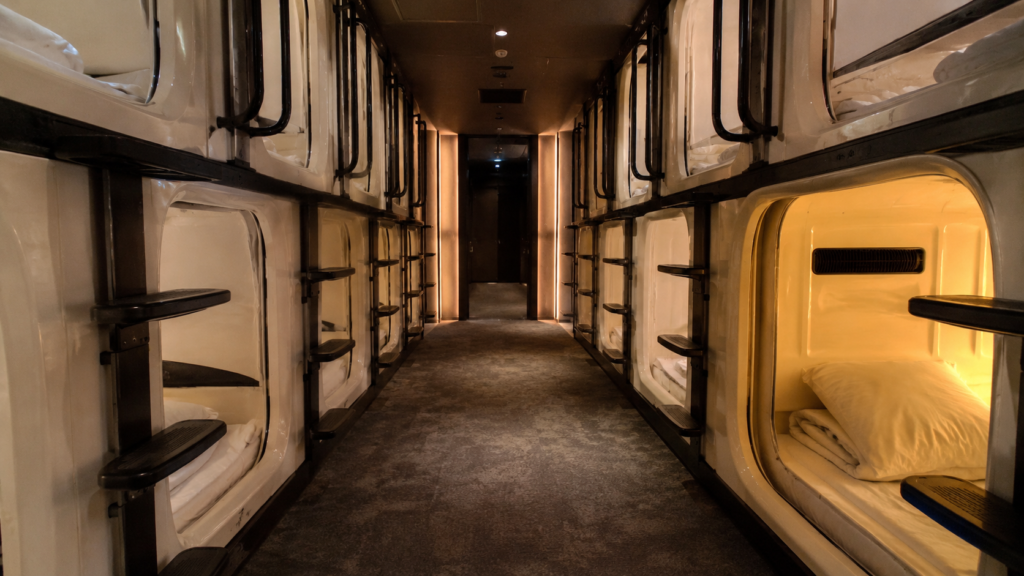
A capsule hotel gives you a private sleeping pod — roughly 1m wide, 1m high, 2m long — stacked in rows of two, in a shared room. Everything else is communal: bathrooms, showers (often full Japanese-style baths), lockers, and a lounge.
Think of it as the midpoint between a hostel dorm and a hotel room. You don’t get a door that locks. You do get privacy, silence rules that are actually enforced, and a level of cleanliness that puts most budget hotels to shame.
============================================================ –>Free Guide · Instant Download
50 Genuinely Free
Travel Experiences
Named, located, and verified — no catches, no upsells. Get the full guide plus one smart, specific travel idea in your inbox every month.
No spam, ever. Unsubscribe in one click.
They started in Osaka in 1979 as somewhere for businessmen who’d missed the last train. The modern versions — especially the newer chains — are designed for travellers, and some are genuinely stylish.
What it costs
Real prices, checked at time of writing:
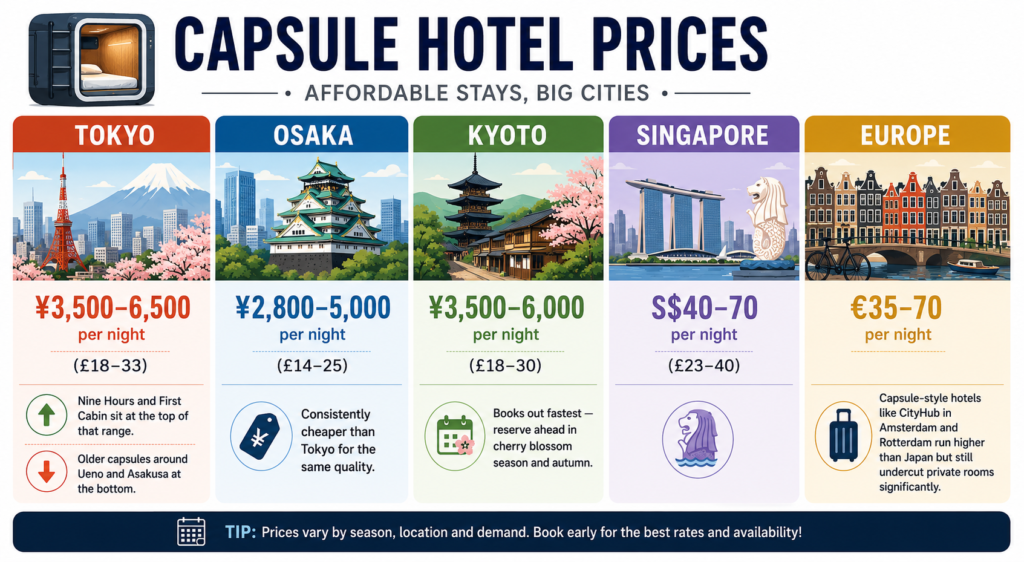
Compare that with a Tokyo business hotel at ¥12,000+ or even a decent hostel dorm at ¥3,000–4,000, and the value case is obvious: for roughly hostel money, you get actual privacy.
The ones I’d actually book
Nine Hours (Tokyo, Kyoto, Osaka, and more). The design-led option — white futuristic pods, excellent showers, ruthlessly efficient. The name is the concept: 1 hour to shower, 7 to sleep, 1 to get ready. Some branches now do “sleep analysis” reports of your night. Best for a first-timer who wants the iconic capsule experience without the smoky 1980s vibes. From around ¥4,500.
First Cabin (multiple Japanese cities). Technically “cabin-style” — the pods are bigger, styled like aircraft first class, and you can stand up in the Business Class cabins. The best choice if the idea of a 1m-high pod makes you claustrophobic. From around ¥5,000.
Anshin Oyado (Tokyo, Kyoto). The comfort pick. Proper artificial-hot-spring baths, free ramen at some branches, massage chairs, huge lounge areas. It feels like a spa that happens to have beds. Slightly more expensive, worth it after a long-haul flight.
The Millennials (Shibuya, Kyoto). “Smart pods” with beds that recline at the touch of an iPod controller, free beer hour in the evening, co-working space. More social than the others — closest to a hostel atmosphere.
Booking tip: Agoda consistently has the best capsule hotel coverage and prices in Japan — better than Booking.com for this specific accommodation type. Book 2–3 days ahead for Tokyo and Osaka; a week or more for Kyoto in peak season.
What first-timers get wrong
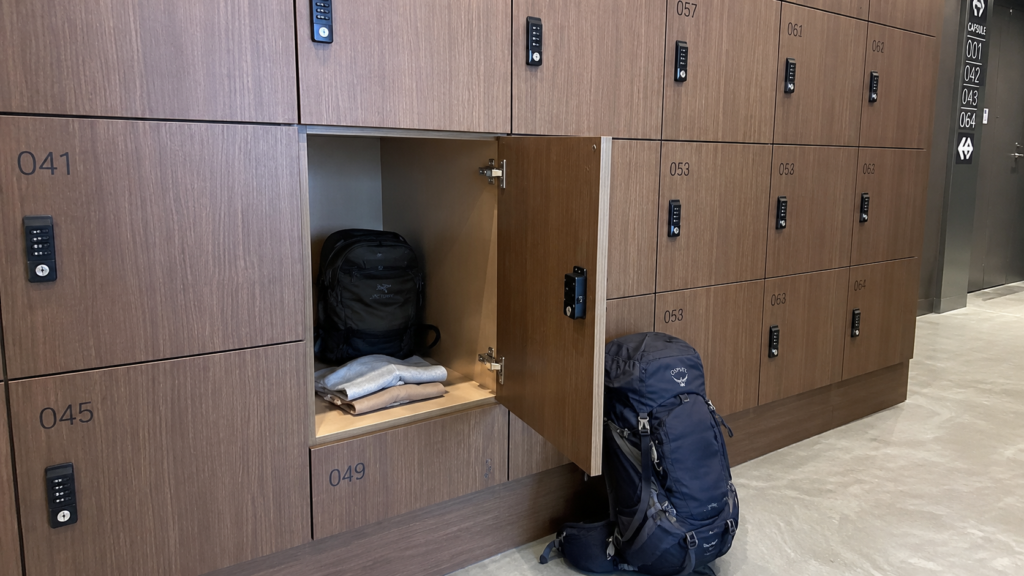
1. Your luggage doesn’t come to the capsule with you. You get a locker — usually big enough for a carry-on, often not big enough for a 65L backpack. Larger bags go behind reception or in a luggage room. Pack a small bag with your night things before you check in, because rummaging through your main pack in a silent capsule room at 11pm makes you that person.
2. Men and women usually sleep on separate floors. This is standard in Japan. Couples can’t share a capsule (they’re single-occupancy by design and often by fire regulation). If you’re travelling as a couple, you’ll say goodnight at the lift. Some newer places like Nine Hours have mixed lounges, but sleeping floors stay separated. A few — check before booking — are men-only, a leftover from the salaryman era.
3. There’s a curfew culture, not a curfew. Most capsule hotels are open 24 hours, but the sleeping floors go silent from around 10pm. No phone calls, no conversations, headphones only. It’s enforced socially and by staff, and it’s the reason capsules are quieter than any hostel.
4. Check-out often means full check-out. Many capsule hotels make you check out entirely each morning (traditionally around 10am) even if you’re staying multiple nights — you take your valuables, they clean everything, you check back in later. The newer chains have relaxed this, but confirm before booking a multi-night stay.
5. Tattoos can be an issue in the baths. Some capsule hotels with Japanese-style communal baths still restrict visible tattoos. Nine Hours and The Millennials are relaxed about it; older establishments may not be. If you’re inked, check the hotel’s policy or use the shower cubicles instead.
What to pack for a capsule stay
Less than you think. Most Japanese capsule hotels provide pyjamas or a lounge set, towels, toothbrush, razor, and decent toiletries in the baths — it’s part of the culture.
Bring:
- Ear plugs. The pods block light well and sound reasonably. Someone will still snore.
- An eye mask if you’re sensitive — some pods have a blind, some just a curtain.
- A small packable bag for the locker-to-capsule shuttle of essentials.
- Flip flops or slides — you’ll leave your shoes in a shoe locker at the entrance (this is universal in Japan).
That’s genuinely it. Capsule hotels are the one accommodation type where you can rock up with nothing and be fine.
Who capsule hotels are for — and who they’re not
Book one if: you’re travelling solo, you want privacy at hostel prices, you’re arriving late or leaving early, or you just want to try one of the most distinctive budget sleeps in the world. One or two nights in a capsule between longer stays is the perfect way to do it.
Skip them if: you’re claustrophobic (First Cabin excepted — try that first), you’re travelling as a couple who wants to share a bed, you have a lot of luggage and hate repacking, or you need to spread out and work in your room. There is no “in your room” here. There is a pod.
My honest take after multiple stays: capsules beat hostel dorms on every measure except socialising. If you want to meet people, book a hostel. If you want to sleep well for £20 in the middle of Tokyo, book a capsule.
Beyond Japan
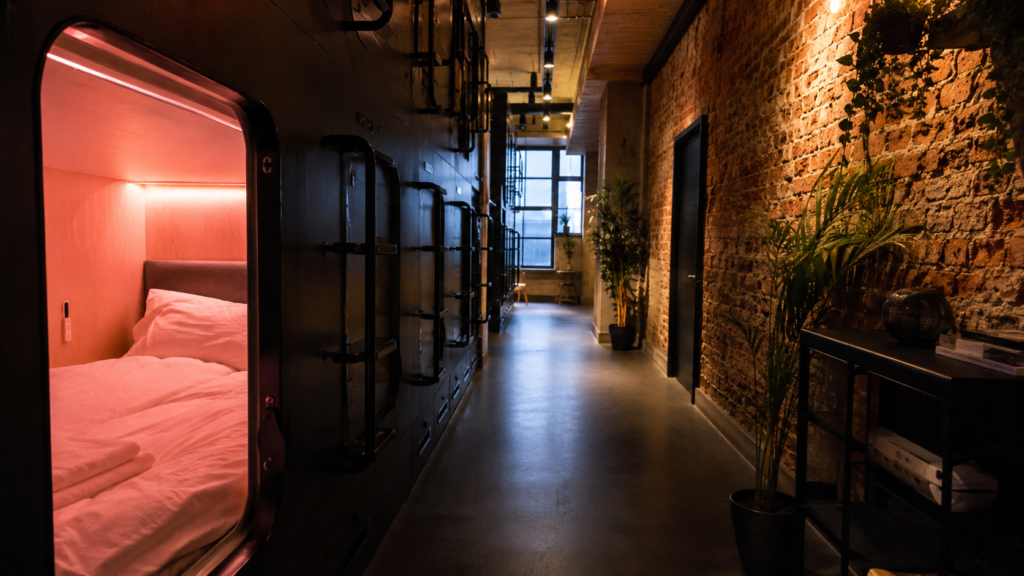
Japan owns this category, but it’s spreading:
- Singapore: CUBE Boutique Capsule and The Pod, both in central locations, both well run. Good value in one of Asia’s most expensive cities.
- Hong Kong: SLEEEP and Mini Hotel offer pod-style stays in a city where a normal budget room is the size of a capsule anyway.
- Amsterdam/Rotterdam: CityHub — app-controlled pods with mood lighting. Pricier, but the cheapest genuinely private sleep in central Amsterdam.
- Iceland, London, and airports everywhere: Galaxy Pod Hostel in Reykjavík, and YOTELAIR pods at Heathrow, Gatwick, and Amsterdam Schiphol for layovers.
Quick answers
Are capsule hotels safe? Yes — among the safest budget options. Key-card floor access, gender-separated floors, lockers, and staff on-site 24 hours. Solo female travellers consistently rate them above hostels for security.
Can you stand up inside a capsule? No, except in First Cabin’s larger cabins. You sit, crawl in, and lie down.
Is there Wi-Fi and power? Always. Every capsule has at least one socket and a reading light; most have USB ports.
Can I stay multiple nights? Yes, but check the daytime check-out policy first (see above).
How do I book? Agoda for Japan and Asia, Booking.com for Europe. Book direct with Nine Hours for occasional member rates.
Planning the rest of your trip? See how to get around cheaply once you land in the City Bike Share Programs Worldwide guide, compare your other options in Hostels vs Budget Hotels: An Honest Cost-Benefit Analysis, and if you’re eating on a budget, Cooking in Hostels covers the kitchen side.