A safari on a budget is completely doable. You won’t sleep in a £900-a-night tented suite, but you’ll see the same lions, the same elephants and the same wildebeest as the people who do. The animals don’t check your booking confirmation.
The trick is knowing where your money actually goes. On most safaris, the biggest fixed cost isn’t the lodge. It’s the park fee, and that’s the one thing nobody can discount. Everything else — where you sleep, how you get around, who drives — is flexible.
This guide covers the real 2026 park fees, what budget operators actually charge, and the four countries where your money goes furthest: South Africa, Tanzania, Kenya and Uganda.
How Much Does a Safari on a Budget Actually Cost?
Park fees are the non-negotiable part of every safari budget. They’re set by governments, charged per person, per day, and every operator — budget or luxury — pays exactly the same. Here’s what non-resident adults pay right now.
============================================================ –>Free Guide · Instant Download
50 Genuinely Free
Travel Experiences
Named, located, and verified — no catches, no upsells. Get the full guide plus one smart, specific travel idea in your inbox every month.
No spam, ever. Unsubscribe in one click.
| Park | Fee (non-resident adult) | Roughly in £ | Watch out for |
|---|---|---|---|
| Kruger National Park, South Africa | R692 per day (from 1 Nov 2026) | £30 | Cheapest of the big-name parks by a mile |
| Serengeti, Tanzania | $83 per day | £63 | Plus $71 a night if you sleep inside the park |
| Ngorongoro Crater, Tanzania | Entry per person + $295 per vehicle to drive into the crater | £224 per vehicle | Split that vehicle fee six ways and it shrinks fast |
| Masai Mara, Kenya | $100 per day Jan–Jun, $200 per day Jul–Dec | £76 / £152 | The fee doubles exactly when the migration arrives |
| Gorilla permit, Uganda | $800, or $600 in April, May and November | £608 / £456 | One hour with the gorillas — but half Rwanda’s $1,500 |
Pounds are approximate at today’s exchange rates. Fees change most years, so check the official rate before you pay.
On top of park fees, you’re paying for three things: somewhere to sleep, a vehicle, and food. That’s where budget travellers win. A campsite inside Kruger costs from about R410 a night for the whole pitch in early November — shared between two, that’s under £10 each. A luxury lodge a few kilometres away charges hundreds per person.
Realistic daily budgets per person, everything included:
- Self-drive Kruger, camping, two people sharing a hire car: from about £60–£80 a day
- Group camping safari, Kenya or Tanzania: about £100–£250 a day, depending on season and how many parks
- Mid-range lodge safari: £350+ a day
- Luxury lodge or fly-in camp: £800 to well over £1,500 a day
The Best Countries for a Safari on a Budget
South Africa: the cheapest Big Five safari in Africa
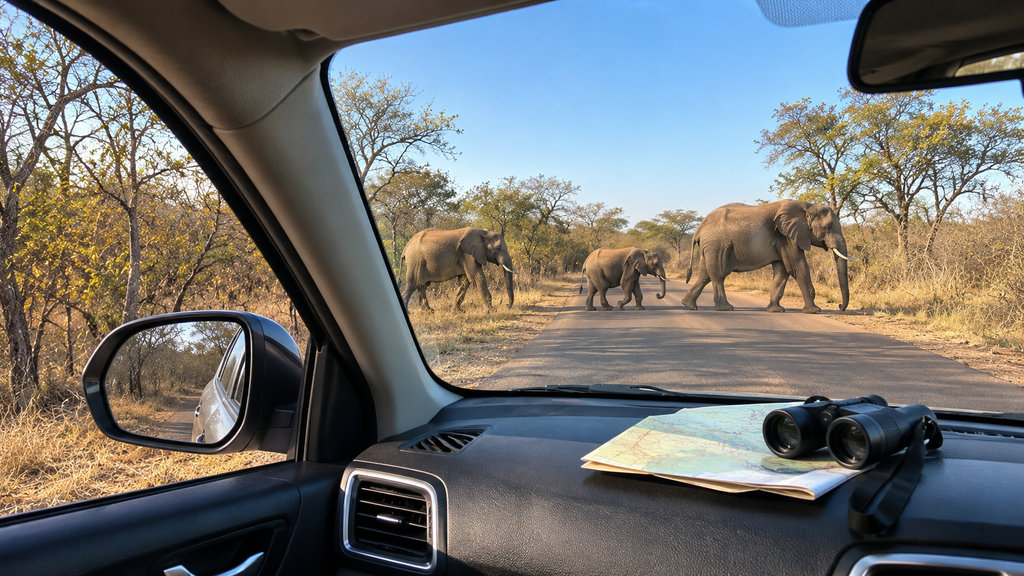
Kruger is the answer if money is the main constraint. It’s the only big-name park where you can hire a normal car, drive yourself on tarred roads, and sleep in a government rest camp inside the park. No guide, no operator margin, no lodge.
The international conservation fee rose to R692 a day on 1 November 2026 — still around £30. Rest camps like Skukuza, Satara and Lower Sabie have campsites, safari tents and simple huts, plus shops, fuel and braai areas. Satara has a reputation as the best camp for big cats.
If you’re visiting several South African parks, price up the International All Parks Wild Card. It was R4,680 for an individual for 2025/26; check the new 2026/27 rate before you buy.
Read next: South Africa on a Budget: Self-Drive Safaris in Kruger National Park
Kenya: a safari on a shoestring (if you time it right)
The Masai Mara is the most famous safari destination on earth, and it’s priced accordingly. Non-resident adults pay $100 a day from January to June and $200 a day from July to December. The migration river crossings run roughly July to October — right when the fee doubles.
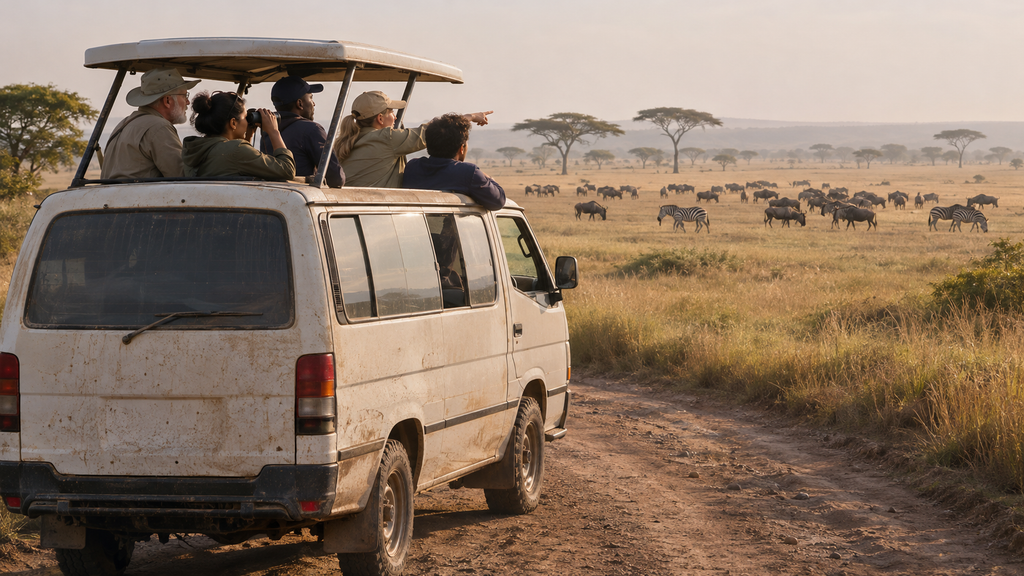
The budget move is a group-joining safari from Nairobi. You share a pop-up-roof van with up to six other travellers and sleep in a budget tented camp outside the reserve. On SafariBookings, 3-day group-joining trips are currently listed from around $353–$454 per person (Alphadean Tours) to $528–$649 (Africompass).
Always ask one question before you book: are park fees included? Some cheap listings quote the safari price and collect the park fee separately in Nairobi.
Read next: A Safari Adventure on a Shoestring: Kenya Edition
Tanzania: Serengeti and Ngorongoro on a camping safari
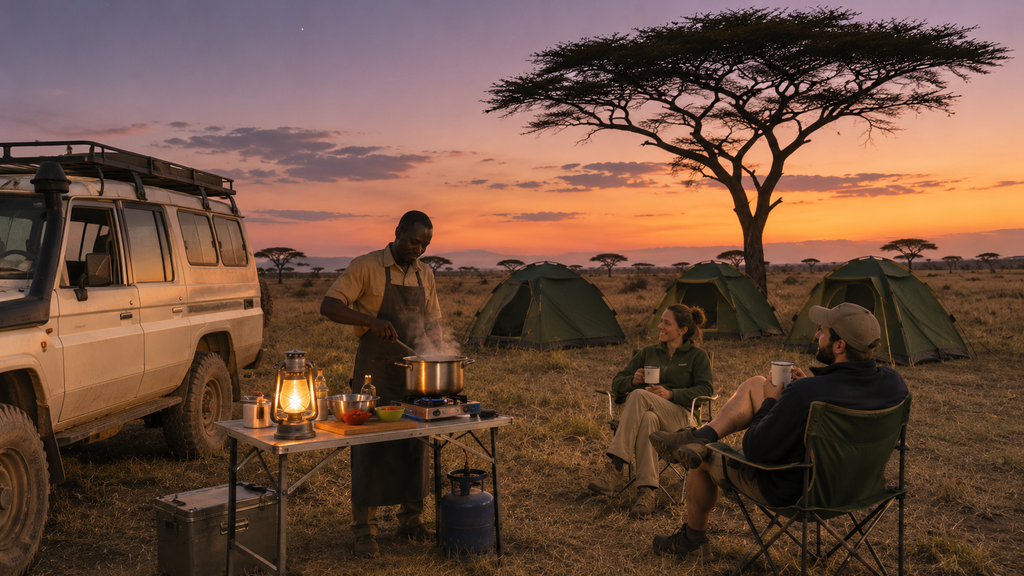
Tanzania’s northern circuit — Tarangire, Serengeti and Ngorongoro Crater — is the classic East African safari. Serengeti entry is $83 a day, and the crater adds a $295 vehicle fee per descent.
Budget camping safaris from Arusha use public campsites inside the Serengeti and on the crater rim, with a cook travelling with the group. Four-day budget camping trips on SafariBookings currently start around $699 per person (Serengoro Experience, join-in) and $880 (Sunscape Safaris).
Tarangire is cheaper than the Serengeti and is packed with elephants in the dry season. It’s the best value day on the circuit.
Read next: Budget Safari in Tanzania: Serengeti and Ngorongoro Without the Luxury Lodge
Uganda: gorillas for half the Rwanda price
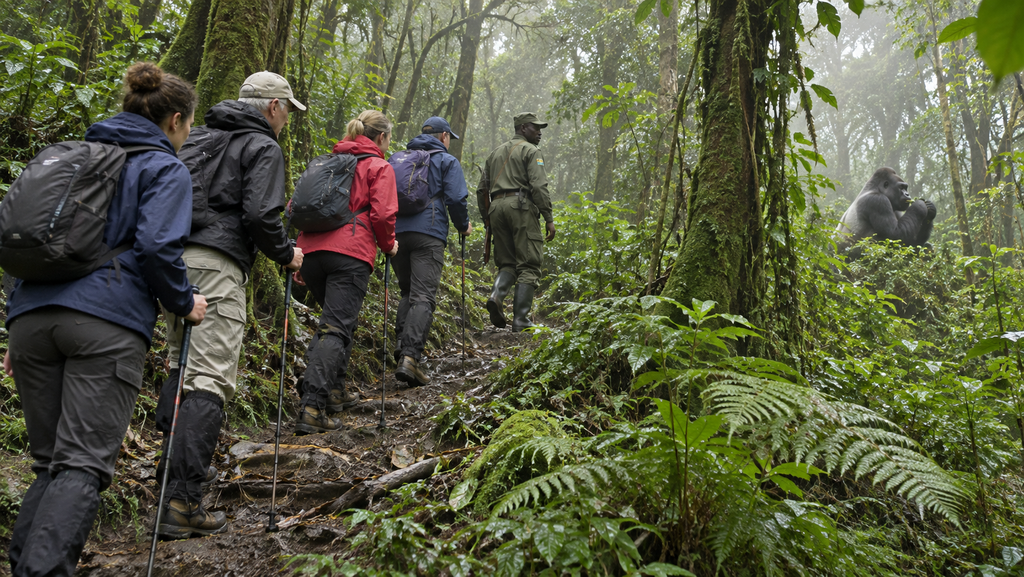
Uganda’s gorilla permit costs $800, dropping to $600 in April, May and November. Rwanda charges $1,500 for the same hour. Foreign visitors must book Ugandan permits through a licensed tour operator.
Pair the gorillas with Queen Elizabeth National Park for tree-climbing lions and boat safaris on the Kazinga Channel. Entry there is around $40 a day — a fraction of the Mara.
Read next: [Budget Safari in Uganda: Gorilla Trekking Without Breaking the Bank]
Self-Drive vs Group Camping Safari: Which Is Cheaper?
Self-drive is cheapest where it’s allowed. Group camping is cheapest everywhere else. The right choice depends on the country, not your preference.
| Self-drive | Group camping safari | |
|---|---|---|
| Best for | Kruger, Namibia’s Etosha | Kenya, Tanzania |
| You pay for | Car hire, fuel, park fee, campsite, food | One package price (check park fees are included) |
| Biggest saving | No guide or operator margin | Vehicle and crater fees split six or seven ways |
| Biggest downside | You spot the animals yourself | Fixed itinerary, shared van, early starts |
| Works solo? | Expensive — one person pays for the whole car | Yes — joining a group is the point |
In Kenya and Tanzania, self-drive is technically possible but rarely cheaper. Roads are rougher, you’ll need a proper 4×4, and the Ngorongoro $295 vehicle fee lands on you alone. Join a group.
Read next: Self-Drive vs. Budget Group Safari: Which Is Actually Cheaper?
7 Ways to Cut the Cost of Your Safari
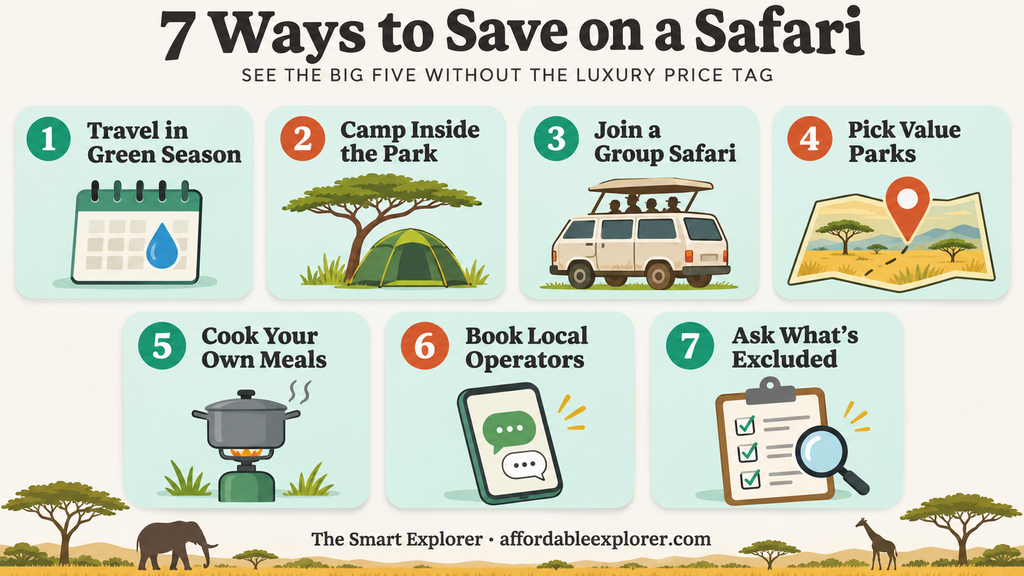
- Go in the shoulder or green season. The Mara fee is half price January to June. Uganda’s gorilla permit drops $200 in April, May and November. Lodges and camps discount too.
- Camp inside the park. You save the drive in and out, get on the roads at gate opening, and pay a fraction of a lodge. In Kruger, a campsite pitch costs less than one lodge dinner.
- Join a group. Vehicle fees, fuel and the guide are split between everyone in the van. This is the single biggest saving for solo travellers.
- Pick value parks. Tarangire over a third Serengeti day. Amboseli or Lake Nakuru alongside the Mara. Queen Elizabeth in Uganda instead of a second gorilla trek.
- Cook your own meals. Kruger rest camps have braai areas and shops. Self-catering is often the difference between a £60 day and a £90 one.
- Book direct with local operators. Compare listings on SafariBookings, then email two or three Arusha or Nairobi operators directly for the same itinerary.
- Ask what’s excluded. Park fees, crater fees, drinking water, tips and the Nairobi hotel the night before are the usual hidden extras. Get them in writing.
What to Pack (and What Not to Buy)
You don’t need new kit for a budget safari. You need neutral clothes, a warm layer for 5am game drives, a headtorch for camp, and binoculars — the one thing worth spending on. Leave bright white and camouflage at home.
Sort travel insurance before you book anything. Most policies need an adventure or safari add-on, and medical evacuation cover matters when the nearest hospital is hours away.
Read next: Budget Safari Packing List: What You Actually Need · Best Travel Insurance for Budget Travellers
Budget Safari FAQs
What is the cheapest country for a safari? South Africa. Self-driving Kruger and camping in the rest camps is the cheapest way to see the Big Five, from about £60 a day per person.
How much does a budget safari cost in Kenya? Three-day group-joining Masai Mara safaris are listed from around $350–$650 per person. Check whether the $100–$200 daily park fee is included.
When is the cheapest time to go on safari? The green season — roughly March to May in East Africa. Prices drop and parks are quieter. The trade-off is rain and longer grass.
Can I do a budget safari solo? Yes. Group-joining safaris in Kenya and Tanzania are built for it. Self-drive is less suited to solo travellers because you pay for the whole car.
Are budget safaris safe? Yes, with a reputable operator. Read recent reviews, check the operator is licensed, and confirm the vehicle has a pop-up roof and the guide is qualified.
The Bottom Line
A safari on a budget isn’t a lesser safari. It’s the same animals, the same sunrises and the same dust on your boots — with a tent instead of a suite. Pick the right country, travel in the right season, and share the vehicle.
Start with the numbers. My Budget Safari Planning Kit has an operator comparison template and a day-by-day itinerary builder so you can price your trip properly before you commit.
Not ready to plan yet? Grab the free Budget Traveller’s Packing List and get new Adventures guides in The Smart Explorer newsletter.
More in Adventures:
- A Safari Adventure on a Shoestring: Kenya Edition
- Budget Safari in Tanzania: Serengeti and Ngorongoro Without the Luxury Lodge
- South Africa on a Budget: Self-Drive Safaris in Kruger National Park
- Budget Safari in Uganda: Gorilla Trekking Without Breaking the Bank
- Best Budget Safari Operators: Honest Reviews and Price Comparisons
- Self-Drive vs. Budget Group Safari: Which Is Actually Cheaper?