What if the most memorable travel moments of your life cost you nothing? Not almost nothing — genuinely, completely free?
Free meditation retreats in the mountains of northern Thailand. Sunrise hikes in national parks where entry is free for most of the year. Wild camping under a sky full of stars in Scotland or Patagonia. Cooking lessons from locals who want to share their food culture. Walking tours led by passionate residents who simply love their city.
This guide is about all of those experiences — and hundreds more like them. Budget travel gets a reputation for being about sacrifice: the dingy hostel, the overnight bus, the airport meal deal. But the truth is that some of the richest travel experiences on earth are completely free, and most travellers never find them because they’re too busy looking for the cheapest option on a booking platform.
The Affordable Explorer is built around a different idea: that travelling on a budget isn’t about spending less on the same things everyone else does — it’s about seeking out experiences that are intrinsically free, deeply rewarding, and far off the tourist trail.
============================================================ –>Free Guide · Instant Download
50 Genuinely Free
Travel Experiences
Named, located, and verified — no catches, no upsells. Get the full guide plus one smart, specific travel idea in your inbox every month.
No spam, ever. Unsubscribe in one click.
This pillar guide covers the full spectrum of free travel experiences, from spiritual retreats to wildlife encounters, from volunteer programmes to free museum days. Each section links to a dedicated guide with everything you need to actually plan and book these experiences. This is where your budget adventure starts.
| Who This Guide Is For: Budget travellers who want depth and meaning in their trips, not just the lowest price. Whether you have two weeks or two months, whether you’re a solo traveller or going with friends — these experiences are open to you. No special skills or connections required. |
What We Mean by ‘Free Travel Experiences’
A quick note on what qualifies as ‘free’ in this guide — because free exists on a spectrum.
Genuinely free experiences are activities or programmes that cost nothing at all: wild camping on public land, free museum entry days, free walking tours (though tipping is customary), public ceremonies and festivals, and some volunteer-for-accommodation programmes.
Low-cost free-adjacent experiences are things that are free in principle but may involve a small mandatory cost — a park entry fee of a few dollars, a suggested donation, or a transport cost to reach them. These are included where they represent exceptional value and the core experience itself carries no direct charge.
Work-for-stay experiences — like Workaway and Worldpackers — aren’t free in the traditional sense, but they exchange your time and skills for food and accommodation, reducing your daily travel cost to near zero. These are among the most transformative budget travel options available and deserve a place in any serious guide.
1. Free Meditation Retreats: The World’s Best Spiritual Freebie
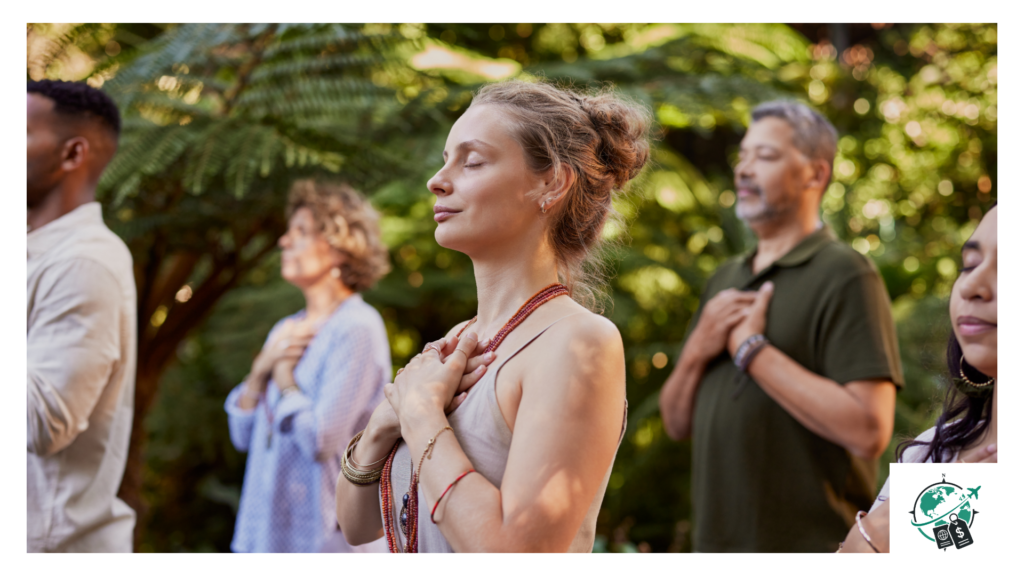
Of all the free travel experiences covered in this guide, meditation retreats are the one that most consistently surprises people. The idea that you can spend a week — sometimes longer — at a fully equipped retreat centre with accommodation, food, and guided instruction, all for free, sounds too good to be true. But it is absolutely real, and thousands of budget travellers take advantage of these programmes every year.
Why Are They Free?
The short answer is dana — a Pali word meaning generosity or gift. Many Buddhist meditation traditions, particularly in the Theravada tradition (which is dominant in Thailand, Myanmar, and Sri Lanka), operate on a dana economy. The retreat centre is funded by donations from previous students who found value in the teaching and choose to pay it forward. Your stay is subsidised by people who were in your position months or years earlier.
This model has sustained major retreat centres for decades. Dhamma Giri in India has been operating on dana since 1976. Suan Mokkh in Thailand has been running free ten-day retreats since the 1980s. These are serious, well-established organisations — not pop-up wellness experiences.
What to Expect
Free meditation retreats are not luxury wellness holidays. Most are intensive programmes with early starts (4:30am is standard), long meditation sessions, periods of noble silence, simple vegetarian food, and shared dormitory accommodation. They ask for your full commitment and your honest observation of the retreat guidelines.
That sounds daunting, but the experience consistently described by participants is one of the most clarifying and restorative things they have ever done. For budget travellers, the combination of zero cost and high reward is hard to beat.
| Where to Start:Thailand is the easiest country for first-time retreat participants. The concentration of retreat centres, the ease of the visa situation, and the established backpacker trail make it a natural starting point. See our dedicated guide: Free Meditation Retreats in Thailand: The Complete Guide. |
2. Free Walking Tours: The Smartest Way to Arrive in a New City
Free walking tours have transformed city tourism over the past decade. In almost every major city in Europe, Latin America, Southeast Asia, and beyond, you can join a guided walking tour led by a local — and pay absolutely nothing upfront.
How Do Free Walking Tours Work?
The model is simple: guides work for tips only. There is no fixed price, no booking fee, no obligation. At the end of the tour, you give whatever you feel the experience was worth. For a genuinely good tour, most participants tip somewhere between £5 and £15 — still far less than a paid tour — and guides who are excellent can earn more than those running paid experiences.
The result is a motivated, enthusiastic guide who has chosen this work because they love it and because their income depends on being genuinely useful and entertaining. Many free walking tour guides are students, historians, or long-term travellers who know their city inside out. The quality is often higher than paid alternatives.
Finding Free Walking Tours
- Freetour.com — the largest aggregator of free walking tours globally
- GuruWalk — particularly strong in South America and Europe
- Sandemans New Europe — the original free tour company, now in 20+ cities
- Local Facebook groups and hostel noticeboards for smaller cities
| Booking Tip:Always book in advance even for free tours — spots are genuinely limited and popular tours in cities like Prague, Barcelona, and Lisbon fill up days ahead. Most platforms let you book online at no cost. |
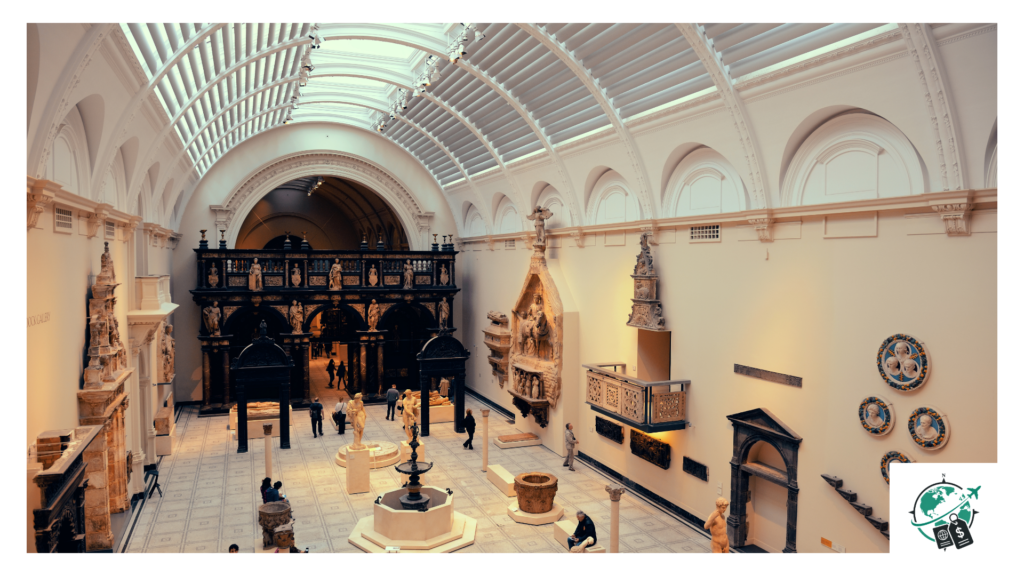
3. Free Museum Days: Planning Your Trip Around Free Entry
Most of the world’s great museums offer free entry on at least some days — and yet most tourists pay full price simply because they don’t know to look. This is one of the most straightforward ways to save significant money on any city trip.
The Big Ones That Are Always Free
Some museums have committed to permanent free entry as a matter of cultural policy. The UK is particularly generous here: the British Museum, the Natural History Museum, the V&A, the Science Museum, Tate Modern, the National Gallery, and dozens of other world-class institutions are all permanently free. This is not a promotion or a limited offer — it is simply their model.
Similarly, the Smithsonian Institution in Washington DC — which encompasses 19 museums including the National Air and Space Museum and the National Museum of Natural History — is free every day, for everyone.
Museums with Free Days or Slots
Beyond permanently free institutions, hundreds of major museums offer free entry on specific days or at specific times:
- The Louvre, Paris — free for under-26s from EU countries; first Saturday evening of each month free for all
- MoMA, New York — free on Friday evenings (5–9pm)
- The Met, New York — pay-what-you-wish for New York State residents; suggested admission for others
- Uffizi Gallery, Florence — first Sunday of each month free for all
- Prado Museum, Madrid — free every day from 6–8pm
| Research Tip: Before visiting any museum, check the official website for free-entry policies. These change more often than travel guides are updated. Search ‘[Museum name] free entry’ or ‘[Museum name] free day’ directly. |
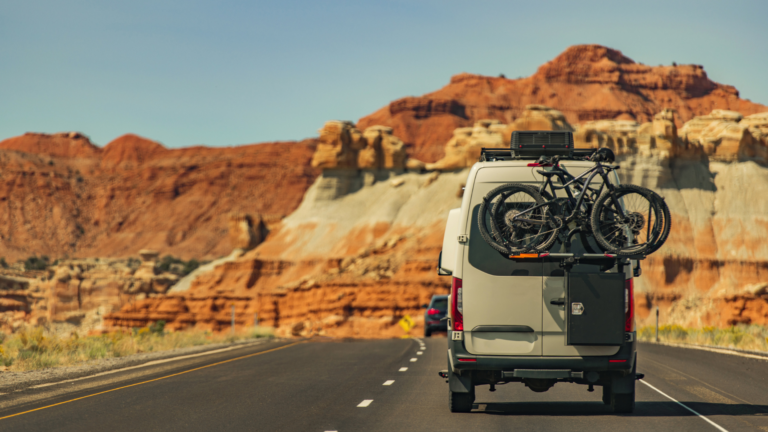
4. Free Camping: Sleeping Under the Stars for Nothing
Wild camping — setting up a tent on unmanaged land away from designated campsites — is legal in a surprising number of countries, and in some it is actively encouraged as part of the national ‘right to roam’ tradition. It is also one of the most profound experiences budget travel has to offer.
Where Wild Camping Is Legal
- Scotland — the Land Reform (Scotland) Act 2003 grants a statutory right to camp on most land, making Scotland one of the best wild camping destinations in Europe
- Sweden, Norway, Finland — the Allemansrätten (everyman’s right) allows camping on uncultivated land for up to one or two nights
- Iceland — wild camping is legal in many areas outside designated campsites
- New Zealand — dispersed camping on DOC (Department of Conservation) land, often free
- Most US National Forests — dispersed camping is typically free within forest boundaries
Where It Is Restricted or Illegal
Wild camping is illegal in most of England and Wales (with some exceptions in Dartmoor), most of France, Germany, and much of southern Europe. Always research the specific rules of your destination country and region before pitching a tent. In countries where it is restricted, some areas have low-cost or donation-based camping that preserves a similar spirit.
| Essential Rule:Leave No Trace. Free camping is only sustainable if participants leave no trace of their presence. Pack out all waste, use biodegradable soap well away from water sources, and leave the site in better condition than you found it. |
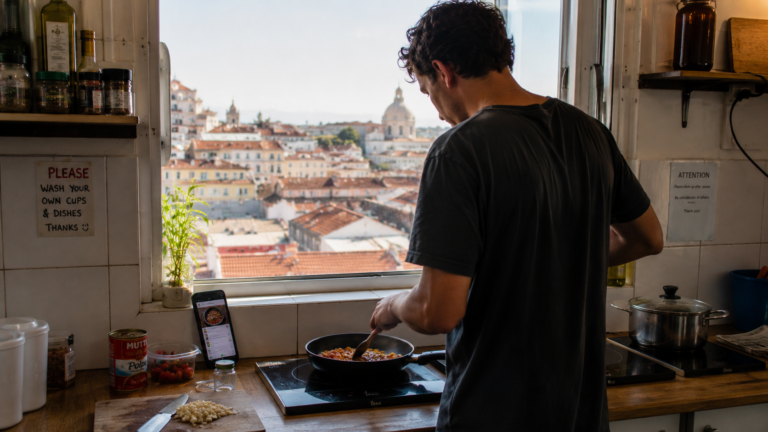
5. Free Cooking Classes Abroad: Learn Local Food for Nothing
Food is one of the most immediate and accessible entry points into any culture, and learning to cook a country’s dishes is a far richer experience than simply eating at restaurants. And it turns out that free cooking classes — or very close to free — are available in more places than you might expect.

How to Find Free Cooking Classes
The most reliable source of genuinely free cooking instruction is through volunteer accommodation programmes (more on those below). Many Workaway and Worldpackers placements in guesthouses, farms, or community projects include cooking alongside your hosts as part of the daily rhythm — which is effectively a free cooking class embedded in your accommodation.
Some hostels offer free cooking nights as a community-building activity, particularly in Southeast Asia. These are worth asking about at check-in. The hostel kitchen is also your friend: staying in self-catering accommodation and shopping at local markets is both cheaper than eating out and an education in local ingredients.
Community-based tourism projects in countries like Peru, Guatemala, Vietnam, and Morocco sometimes offer free or very low-cost cooking sessions as part of cultural exchange programmes. These are worth researching via local tour operators or community tourism websites before you arrive.
6. Workaway and Worldpackers: Work for Your Accommodation
Work-exchange programmes are among the most transformative options in budget travel. The basic model is straightforward: you offer a few hours of help each day — gardening, cooking, teaching English, construction, social media management, or dozens of other tasks — in exchange for free bed and meals.
The Numbers
A typical Workaway or Worldpackers placement provides free accommodation and food in exchange for around four to five hours of work per day, five days a week. Your remaining time is your own. The membership fee for either platform is around $40–50 per year — paid once, covering unlimited placements. For a long-term traveller, this can reduce daily living costs to transport, activities, and incidentals only.
What Kind of Placements Exist?
- Guesthouses and hostels — help with reception, cleaning, or social media in exchange for a private or dorm room
- Organic farms — physical work in exchange for farm-fresh food and countryside accommodation
- Language exchanges — teach English at schools, community centres, or with private families
- Animal sanctuaries and wildlife projects — care for animals in exchange for accommodation
- Surf schools, yoga retreats, and outdoor centres — specialist environments for adventure travellers
- Community development projects — building, infrastructure, or education projects in rural areas
| Platform Comparison:Workaway (workaway.info) has the largest global listing and is stronger in Europe and Latin America. Worldpackers (worldpackers.com) is more curated and popular with the digital nomad and wellness travel community. Both are worth a membership if you plan to travel for more than a couple of months. |
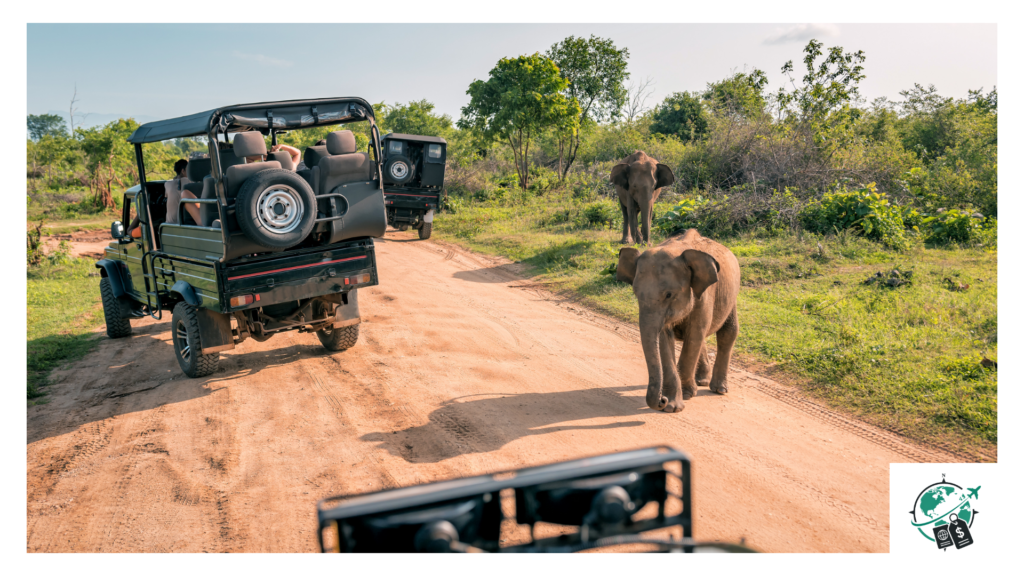
7. Free Safari Experiences: Wildlife Without the Luxury Price Tag
Safari has a reputation as one of the most expensive travel experiences on earth — and at the luxury lodge level, that reputation is entirely justified. But wildlife in Africa is not locked behind a paywall, and with the right knowledge, it is possible to experience genuine, extraordinary wildlife encounters at a fraction of the typical cost.
Free Game Reserves and Conservation Areas
Several game reserves in Southern and East Africa offer free or very low-cost entry, particularly for self-drive visitors. South Africa’s national park network — managed by SANParks — includes Kruger National Park, which charges a daily conservation fee that is modest by international standards (around $20–30 per person per day), but camping within the park can be booked for very little.
Community conservancies in Namibia and Kenya allow independent visitors to enter for free or a small community fee, with the money going directly to local conservation efforts. These are often outstanding wildlife experiences with far fewer visitors than commercial safari areas.
Volunteer Conservation Programmes
For a deeper engagement with African wildlife, volunteer conservation programmes place participants in the field alongside researchers and rangers. Many programmes cover accommodation and food in exchange for your time — making them effectively free safari experiences. See our dedicated guide on volunteer abroad programmes for specific recommendations.
8. Volunteer Abroad Free: Programmes That Cover Your Costs
Volunteering abroad is often conflated with ‘voluntourism’ — the expensive, ethically questionable model where travellers pay thousands to dig holes or play with orphans for a week. That is not what this section is about. Legitimate volunteer programmes that provide genuine value to host communities and cover their volunteers’ costs in return do exist, and finding them requires research but not a large budget.
What Separates Legitimate Free Volunteer Programmes
- Skills matching: the programme needs something you can actually offer — language teaching, medical skills, engineering, agriculture, conservation expertise
- Long-term commitment: the most credible free programmes ask for a minimum of one to three months, because short placements rarely provide enough value to justify the cost of hosting someone
- Community-led: the programme is run by or in close partnership with the community it serves, not a commercial intermediary
- No placement fee: legitimate programmes do not charge you to volunteer. If a programme is asking for $1,000 upfront, that is not a free volunteer experience
Where to Find Them
- Idealist.org — the most comprehensive database of non-profit volunteer opportunities globally
- UN Volunteers (unv.org) — competitive but credible, covers all costs for qualified applicants
- WWOOF (World Wide Opportunities on Organic Farms) — small annual membership, then free placements on organic farms worldwide
- Workaway and Worldpackers (as above) — many non-profit and community placements listed
Planning Your Free Travel Experience: Practical Essentials
Every type of experience covered in this guide requires different preparation, but there are some universal principles that apply to all free travel planning.
Book Further Ahead Than You Think
Free experiences are popular precisely because they are free. The best Vipassana meditation retreat centres have waiting lists measured in months. The most popular free walking tours in high season fill up days in advance. WWOOF placements on farms with good reviews are booked out weeks or months ahead. If you have a firm date in mind, start researching and booking the moment you have it.
Read the Fine Print
Many free experiences have application requirements, time commitments, or terms of participation that need careful reading. A ten-day meditation retreat requires you to commit to the full ten days and observe silence — turning up for three days and leaving is not an option. Workaway placements expect you to show up and work the agreed hours. Volunteer programmes may require specific skills, language ability, or qualifications. None of this should deter you — it’s just worth being informed before you apply.
Budget for the Hidden Costs
Free experiences are free — but getting to them, and living while you’re there, is not. Factor in transport to remote retreat centres, the visa cost for your destination country, any equipment you need for wild camping, and the transport costs of reaching off-the-beaten-path volunteer placements. These costs are still far lower than a conventional travel budget, but they are real.
Be a Respectful Participant
Free experiences run on trust and community. The retreat centre that offers you a free week relies on your honest participation and your generosity at the end if you found value in it. The wild camping tradition in Scotland is under regular political pressure — one careless campfire or pile of litter can contribute to restrictions that affect thousands of future visitors. Show up as a guest who wants to leave things better than they found them.
| The Affordable Explorer’s Philosophy: Free travel experiences are not a consolation prize for people who can’t afford the real thing. In most cases, they are more authentic, more meaningful, and more memorable than the paid alternatives. This guide is about helping you find them. |
What to Read Next:
This page is the starting point. Each section above has a dedicated guide that goes deeper into how to find, plan, and book these experiences. Here is the full reading list:
- Free Meditation Retreats in Thailand: The Complete Guide — our most-read article, covering the best centres, how to apply, what to pack, and what to expect
- Free Meditation Retreats in India: Ashrams, Vipassana, and Dharamsala
- Free Meditation Retreats in Europe: Buddhist Centres and Mindfulness Retreats
- Free Walking Tours: The Best Cities for Budget Cultural Exploration
- Free Museum Days Around the World: Planning Your Trip Around Free Entry
- Free Camping Worldwide: Wild Camping Rules by Country
- Free Cooking Classes Abroad: How to Learn Local Cuisine for Nothing
- Workaway and Worldpackers: The Complete Guide to Working for Accommodation
- Free Safari Experiences: Game Reserves Without the Lodge Price Tag
- Volunteer Abroad Free: Programmes That Cover Food and Accommodation