Van life on a budget is not just possible — the budget version is arguably the honest version. Strip away the £70,000 Sprinter conversions on Instagram and what’s left is the actual idea: a vehicle you can sleep in, park mostly for free, and use to travel further for less than almost any other way of moving around.
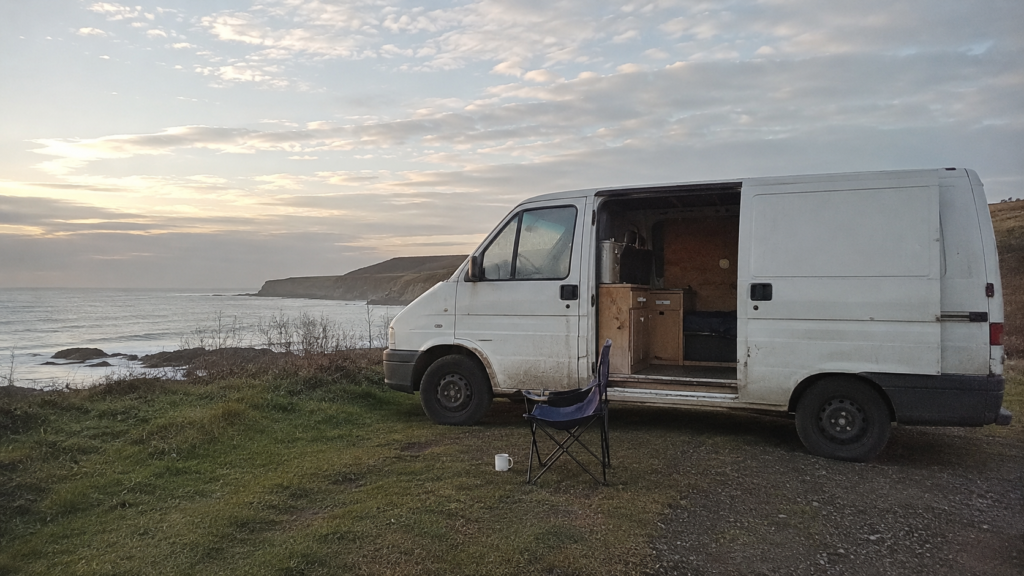
Here’s the short version of what it costs, based on what I’ve seen work: a usable second-hand van from around £3,000–£6,000, a basic DIY conversion for £500–£1,500, and a life on the road that can run at £600–£900 a month if you park free most nights and cook your own food. Everything below is the detail behind those numbers.
Rent One First. Seriously.
Before you spend a penny on a van, spend a weekend in one. Van life has a high fantasy-to-reality gap, and it’s much cheaper to discover you hate it after three nights than after buying a Transit.
- UK/Europe: Quirky Campers and Camptoo list private owner conversions — often cheaper than the big rental firms, and you’ll be renting the kind of real-world budget build you’d actually end up with.
- US/Canada: Outdoorsy is the equivalent — peer-to-peer, huge range, plenty of basic builds.
- Australia/NZ: Camplify, plus the classic backpacker relocations — rental companies sometimes need vans moved between cities and charge as little as $1–5 a day for the privilege.
A rainy Tuesday night in a car park will teach you more about whether van life suits you than a hundred YouTube tours.
============================================================ –>Free Guide · Instant Download
50 Genuinely Free
Travel Experiences
Named, located, and verified — no catches, no upsells. Get the full guide plus one smart, specific travel idea in your inbox every month.
No spam, ever. Unsubscribe in one click.
Choosing the Van: Boring Wins
The best budget van is the most boring one you can find. You want a common model, because common means cheap parts and any mechanic can fix it.
- UK/Europe: A used Ford Transit, Vauxhall Vivaro, or Citroën Relay with sensible mileage and a full service history. Expect £3,000–£6,000 for something with life left in it. Medium wheelbase, high roof if you can stretch to it — being able to stand up matters more than you think after week two.
- US: Older Ford E-Series and Chevy Express vans are the budget workhorses. Ford Transits and Ram ProMasters are the step up. Minivans (Dodge Caravan, Toyota Sienna) are the true bottom rung — no standing room, but people genuinely live in them.
- The one rule: Buy the mechanically sound ugly van, not the pretty one with a suspicious gearbox. Rust and engine history matter; dents don’t.
Get any van inspected before you buy. £50–£100 for a pre-purchase inspection is the single best money you’ll spend in the whole process.
If you’re comparing this against other budget accommodation entirely, start with the honest cost breakdown in Hostels vs Budget Hotels.
Build It Yourself: The £500–£1,500 Conversion
You do not need a professional conversion. The Instagram builds with tiled splashbacks and skylights cost £15,000+ and add almost nothing to the actual experience of sleeping in a van.
A functional budget build is four jobs:
- Insulation — £100–£250. Recycled plastic insulation or sheep’s wool, plus a foil layer. This is the one job not to skip: an uninsulated van is a fridge in winter and an oven in summer.
- A bed platform — £100–£200 in plywood and timber. Build it high enough for storage boxes underneath. A foam mattress topper from any bed shop beats a “campervan mattress” at three times the price.
- Power — £150–£400. Start with a portable power station and a folding solar panel rather than a fixed leisure-battery install. It’s cheaper, it’s portable, and you can upgrade later if you stick with the lifestyle.
- Storage and blackout — £100 or less. Stackable crates, magnetic window covers (make them yourself with reflective foil and blackout fabric), and a curtain behind the cab seats.
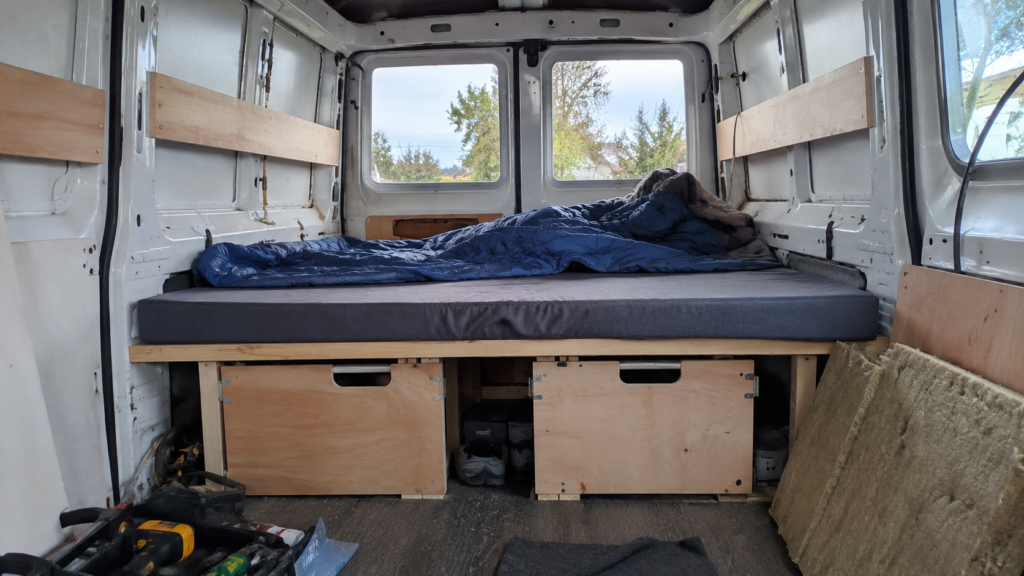
That’s it. No plumbing. A 10-litre water container with a tap and a washing-up bowl is a kitchen sink. Everything else is optional and can be added on the road once you know what you actually miss.
Sleeping for Free: The Apps and the Rules
This is where van life beats every other form of budget travel — the accommodation can genuinely cost nothing. But free parking is a skill, and the rules change completely depending on where you are.
The apps (all free or nearly free):
- Park4Night — the essential one for Europe. User-reviewed spots, including free aires, laybys, and tolerated overnight parking.
- iOverlander — the global one. Strongest in the Americas, good everywhere. Community-maintained and free.
- Searchforsites — best UK-specific coverage, including pub stopovers.
- Freecampsites.net — the US boondocking standard.
The rules, honestly:
- Scotland, Norway, Sweden, Finland — the promised land. Right-to-roam traditions make wild parking legal or broadly tolerated. Be discreet, leave nothing.
- England and Wales — no general right to park overnight, but tolerated spots exist everywhere. Pub car parks are the underrated option: many landlords will let you stay if you eat or drink there. Britstops formalises this for the cost of a guidebook.
- France, Spain, Portugal — the aires network is the best van infrastructure in the world. Free or €5–10 municipal stopovers, often with water and waste disposal.
- US — BLM land and National Forests allow free dispersed camping, usually for up to 14 days. Walmart’s famous car-park tolerance is patchier than the folklore suggests — always check the specific store on iOverlander first.
- Australia/NZ — free camps exist but self-contained certification matters in NZ, and fines are real. Use the CamperMate and WikiCamps apps.
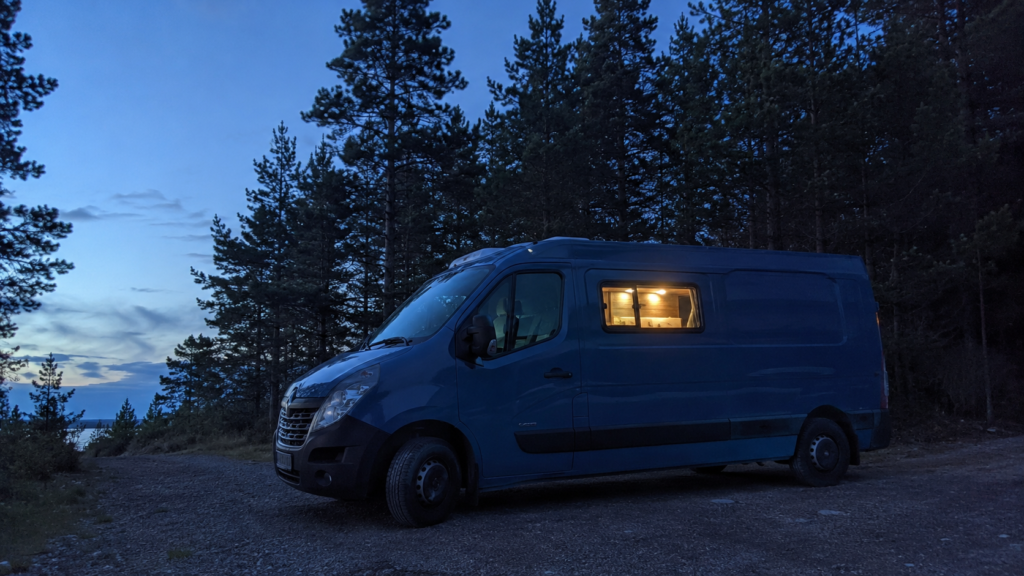
One honest note: plan for one paid campsite night per week or so. A proper shower, laundry, water refill, and a night where nobody can ask you to move on is worth £15–25 for your sanity alone.
If a stretch of your trip doesn’t suit the van, farm stays are the best-value bed I know — see Farm Stays as Budget Accommodation.
Eating and Staying Clean
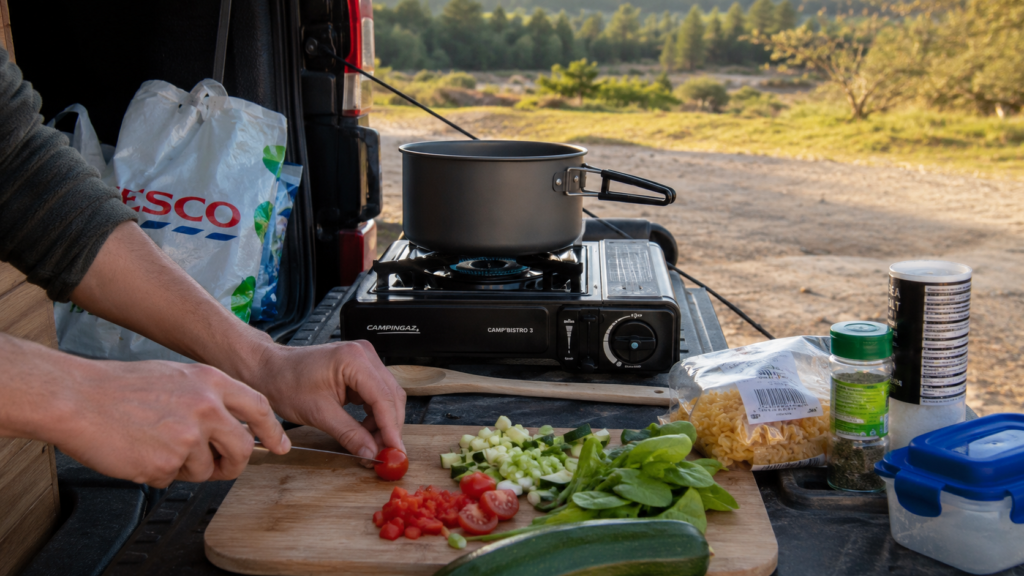
Food: the van is a rolling kitchen, and cooking is where van life quietly saves the most money. A single-burner gas stove, one pot, one pan. Shop at supermarkets like a local, not at services like a tourist. Budget £150–£250 a month for food if you cook — double it if you don’t.
Showers: three real options, in order of usefulness:
- A national gym membership — the single best hygiene hack in van life. PureGym in the UK or Planet Fitness in the US both run low-cost multi-site memberships, which means hot showers in almost every town, plus somewhere to be on a rainy day.
- A solar shower bag — £15, works genuinely well in summer, is a morale event in October.
- Campsites, leisure centres, and beach showers — fill the gaps.
What a Month Actually Costs
Here’s a realistic monthly budget for one person, moving at a relaxed pace and parking free most nights:
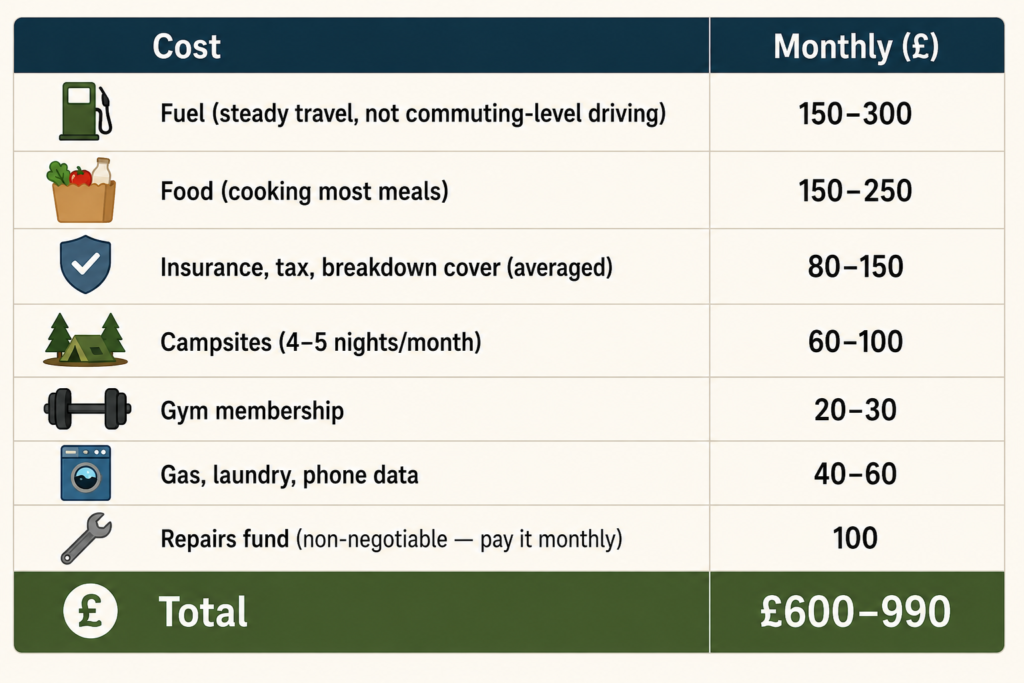
The repairs fund is the line most people skip and most people regret. Old vans break. If you don’t have £500–£1,000 sitting ready when the clutch goes, van life ends abruptly in a Halfords car park.
Gear That Earns Its Place
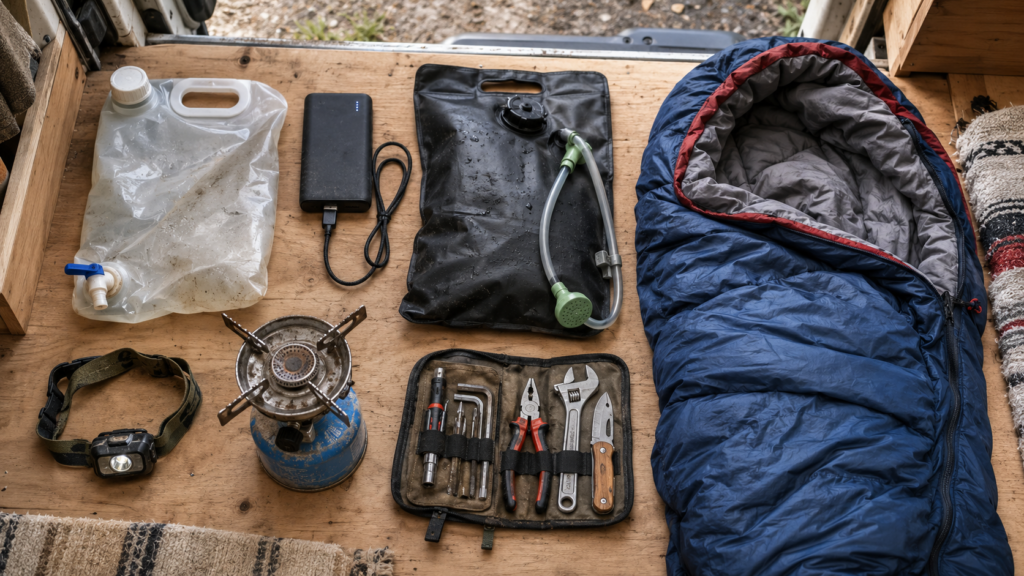
Budget van life gear rule: everything must do its job well, pack small, or do two jobs. My shortlist:
- Portable power station + folding solar panel — the heart of a no-install electrical system.
- Single-burner gas stove — the whole kitchen. (A foldable kettle earns its spot too — I’ve covered [the ones actually worth buying] separately.)
- 10L water container with tap — sink, shower backup, and washing-up station.
- Solar shower bag — summer luxury.
- Head torch — you have two hands; use them.
- Memory foam mattress topper — sleep is the difference between van life and van enduring.
- A basic toolkit and a tyre inflator — see repairs fund, above.
The Boring but Important Bit: Insurance and Legality
- In the UK, insuring a self-converted van as a campervan (rather than a panel van) usually needs the DVLA-recognised conversion features — fixed bed, storage, cooking facilities. Specialist insurers like Adrian Flux and Comfort deal with self-builds routinely; mainstream comparison sites often can’t.
- Tell your insurer the truth about the conversion and where the van sleeps at night. A rejected claim on your home-on-wheels is the worst-case scenario in this whole lifestyle.
- If you’re crossing borders, check your breakdown cover actually includes European recovery — repatriating a dead van from rural Portugal costs more than the van did.
Is Van Life Actually Cheaper? The Honest Answer
Compared to hostels at £20–30 a night, yes — clearly, once the van is paid for. Compared to staying home in a cheap flat-share? Roughly even, and sometimes worse once repairs bite.
So the honest framing is this: van life on a budget isn’t primarily a money hack. It’s a way to travel continuously — new coastline every week, no checkout times, kitchen always with you — at a cost that would get you about ten nights a month in hostels. If that’s the trade you want, it’s one of the best deals in travel. If you just want cheap accommodation in one place, a farm stay, a house sit, or a long-stay hostel will beat it.