Cooking in hostels is the single biggest money-saver in budget travel. Eating out three times a day costs £25–£40 even in cheap countries. Cooking two of those meals in the hostel kitchen brings your food budget down to £6–£10 a day. Over a month-long trip, that’s £450–£900 back in your pocket — enough to pay for the next flight.
But hostel kitchens are their own ecosystem, with their own unwritten rules, their own limitations, and their own strange rewards (the free food shelf is the best invention in budget travel — more on that below). This guide covers exactly what to check before you shop, what to cook when you’ve got one dented pan and a blunt knife, and how not to be the person everyone in the dorm quietly hates.
Check the Kitchen Before You Shop
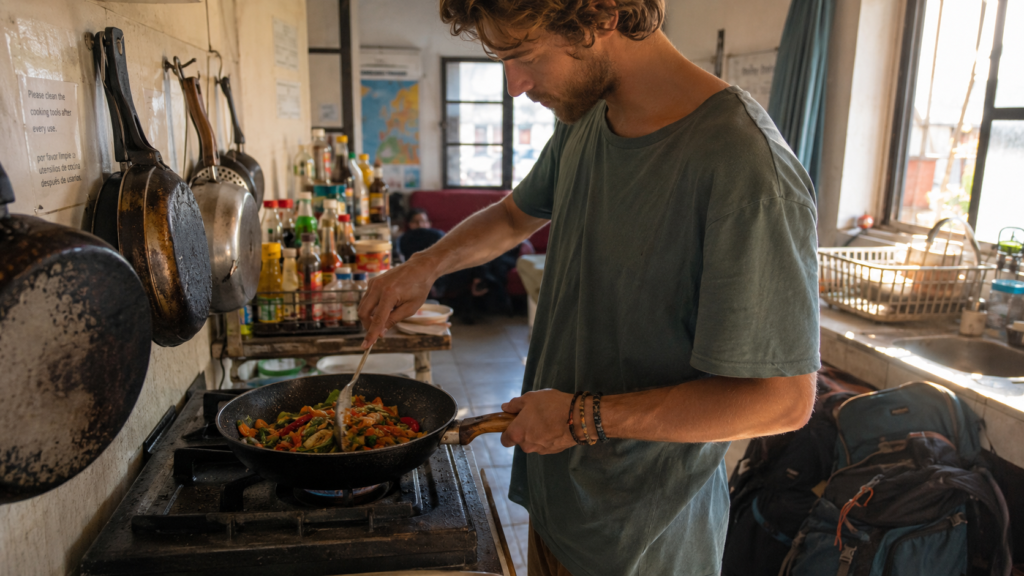
This is the mistake everyone makes once: buying a week’s worth of ingredients, then discovering the “kitchen” is a microwave and a kettle.
Before you go anywhere near a supermarket, do a two-minute kitchen audit:
============================================================ –>Free Guide · Instant Download
50 Genuinely Free
Travel Experiences
Named, located, and verified — no catches, no upsells. Get the full guide plus one smart, specific travel idea in your inbox every month.
No spam, ever. Unsubscribe in one click.
- Hob or no hob? Some hostels — especially in Japan, Singapore, and party hostels everywhere — only offer a microwave and kettle. That changes your entire shopping list.
- How many rings actually work? A six-ring hob with two functioning rings at 7pm is really a two-ring hob with a queue.
- What’s in the communal cupboard? Most hostels accumulate abandoned oil, salt, pasta, and spices. Check before you buy any of it.
- Is there a fridge, and is there space in it? In busy hostels, fridge space runs out by evening.
- Knives. Hostel knives are universally terrible. If there’s a sharp one, someone’s hidden it. Plan meals that don’t need precision chopping.
If the hostel listing on Hostelworld says “kitchen,” read the recent reviews — guests will always mention if the kitchen is a cupboard with a toaster in it.
Shop Like a Local, Not a Tourist
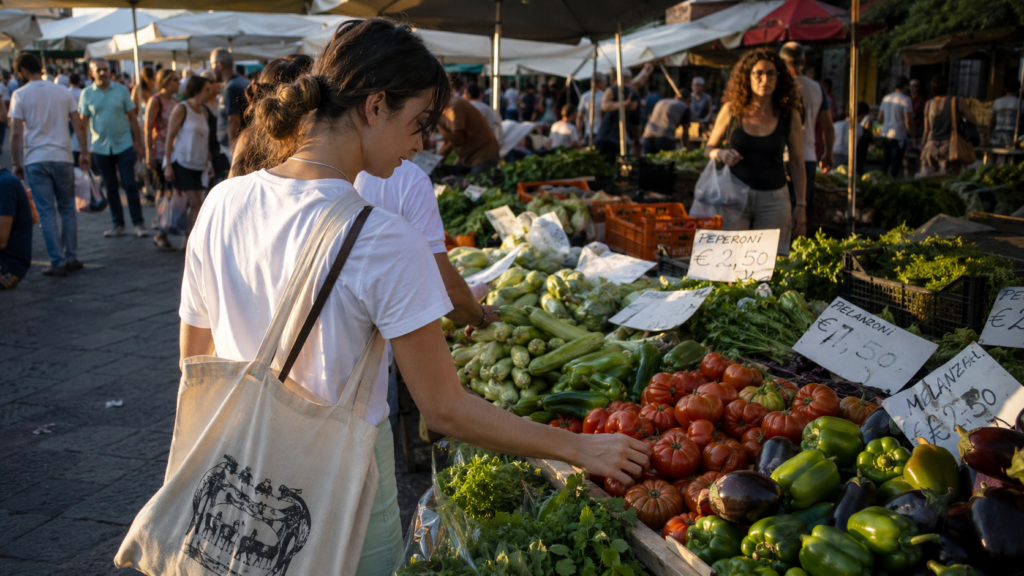
The supermarket 200 metres from the hostel in the tourist district charges 30–50% more than the one three streets back. A few rules that hold up almost everywhere:
- Find the discount chain. Lidl and Aldi across Europe, Biedronka in Poland, Penny in Germany and Austria, Coles or Aldi in Australia, and local wet markets across Southeast Asia. The savings versus a convenience store are dramatic.
- Go to markets in the last hour. Traders discount produce they don’t want to pack up. I’ve bought a full bag of vegetables in Lisbon for €1.50 at 1pm on a Saturday.
- Buy for two or three meals, not one. Cook once, eat twice. Tonight’s stir-fry is tomorrow’s lunch.
- Don’t buy a full pantry. You need oil, salt, and one or two seasonings — not a spice rack you’ll abandon at checkout… sorry, check-out.
Hostel Kitchen Etiquette (The Rules Nobody Writes Down)
Every hostel kitchen runs on the same unspoken code. Break it and you’ll feel the room turn on you.
- Clean as you cook, not after you eat. Wash the pan while your food is on the plate. The next person is waiting for it.
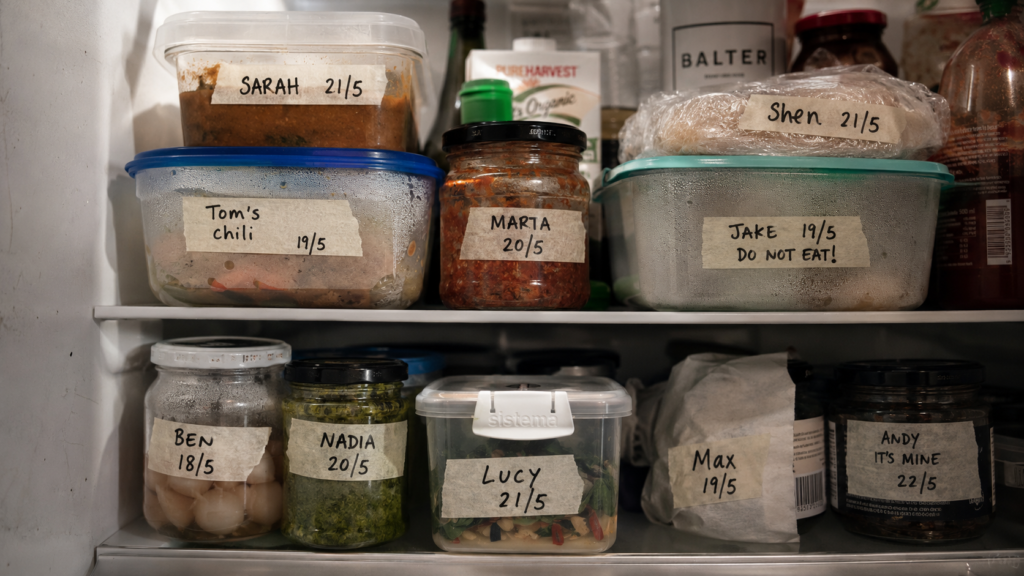
- Label everything. Name and check-out date. Unlabelled food is considered communal in most hostels within about 24 hours — that’s just physics. A roll of labels and a marker weighs nothing.
- Cook off-peak. The kitchen rush is 6:30–8:30pm. Cook at 5:30 or 9 and you’ll have the place to yourself.
- Don’t hog rings. If you’re making something slow, do it outside peak hours. A 45-minute risotto at 7pm is an act of war.
- The free shelf is sacred — in both directions. Take from it freely, and leave your leftovers there when you check out. Half a bag of pasta, an onion, some oil — someone will use it within hours.
- Never take unlabelled milk on faith. It might be free. It might belong to the large Australian man behind you. Ask.
Storage-wise: lightweight reusable containers are worth their space in your backpack for leftovers, and if your hostel storage doesn’t lock, a small padlock sorts it.
Five Hostel Meals I Actually Cook (Under £2 a Portion)
These all work with one pot or one pan, a blunt knife, and whatever the communal cupboard offers. Costs are per portion based on European discount supermarket prices.
1. The Everywhere Stir-Fry — ~£1.50
Rice or noodles, whatever vegetables were cheapest at the market, soy sauce, garlic if you can get it. One pan, ten minutes. Add eggs for protein — they’re cheap in every country on Earth. This is the meal I’ve cooked in more countries than any other.
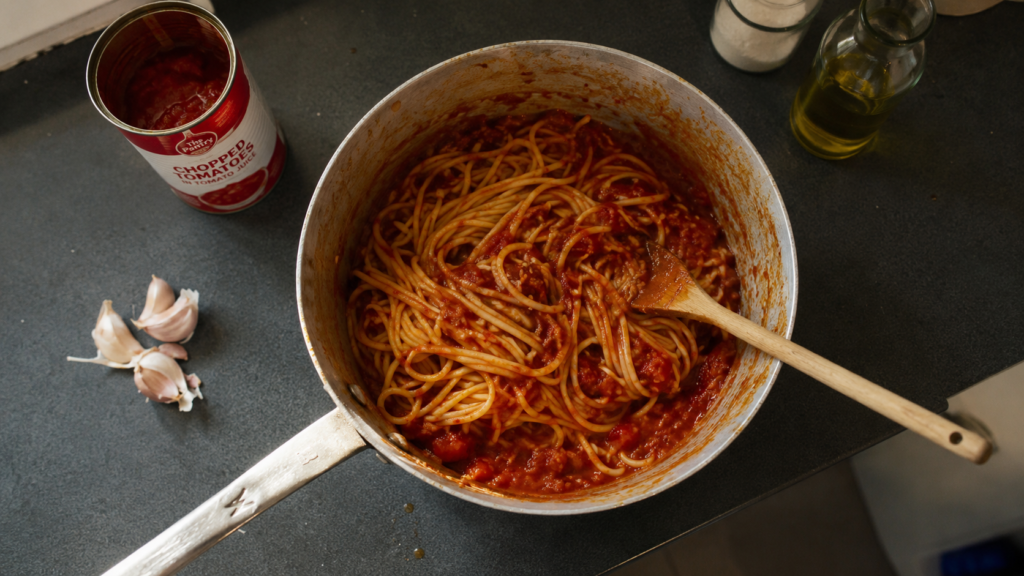
2. One-Pot Tomato Pasta — ~£1.20
Pasta, a tin of tomatoes, an onion, oil, salt. Cook the pasta, drain most of the water, throw the tin in with the onion and let it reduce for five minutes. A tin of tuna or some cheese upgrades it for 50p.
3. Curry-Paste Anything — ~£1.80
A jar of curry paste is the best £2 you’ll spend in a supermarket. It transforms rice plus any vegetable plus a tin of coconut milk into a proper dinner. One jar lasts four or five meals, and it travels well between hostels.
4. The Overnight Oats Breakfast — ~£0.60
Oats, milk (or water, honestly), banana, done the night before in one of your containers. Hostel breakfast queues are grim; this means you eat while everyone else is waiting for the toaster. 3 Easy Overnight Oats Recipes to Make for Breakfast
5. The Free-Shelf Frittata — £0–£1
Eggs plus whatever the free shelf has surrendered: half an onion, sad-looking peppers, cold potatoes, cheese ends. Fry it all, pour beaten eggs over, lid on, five minutes. I once made a genuinely good frittata in Porto entirely from other people’s abandoned food.
The Gear That Earns Its Place
You don’t need a travel kitchen. You need five small things:
- A small sharp knife or peeler (checked luggage only) — because hostel knives are butter knives with ambition
- Reusable containers — leftovers, overnight oats, market snacks
- Food labels and a marker — the cheapest theft insurance in travel
- A basic salt and pepper set plus one seasoning you love — mine’s smoked paprika
- A spork — for the hostels where every fork has mysteriously vanished
If you’re staying somewhere with no kitchen at all, a foldable travel kettle changes what’s possible — instant noodles, couscous, oats, tea. I’ve reviewed the ones worth buying in my foldable travel kettles guide.
Cook Together — It’s the Cheapest Social Event in Travel
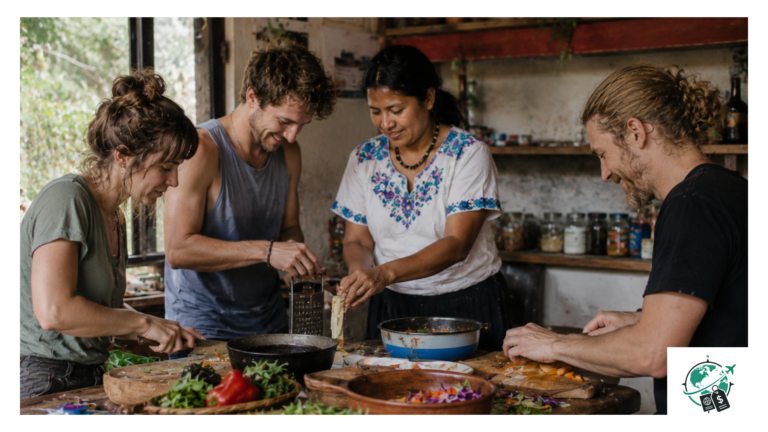
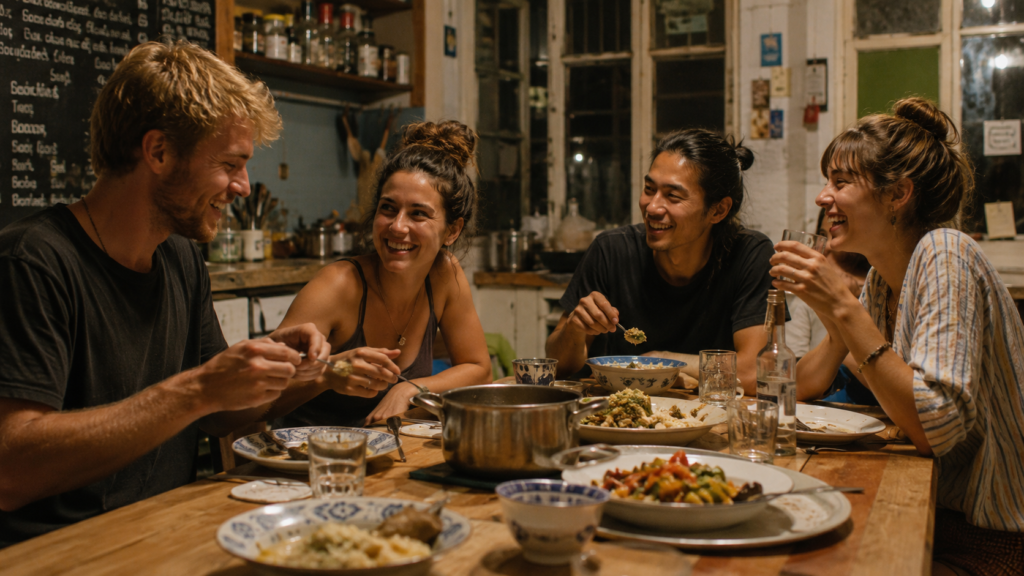
The communal dinner is the best thing that happens in hostel kitchens. Four people chip in £2 each and you eat far better than any of you would alone — and it’s how you actually meet people beyond “where are you from, how long are you travelling.”
Some hostels run organised family dinners (common in Portugal, Spain, and South America — usually £5 or free if you help cook). Always say yes. It’s the best value meal in the building, and the recipes people cook are the ones from home: I’ve learned proper carbonara from an Italian in Kraków and pad krapow from a Thai traveller in Melbourne, neither of which any cooking class would have taught me better.
The Bottom Line
Cooking in hostels isn’t a compromise — done right, it’s cheaper, faster, and more social than eating out every night. Audit the kitchen before you shop, shop where locals shop, learn the five one-pot meals above, respect the etiquette, and treat the free shelf as the gift it is.
If you’re weighing up where to stay in the first place, start with my honest comparison of hostels vs budget hotels — and if you’re heading to Japan, capsule hotels are a different (kitchen-free) world worth knowing about.
More from The Smart Explorer: