Wild camping is one of the last truly free things left in travel. No booking system, no nightly fee, no reception desk. Just you, your tent, and whatever landscape you’ve managed to get yourself into.
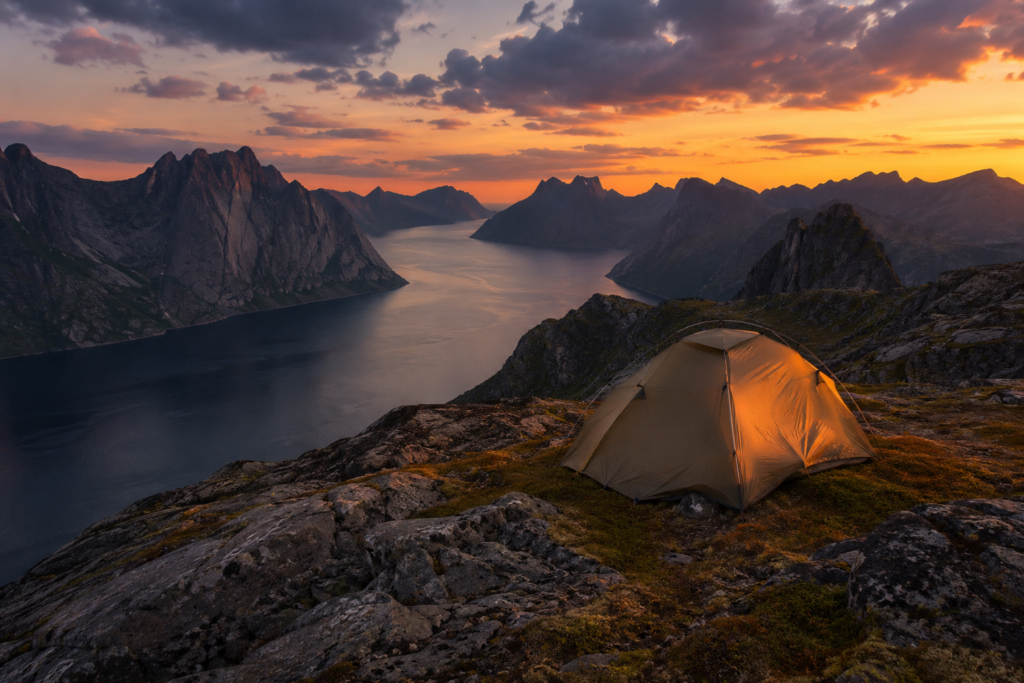
The rules, though, are wildly inconsistent. In some countries wild camping is a legal right — it’s written into national law and the government actively encourages it. In others it’s technically illegal but completely unenforced. And in a handful of places it will get you fined, removed, or worse.
This guide covers the actual rules, not the optimistic version you’ll find on tourism board websites. I’ve camped in most of these places and done the research on the ones I haven’t. Here’s what you actually need to know, country by country.
| Before you read on Wild camping rules change. National park regulations get updated, byelaws get enforced differently, and seasonal restrictions apply in many places. Always check the most current local regulations before you go. This guide is accurate as of May 2026, but treat it as a starting point, not a legal opinion. |
Where Wild Camping is Legal
These countries either have a right to roam written into law, or a strong tradition of wild camping that has been formally protected. You can camp in these places with confidence — though rules still apply on what you can and can’t do while you’re there.
============================================================ –>Free Guide · Instant Download
50 Genuinely Free
Travel Experiences
Named, located, and verified — no catches, no upsells. Get the full guide plus one smart, specific travel idea in your inbox every month.
No spam, ever. Unsubscribe in one click.
🇸🇪 Sweden LEGAL
Sweden’s allemansrätten — the ‘right of public access’ — is one of the strongest outdoor access laws in the world. You can camp anywhere in nature for up to two nights without asking permission, as long as you stay at a reasonable distance from homes and leave no trace. This applies to privately owned land as well as public land. No fee, no permit, no negotiation.
- What you can do: pitch a tent anywhere in open countryside, light small fires in safe conditions (not during dry summers), swim in any body of water, pick berries and mushrooms
- What you can’t do: camp in people’s gardens, disturb wildlife or nesting birds, drive vehicles off-road, leave litter or any trace
- Best regions: Lapland (midnight sun camping), Dalarna, the Swedish archipelago
🇳🇴 Norway LEGAL
Norway has the same tradition as Sweden — friluftsloven (the Outdoor Recreation Act) gives everyone the right to camp anywhere in ‘uncultivated land’ for up to two nights. In practice, Norwegians routinely camp for much longer in the mountains and fjord regions. Above the treeline it’s essentially unlimited.
- The key rule: stay at least 150 metres from the nearest house or cabin. Below this you need to ask permission, but almost nobody enforces it strictly
- Fires: banned between 15 April and 15 September in most areas due to fire risk. Use a camp stove
- Best for: fjord camping, the Lofoten Islands, Jotunheimen, Trolltunga approach routes
🇫🇮 Finland LEGAL
Finland’s jokamiehenoikeus (every man’s right) is essentially identical to the Scandinavian standard. Camp in nature for up to two nights without permission, on public or privately owned uncultivated land. Finland has over 180,000 lakes — the camping options are extraordinary.
- Practical tip: designated campfire spots (laavut) are free to use throughout Finland’s national parks and forests. Many have dry firewood left by previous campers
- Best for: lake district camping around Saimaa, Lapland under the aurora, Nuuksio National Park near Helsinki
🏴 Scotland LEGAL
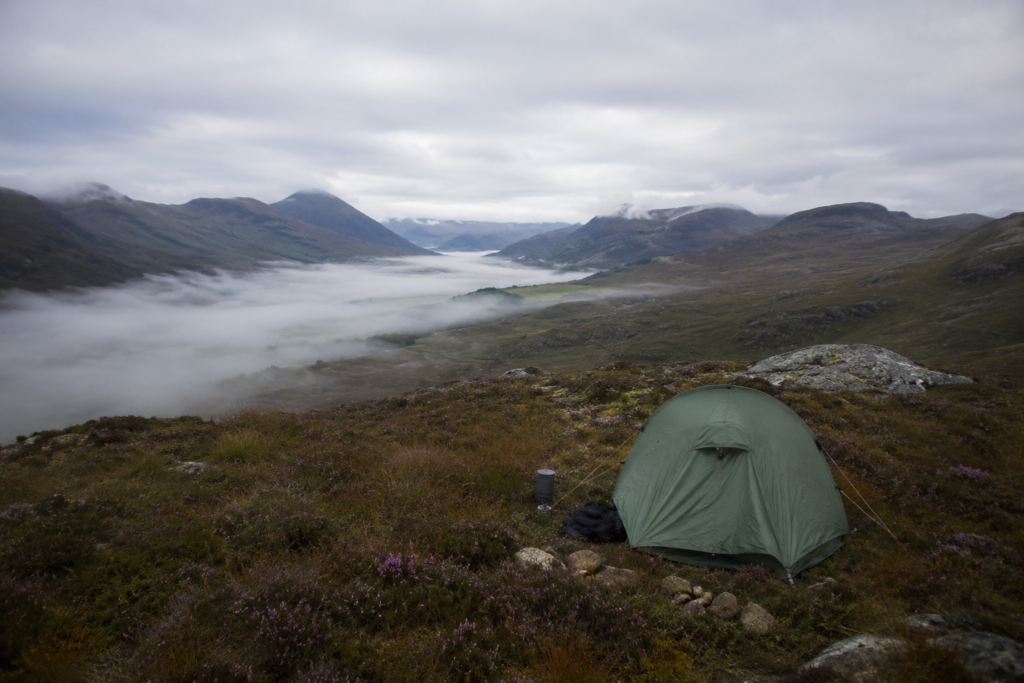
Scotland has the most progressive access legislation in the UK — the Land Reform (Scotland) Act 2003 gives everyone the right to wild camp anywhere in Scotland as long as they act responsibly. This is a genuine legal right, not a tolerance. It explicitly includes wild camping.
- What responsible means: no fires during dry periods, no camping near houses without permission, take all litter with you, use a cathole for human waste at least 30 metres from water
- Seasonal restrictions: certain popular areas (Loch Lomond shores, Trossachs) have local camping management zones with byelaws requiring a permit between March and September. A permit costs £3–5/night and can be booked online
- Best routes: West Highland Way, Cape Wrath Trail, Cairngorms, Outer Hebrides
| The Loch Lomond Situation The east shore of Loch Lomond is the most popular wild camping destination in Scotland — and the most regulated. Between March and September you need a permit for the eastern lochside. The west shore has no permit requirement but is harder to access. Plan accordingly. |
🇮🇸 Iceland LEGAL
Iceland operates on a permit and campsite system, but wild camping in uninhabited highland areas is generally permitted. The Highlands (the interior) are accessible only in summer and are effectively wilderness — camping is expected.
- Important: camping is NOT permitted on private farmland or near roads without using an official campsite. The ‘don’t camp in people’s fields’ rule is enforced, particularly near the Ring Road
- National parks: Vatnajökull and Snæfellsjökull national parks have designated camping areas. Camping outside these in the park requires specific conditions
- Best for: Landmannalaugar (highland camping, natural hot springs), the Laugavegur trail, interior F-roads
🇳🇿 New Zealand LEGAL
New Zealand’s Department of Conservation (DOC) land — which covers about a third of the country — allows freedom camping in many areas. The Freedom Camping Act 2011 governs this, and most DOC land is available for camping with minimal restrictions.
- Self-contained vehicles: if you have a certified self-contained campervan (toilet, water, waste holding), you can camp almost anywhere on public land
- Tent camping: restricted to DOC sites in many areas. Some freedom camping zones are tent-accessible — check the Campermate app or DOC website
- Fines: New Zealand takes freedom camping violations seriously. Fines of NZ$200–$400 are common for camping in prohibited areas
Where Wild Camping is Restricted but Possible
These countries don’t have a legal right to roam, but wild camping exists in practice — either because it’s permitted in specific areas, tolerated in remote regions, or because enforcement is minimal. Know the local rules before you set up camp.
🇩🇪 Germany RESTRICTED
Wild camping is technically illegal on all land in Germany without the landowner’s permission. In practice, camping in forested areas is extremely common and rarely challenged — especially if you’re discreet, set up after dark, and leave before dawn. The ‘stealth camping’ culture is well established.
- Where it works: remote forested areas, far from roads and settlements. Bavarian Alps above the treeline, Black Forest
- Where it doesn’t: near farms, within national parks (strictly enforced), near any settlement. Bavaria has specific bans in many forest areas
- Bavarian Alps exception: above 1,500 metres, a one-night bivouac is generally tolerated as a mountain shelter tradition
🇫🇷 France RESTRICTED
France prohibits wild camping on most land but has extensive exemptions. In many national parks and protected areas, bivouacking (arriving after 7pm, leaving before 9am with no trace) is explicitly permitted. Below the treeline in national parks, check the specific park rules.
- The bivouac rule: applies in most French national parks and means you can sleep under the stars without technically camping. No tent pegs, no campfire, no waste
- Regional parks: less strict. Many allow camping in remote areas without formal enforcement
- Best regions: Pyrenees (GR10), Mercantour National Park (Alps), Massif Central
🇪🇸 Spain RESTRICTED
Spain’s rules vary significantly by autonomous community. Catalonia is strict. Andalusia is more relaxed. National parks across Spain generally prohibit camping except in designated sites, but wilderness areas away from parks are much more flexible.
- What generally works: remote mountain areas, Pyrenees foothills, inland Extremadura and Castilla
- What to avoid: national park land, coastal areas (especially Catalonia’s coast), anything within sight of settlements
- Canary Islands: free camping exists in the volcanic highlands of Tenerife and La Palma. The Teide National Park requires a permit for summit camping
🇮🇹 Italy RESTRICTED
Italy prohibits wild camping in national parks and near the coast. In the mountains (Alps, Dolomites, Apennines), it’s widely practiced and generally tolerated for single-night bivouacs above the treeline. In southern Italy enforcement is minimal everywhere.
- Practical approach: set up after sunset, leave at sunrise. Don’t light fires. Don’t camp near rifugi (mountain huts) — they’ll direct you to a campsite
- Dolomites: above 2,000 metres, single-night bivouacking is common. Stay off managed piste and away from hut approaches
🇵🇹 Portugal RESTRICTED
Portugal technically requires permission for wild camping but enforcement is minimal outside protected areas. The Alentejo region and interior mountain areas are popular with overlanders and hikers who camp freely.
- Coast: strictly off limits for camping outside of official sites. Fines are common near popular beaches
- Interior: very relaxed. Alentejo, Trás-os-Montes, and Serra da Estrela are low-enforcement areas
🇨🇿 🇸🇰 Czech Republic & Slovakia RESTRICTED
Both countries technically prohibit wild camping outside designated areas, but in practice the Bohemian and Slovak backcountry is full of wild campers, particularly in Bohemian Switzerland, Czech Switzerland NP (post-fire, check current access), Slovak Paradise, and the Tatra Mountains.
- Slovak Tatras: above the treeline in the High Tatras, one-night bivouacking is tolerated. Below the treeline in designated zones, it’s more restricted
🇷🇴 Romania RESTRICTED
Romania is one of Europe’s best wild camping destinations in practice. The Carpathians are vast, sparsely populated, and enforcement is almost non-existent. Technically you need permission on private land, but most of the mountain areas are accessible.
- Best areas: Fagaras Mountains, Retezat National Park (camping permitted in designated zones), Bucegi plateau
- What to know: stray dogs are a genuine concern in some remote areas. Travel in pairs and carry a walking pole in unfamiliar terrain
🇨🇦 Canada RESTRICTED
Canada is vast and the rules depend entirely on land type. Crown land (public land not in a park) — which makes up the majority of Canada — generally allows free camping. National parks require reservations and fees. Provincial parks vary.
- Crown land: camp for free for up to 21 days (varies by province). Check provincial regulations for your specific area
- British Columbia: crown land camping is legal and accessible throughout the province. The BC Rec Sites are free or low-cost managed sites on crown land
- Ontario: crown land camping permitted up to 21 days in any one location. No permit required
🇺🇸 United States RESTRICTED
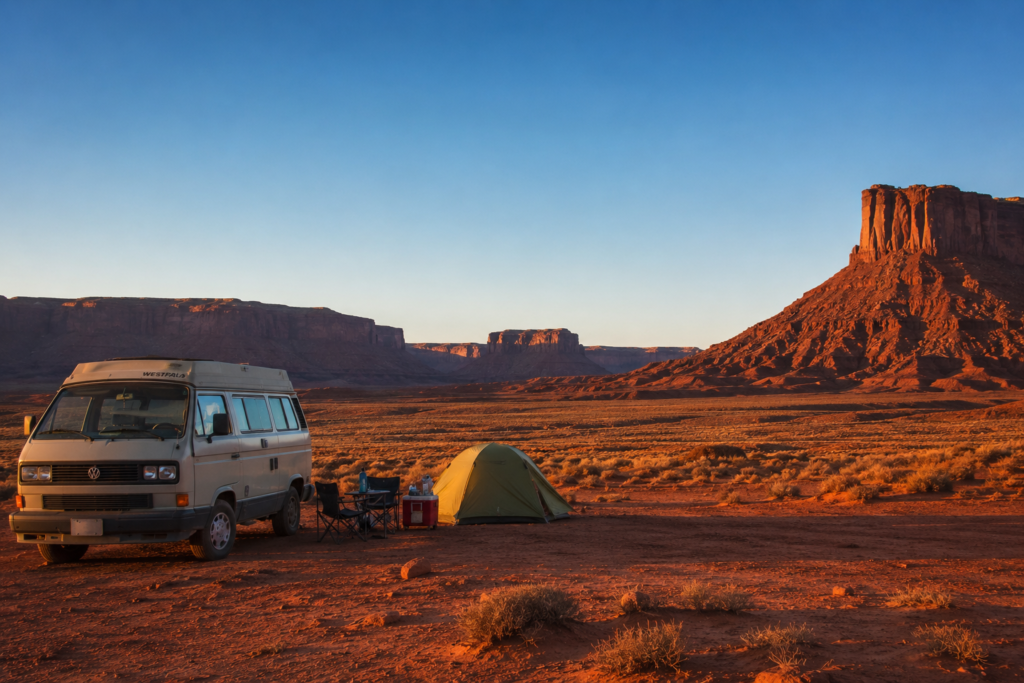
America’s rules are complicated but the opportunities are enormous. Bureau of Land Management (BLM) land, National Forests, and some National Grasslands allow dispersed camping (free, no site required) as long as you follow Leave No Trace and any local rules. National Parks require reservations.
- BLM dispersed camping: the best free camping deal in America. BLM land covers 245 million acres — mostly in the west. No fee, usually no permit, max 14 days in one spot
- National Forests: dispersed camping generally permitted outside of designated wilderness areas and campgrounds. Check with the specific ranger district
- What to avoid: anywhere within 200 feet of water, camping near signposted ‘no camping’ areas, and pitching within sight of a trailhead (generates complaints)
- Best states for free camping: Utah, Nevada, Wyoming, Colorado, Montana, New Mexico, Oregon
| The iOverlander and FreeRoam Apps For US and Canada free camping, iOverlander and FreeRoam are indispensable. Both are free, community-updated, and show exact GPS coordinates of dispersed camping areas, with reviews covering road conditions, facilities (usually none), and any recent enforcement issues. |
🇦🇺 Australia RESTRICTED
Australia has massive free camping potential on Crown land and National Parks where permits are available. State forests in most states allow free camping for up to 30 days. The variability is huge — Queensland is more restrictive than Western Australia.
- National Parks: most require a permit (usually AUD $7–20/night) but many backcountry sites are free with a free permit
- State forests: free camping allowed in most states. NSW, Victoria, Queensland, and WA all have large state forest networks with free sites
- WikiCamps Australia app: essential. Shows free sites, their facilities, and user reviews. One-time purchase of AUD $5
🇰🇪 Kenya / East Africa RESTRICTED
Wild camping in Kenya is possible but requires more planning than Europe. National parks and reserves generally have designated campsites — public campsites in the parks cost less than private camps. Outside park boundaries, it’s a matter of finding a local contact or campsite.
- Public campsites in Kenyan parks: KWS (Kenya Wildlife Service) public campsites cost around USD $15–30/night with basic facilities. These are the budget safari option
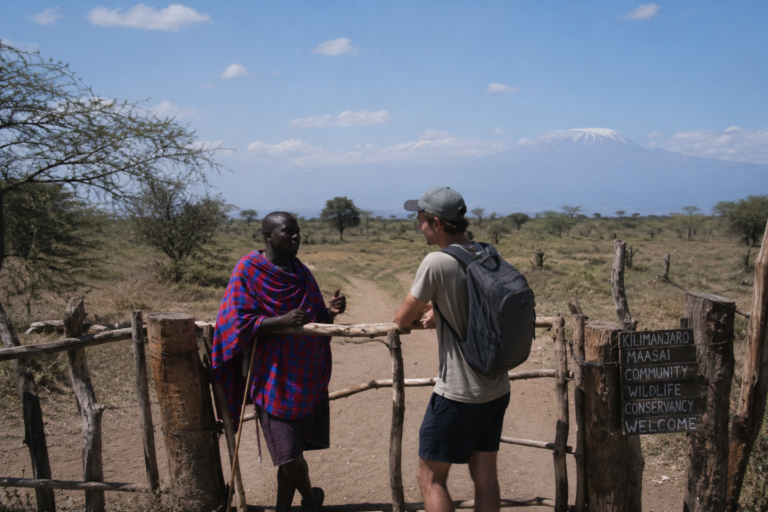
- Community conservancies: many community-owned conservancies outside the main parks allow camping at very low cost (sometimes free with a local guide). This is the real budget safari approach
- Safety: do not wild camp outside designated areas in East Africa without local knowledge. Wildlife movement, particularly in unfenced areas, makes solo bivouacking genuinely dangerous
🇹🇭 Thailand RESTRICTED
Thailand has designated camping areas in its national parks but wild camping outside these is not permitted. The national parks charge a small fee (usually 100–200 THB per person) and maintain basic facilities.
- Best camping: Doi Inthanon National Park (Thailand’s highest peak), Khao Yai (wildlife, accessible from Bangkok), Erawan National Park
- Free option: some temples and monasteries permit camping in their grounds if you ask respectfully. This applies especially to meditation retreats (see our Free Meditation Retreats in Thailand guide)
🇮🇳 India RESTRICTED
India’s wild camping rules are inconsistent and often unenforced except in national parks and protected forest areas. In the mountains — Himachal Pradesh, Uttarakhand, Ladakh — camping is widely practiced by trekkers, usually with a local guide.
- Himachal Pradesh: camping above 3,000m is common on established trekking routes. Spiti Valley, Kullu-Manali area, and Kinnaur all have free camping traditions
- What helps: hiring a local guide or using a local trekking agency generally resolves any ambiguity about where you’re permitted to camp
Where You Should Not Wild Camp
In some countries, wild camping is genuinely illegal and enforced. In others, it’s technically available but practically dangerous. Here are the places to be careful.
- Netherlands and Belgium: virtually no wild camping. Both countries are densely populated and private property laws are strictly enforced. Use formal campsites or overlander-specific services
- Switzerland: wild camping is prohibited in most of Switzerland, including above the treeline in many cantons. Mountain huts (SAC huts) are the budget overnight option here. Some cantons permit one-night bivouacking above 2,000m — check canton-specific rules
- Japan: wild camping is prohibited on most land. Designated campsites are affordable (¥500–2,000/night) and well-maintained. National parks have no camping outside designated sites. The exception is some island and coastal areas
- Singapore and Malaysia: Singapore has no accessible wild camping. Malaysia permits camping in some forest reserves but park infrastructure is the norm — and often quite affordable
- National parks globally: national park land almost universally prohibits camping outside designated areas, regardless of what the surrounding country’s law says. This applies to Yellowstone, Kruger, Torres del Paine, and virtually every other major national park. Do not try to bypass designated camping in national parks
Universal Rules That Apply Everywhere
Regardless of where you are or what the law says, these principles apply. They’re not just ethical — following them is what keeps wild camping available for everyone.
Leave No Trace
Carry out everything you carry in. This includes food waste, packaging, and toilet waste if you’re in an area without soil cover. If you can pack it in, you can pack it out.
Human Waste
Use a cathole — dig at least 15cm deep, at least 60 metres from any water source, trail, or campsite. Bury it properly. In very high-use areas (popular mountain routes, alpine zones) consider carrying a WAG bag (waste alleviation and gelling bag) and packing out waste. It sounds extreme until you’ve seen what unmanaged human waste does to a popular trekking area.
Water Sources
Never camp directly on a riverbank or lakeshore. Set up at least 60 metres back. This protects the water source from contamination and gives wildlife a corridor to drink without disturbance.
Fire
The default answer on fire is: don’t. Use a camp stove. If you do make a fire, use an existing fire ring where possible, never in dry conditions, never in areas with fire bans, and drown it completely before you sleep or leave — not just the surface but the whole ash pile.
Arrive Late, Leave Early
In restricted-but-tolerated destinations, the accepted approach is to set up after dark (or at least after most day visitors have left) and be packed and gone before 8–9am. This minimises visual impact and avoids confrontation. It’s also just good practice — you’re not a permanent structure.
Ask First When in Doubt
In many countries where wild camping is technically restricted, asking a nearby farmer or local landowner for permission will almost always get you a yes — and changes your legal position entirely. A five-minute conversation is almost always worth it.
What You Actually Need for Wild Camping
Wild camping gear doesn’t have to be expensive. The basics cover everything you need for a comfortable night in the backcountry.
- Tent: a decent three-season tent is sufficient for most wild camping. Look for a freestanding design (easier to pitch on hard ground) with a good rainfly. Budget option: Naturehike Cloud-Up series (around £80–120)
- Sleeping bag: rated for slightly colder than you expect. A 3-season bag rated to 0°C covers most wild camping in Europe and at altitude in warmer regions
- Sleeping mat: a foam mat weighs almost nothing and is indestructible. An inflatable mat is more comfortable but another thing that can fail. Both work
- Camp stove: a gas canister stove (MSR, Primus, or budget alternatives from Alpkit) is the most practical option. Trangia alcohol stoves are heavier but fuel is available everywhere
- Water filtration: a Sawyer Squeeze or LifeStraw filters wild water and weighs almost nothing. Essential for backcountry camping where you’re relying on streams and lakes
- Headtorch: essential. A 200-lumen headtorch (Black Diamond Spot or budget equivalent) is all you need
- Trowel: for catholes. A dedicated lightweight trowel is faster and cleaner than improvising
| The Foldable Kettle ProblemFor hostel travel, a foldable travel kettle is the gear upgrade that changes everything — see our Best Foldable Travel Kettles guide. For wild camping, it’s redundant: you’re boiling water on a camp stove anyway. Don’t add the weight. |
The Apps That Make Wild Camping Practical
- iOverlander (free): community-sourced camping locations worldwide. Excellent for finding free spots in South America, Africa, and the American West
- park4night (free basic, paid for full access): best app for Europe. Shows campsites, wild camping areas, motorhome stops, and community-reviewed free spots
- maps.me (free): offline maps that show trails, terrain, and many remote camping areas. Works without signal
- what3words (free): for sharing your location in a genuine emergency. Give your three-word address to someone at home before you set off
- Met Office / Yr.no (free): Yr.no (Norwegian Meteorological Institute) is the best mountain weather forecast app available. More accurate than Google for remote highland areas
- WikiCamps (paid, ~£5): best for Australia and New Zealand. Worth every penny for a long trip
- FreeRoam (free): BLM and public land camping in the USA. Shows exact coordinates and user reviews
Quick Reference: Wild Camping Status by Country
| Country | Status | Notes |
|---|---|---|
| Sweden | ✅ Legal | Allemansrätten — camp anywhere 1–2 nights |
| Norway | ✅ Legal | Friluftsloven — 150m from dwellings |
| Finland | ✅ Legal | Jokamiehenoikeus — same as Scandinavia |
| Scotland | ✅ Legal | Land Reform Act 2003 — act responsibly |
| Iceland | ✅ Legal (highlands) | Farmland off limits; use campsites near Ring Road |
| New Zealand | ✅ Legal (DOC land) | Freedom Camping Act; self-contained vehicles best |
| Canada | ⚠️ Restricted | Crown land camping legal; parks require permits |
| USA | ⚠️ Restricted | BLM and National Forest dispersed camping legal |
| Australia | ⚠️ Restricted | State forests generally permit free camping |
| Romania | ⚠️ Restricted | Carpathians widely tolerated; check park rules |
| France | ⚠️ Restricted | Bivouac rule applies in national parks |
| Spain | ⚠️ Restricted | Varies by region; mountains more relaxed |
| Italy | ⚠️ Restricted | Above treeline bivouac tolerated |
| Germany | ⚠️ Restricted | Technically illegal; widely practiced discreetly |
| India | ⚠️ Restricted | Mountain regions tolerated with guide |
| Thailand | ⚠️ Restricted | National park designated sites; ask at temples |
| Kenya | ⚠️ Restricted | KWS campsites; community conservancies |
| Japan | ❌ Avoid | Use designated campsites; affordable and good |
| Switzerland | ❌ Avoid | Check canton rules; SAC huts the best option |
| Netherlands | ❌ Avoid | No wild camping; private land rules strict |

The Most Honest Thing I Can Tell You About Wild Camping
The rules matter — but they’re not the hardest part. The hardest part is the first time you pitch a tent somewhere you’ve never been, with no booking confirmation and no idea if anyone will knock on your tent at 2am.
They almost certainly won’t. Wild camping is much more accepted, much more normal, and much more achievable than most travel writing makes it sound. The people who write about it nervously tend not to have done it much. The people who do it regularly treat it as completely unremarkable.
Start somewhere with clear legal rights — Scotland, Scandinavia, or BLM land in the American West. One night in a field watching the stars is all it takes to understand why people build entire trips around this. After that, the rule-checking becomes part of the adventure rather than the obstacle to it.
| Related on The Smart Explorer Free Meditation Retreats in Thailand · Workaway and Worldpackers: Working for Accommodation · Budget Safari in Kenya: Shoestring East Africa · City Bike Share Programs Worldwide |