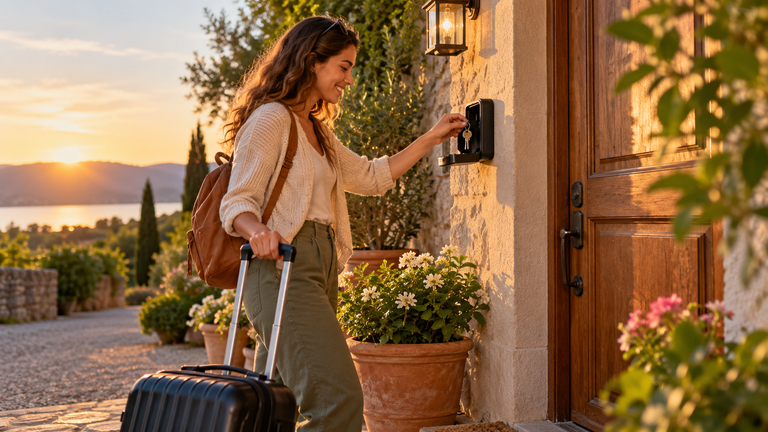
You can sleep well almost anywhere in the world for under £25 a night — and in plenty of places, for nothing at all. I’ve done it in a Tokyo capsule pod, a Kenyan farm stay, a converted van in Scotland, and more hostel dorms than I can count. This guide covers every budget accommodation type worth knowing about, what each one actually costs, who it suits, and the honest downsides nobody puts in the booking listing.
This is the hub page for everything The Smart Explorer publishes on where to sleep. Each section links to a full guide where I go deeper — specific cities, specific booking platforms, specific prices.
First, the mindset shift
“Budget accommodation” doesn’t mean the worst room you can tolerate. It means paying for a bed and a shower — the things you actually use — and refusing to pay for a lobby fountain, a trouser press, and a minibar you’ll never open.
Smart travellers work out their real requirements first. Mine are: a secure place for my bag, a decent shower, and enough quiet to sleep. Everything beyond that is optional. Once you know your own list, half the accommodation market becomes irrelevant — and the half that’s left is dramatically cheaper.
============================================================ –>Free Guide · Instant Download
50 Genuinely Free
Travel Experiences
Named, located, and verified — no catches, no upsells. Get the full guide plus one smart, specific travel idea in your inbox every month.
No spam, ever. Unsubscribe in one click.
Hostels: the default for a reason
Typical cost: £10–£30 per night for a dorm bed in Europe; £4–£12 in Southeast Asia; £20–£45 in expensive cities like London, Zurich, or Reykjavik.
Hostels remain the backbone of budget travel, and they’ve quietly improved enormously. Modern hostels have privacy curtains on bunks, individual reading lights, USB sockets by every bed, and female-only dorms as standard. The grim 20-bed dorm with one broken shower still exists, but it’s now the exception — and the reviews will tell you exactly where it is.
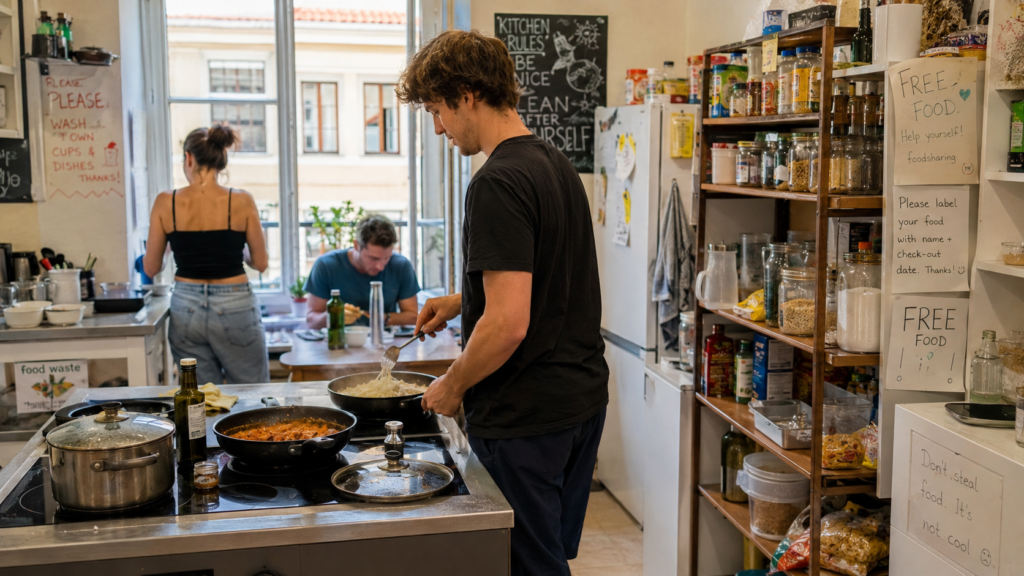
What a hostel actually gets you beyond the bed:
- A kitchen. This is the single biggest money-saver in budget travel. Cooking your own meals cuts food costs by 50–70% in expensive countries. I’ve written a full guide to cooking in hostels — recipes, gear, and the etiquette nobody explains.
- Free information. Hostel staff and noticeboards are better than any guidebook for free walking tours, cheap eats, and transport tricks.
- Other travellers. If you’re travelling solo, a hostel common room is the fastest way to find people to split taxi fares, tour costs, and rental cars with.
The honest downsides: you will occasionally share a room with a snorer, a 5am flight-catcher, or both. Earplugs and an eye mask are non-negotiable kit. And private rooms in hostels are often poor value — more on that below.
Where to book: Hostelworld beats Booking.com for hostels specifically. Better filters (female dorms, bed privacy, kitchen quality), better reviews from actual hostel travellers, and more properties in hostel-heavy destinations. I use Booking.com as the cross-check, not the starting point.
→ Full guides: The Best Hostels in Europe: City-by-City Picks · Cooking in Hostels: Everything You Need to Know
Capsule hotels: the smart alternative in Asia
Typical cost: £15–£35 per night in Japan; similar in Singapore, Taipei, and Hong Kong.
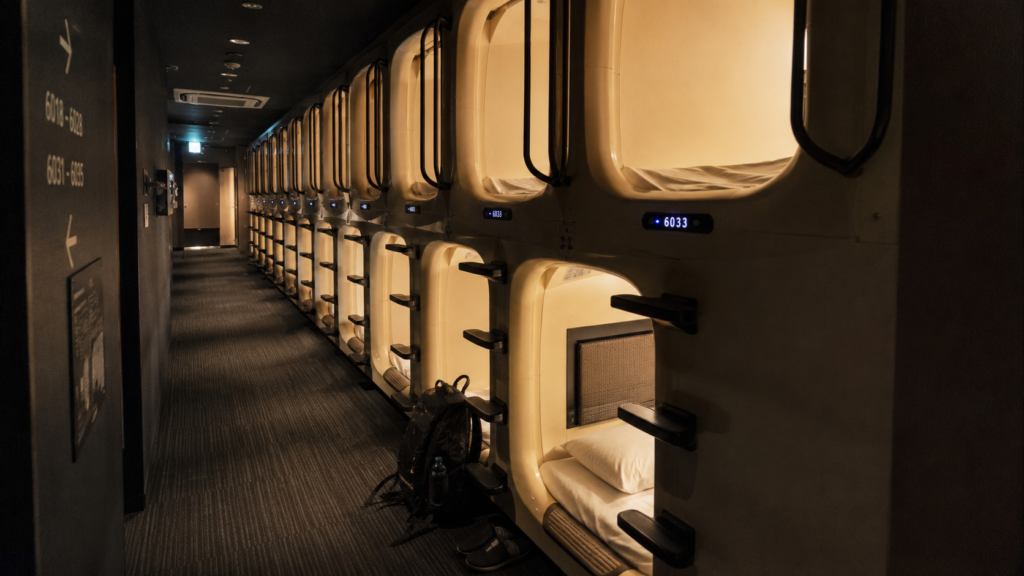
A capsule hotel gives you exactly what a hostel dorm doesn’t: total privacy. Your pod is a sealed sleeping unit with a mattress, ventilation, a light, power sockets, and usually a small TV or shelf. Bathrooms are shared but typically spotless — Japanese capsule hotels often include full bathing facilities that put mid-range hotels to shame.
I rate capsule hotels above hostels in Japan for three reasons:
- Price parity. In Tokyo, a capsule pod and a hostel dorm bed cost roughly the same — but the pod is private.
- Availability. Capsules are often bookable when hostels are full, especially last-minute. They have far more units per building.
- The experience itself. A good capsule hotel is one of the most distinctive nights you’ll spend anywhere, and it costs less than a chain hotel breakfast.
The honest downsides: you can’t sit up straight in most pods, your luggage lives in a separate locker, and if you’re claustrophobic this is not your format. Many are also gender-segregated by floor — check before booking if you’re travelling as a couple.
Where to book: Agoda has the strongest capsule hotel coverage in Asia, often with prices below the hotel’s own website.
→ Full guides: Capsule Hotels: The Complete Guide for First-Timers · Best Capsule Hotels in Japan: Tokyo, Osaka, Kyoto
Budget hotels vs hostels: the honest maths
Here’s the comparison most budget travel sites won’t make properly: sometimes a budget hotel is cheaper than a hostel.
The break-even point is two people. A hostel dorm bed at £22 each costs a couple £44 a night. A budget hotel double — an Ibis Budget, a Premier Inn sale rate, a local two-star — is frequently £40–£55, with a private bathroom and no bunk ladder. Once you add the hostel’s locker fees, towel hire, and the breakfast you end up buying anyway, the hotel often wins outright.
When the hostel wins: solo travel, kitchen access, social connection, one-night stops where price is everything.
When the budget hotel wins: couples and pairs, anyone who needs proper sleep before a long travel day, cities where hostel prices have crept up to hotel levels (looking at you, Amsterdam).
When neither wins: hostel private rooms. They combine hotel prices with hostel facilities. Unless the kitchen or the social side is the point, a private hostel room is usually the worst-value option on the page.
→ Full guide: Hostels vs Budget Hotels: An Honest Cost-Benefit Analysis
Free accommodation: yes, genuinely free
This is where budget accommodation stops being about spending less and becomes about spending nothing. Three options, in order of how much I recommend them:
House sitting
You look after someone’s home — usually their pets — and stay for free. Sits range from a weekend to several months. Trusted Housesitters is the biggest platform (membership around £99–£259/year, which pays for itself in one or two nights of saved accommodation). The best sits go to people with reviews, so start with local, less glamorous sits to build a profile.
Honest take: this is the best free accommodation on the internet, but it’s a commitment, not a crash pad. You’re responsible for someone’s dog, and you can’t wander off for three days.
Farm stays
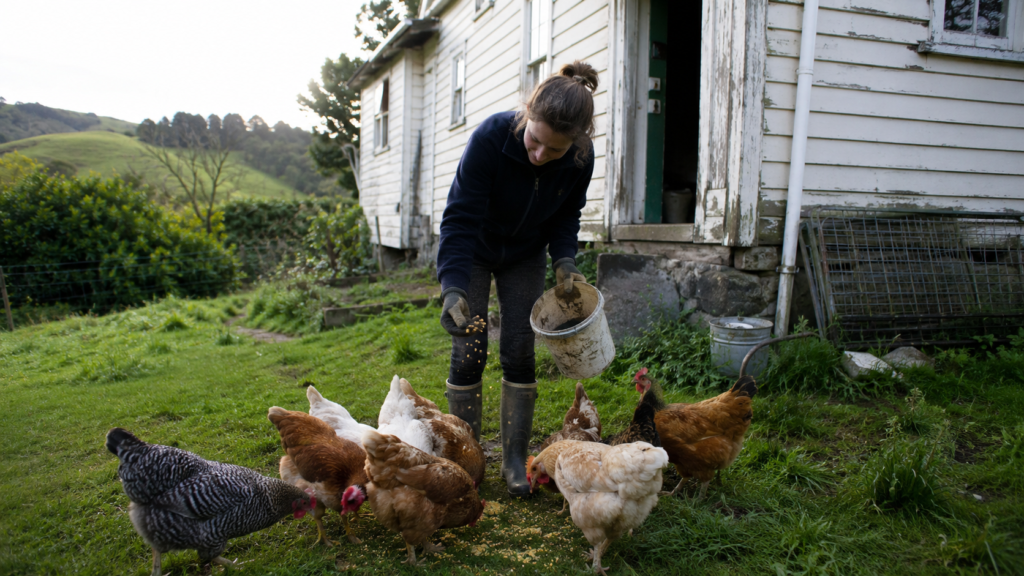
Working farm stays — common in New Zealand, Australia, and across Europe — trade a few hours of daily help for room and board. Non-working farm stays are paid but still cheap, and they’re some of the most memorable places I’ve slept.
Couchsurfing
Free by design: locals host travellers on their sofa or spare bed. It still works in 2026, but the platform is smaller than its heyday and quality varies wildly by city. Read references carefully, have a backup booked for your first night, and treat it as a cultural exchange, not a free hotel — because your host certainly does.
→ Full guides: House Sitting: The Complete Guide to Free Accommodation Worldwide · Farm Stays as Budget Accommodation · Couchsurfing in 2026: Is It Still Safe and Worth It?
Work for your bed: Workaway and Worldpackers
Typical cost: platform membership (~£40–£50/year), then free accommodation and often meals in exchange for 4–5 hours of work, five days a week.
Workaway and Worldpackers connect travellers with hosts — hostels, farms, guesthouses, families — who provide a bed and food in exchange for help. Reception shifts, painting, gardening, teaching English, social media for a hostel. Placements run from a week to several months.
This is the option that turns accommodation from a cost into an experience. My rule of thumb: it makes sense when you want to stay somewhere, not just pass through. If you’re moving cities every two days, the work exchange maths doesn’t work. If you want a month in one place spending almost nothing, it’s unbeatable.
Read the reviews on both sides. A small number of hosts treat volunteers as free labour well beyond the agreed hours. The reviews expose them every time — trust the pattern, not the listing.
→ Full guide: Workaway and Worldpackers: The Complete Guide to Working for Accommodation
Van life: your bed travels with you
Typical cost: highly variable. A self-build starts around £3,000–£8,000 including the van; renting a campervan runs £50–£120/day, which is only “budget” for groups.
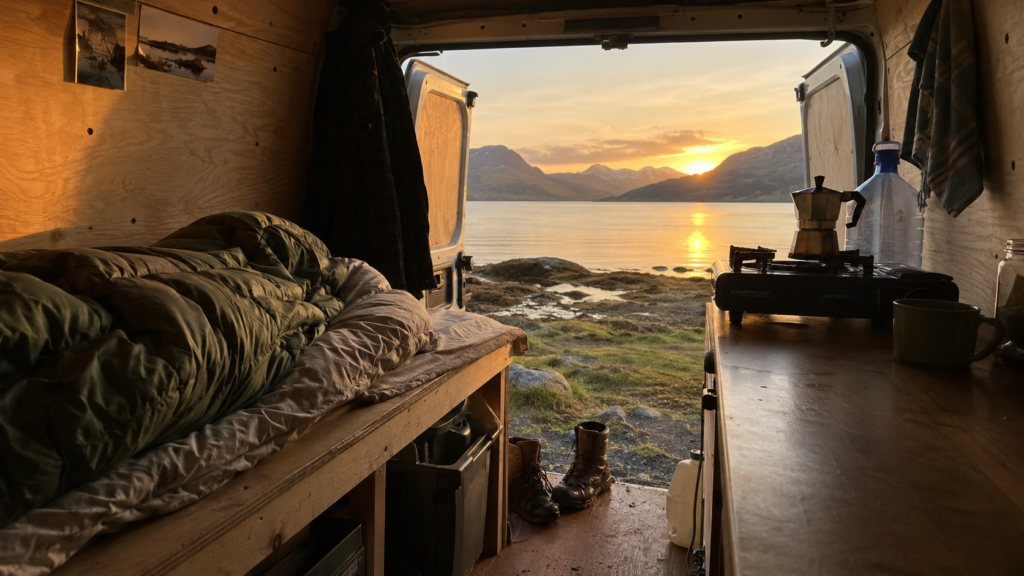
Van life merges your accommodation and transport budgets into one, and in countries with generous overnight parking rules — New Zealand, much of Scandinavia, Scotland — it’s a genuinely cheap way to travel long-term. It is not, despite Instagram, automatically cheap: fuel, insurance, and repairs are real numbers.
The budget version of van life is buying a used, boring van and doing a minimal conversion — a bed platform, storage boxes, a camp stove. The £40,000 fitted-out Sprinter is a lifestyle purchase, not a travel hack.
Free overnight spots exist almost everywhere if you know the rules, and apps like Park4Night and iOverlander map them. Know the local law: wild parking is legal-ish in Scotland and Scandinavia, tolerated in New Zealand with a self-contained vehicle, and actively fined in much of Southern Europe.
→ Full guide: Van Life on a Budget: How to Start Without Breaking the Bank
Camping and glamping on a budget
Typical cost: free (wild camping, where legal) to £10–£25/night for a campsite pitch; budget glamping from £30–£60/night for a fixed tent or pod.
Camping is the cheapest accommodation on earth after someone else’s sofa. Wild camping is legal in Scotland, Norway, Sweden, and Finland under right-to-roam laws, tolerated in parts of Spain and Eastern Europe, and banned (with enforcement) in most of England and much of Western Europe. The country-by-country rules matter — a full night’s sleep is not worth a 3am ranger knock.
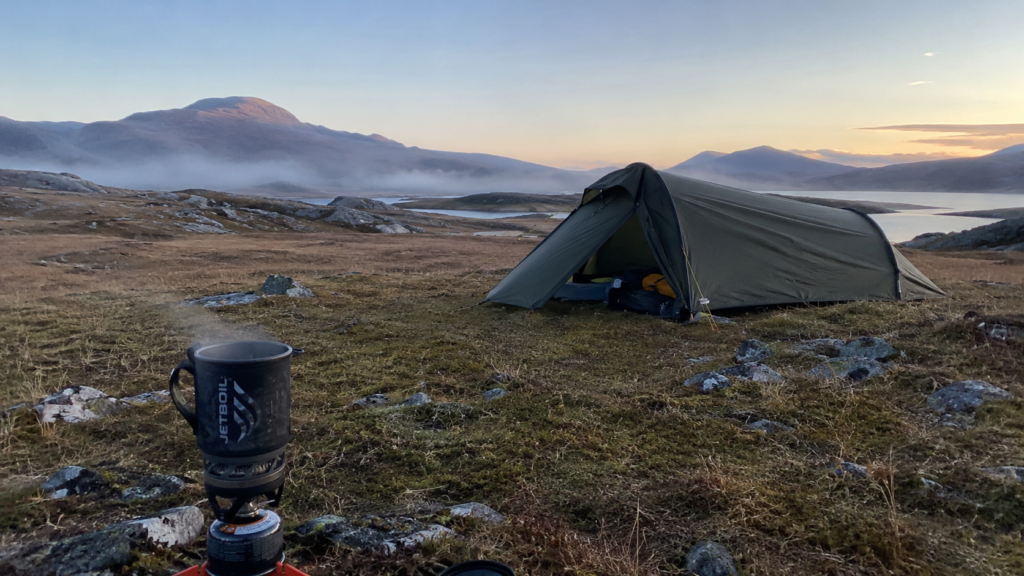
Budget glamping — pre-pitched bell tents, wooden pods, basic cabins — is the middle path. You skip carrying a tent, still pay a fraction of hotel prices, and it opens up rural areas where hostels don’t exist.
→ Full guides: Free Camping Worldwide: Wild Camping Rules by Country · Glamping Or Camping: Which Is Right For You?
How to choose: the decision in three questions
1. Solo or not? Solo → hostel dorm or capsule. Couple or pair → run the budget hotel comparison before booking anything. Group → apartments and campervans suddenly become the cheapest option per head.
2. Moving fast or staying put? One or two nights per stop → hostels, capsules, budget hotels. A week or more in one place → house sitting, farm stays, and work exchanges start to make sense, and they’re dramatically cheaper.
3. What’s the one thing you won’t compromise on? Sleep quality → capsule or budget hotel. Food budget → hostel with a proper kitchen. Meeting people → hostel common room. Total cost → free options first, then camping.
Answer those three and the right accommodation type usually picks itself.
Booking tips that actually save money
- Match the platform to the accommodation type. Hostelworld for hostels, Agoda for Asia and capsule hotels, Booking.com for budget hotels and as a cross-check. No single platform is cheapest across the board.
- Book the first night, wing the rest. In most destinations outside peak season, walk-in and next-day rates are fine — and you keep the freedom to leave a place you don’t like. Peak summer in Europe is the exception: book ahead or pay heavily.
- Check the total, not the nightly rate. Locker fees, towel hire, linen charges, city taxes, and “service fees” can add 15–20% to a hostel’s headline price. The booking page footnotes are where the real price lives.
- Sunday to Thursday is cheaper almost everywhere. If your dates flex, shift them.
- Read the newest reviews, not the rating. A 9.1-rated hostel that changed management three months ago is a 9.1-rated mystery. The last twenty reviews tell you what you’re actually walking into.
- Location beats a £3 saving. A hostel that’s £3 cheaper but two bus rides from anything costs you more in transport and time. Check the map before the price.
Where you sleep is the biggest single line in any travel budget — bigger than flights on most trips over a week. Get it right and everything else opens up: the extra fortnight away, the safari you thought you couldn’t afford, the trip that happens this year instead of someday. I’ve slept in every option on this page, and not once has the cheap choice been the thing I regretted. The £200-a-night hotel room looks exactly the same at 2am with your eyes shut. Spend the money on the travelling instead.
Travel smart. Spend smarter.